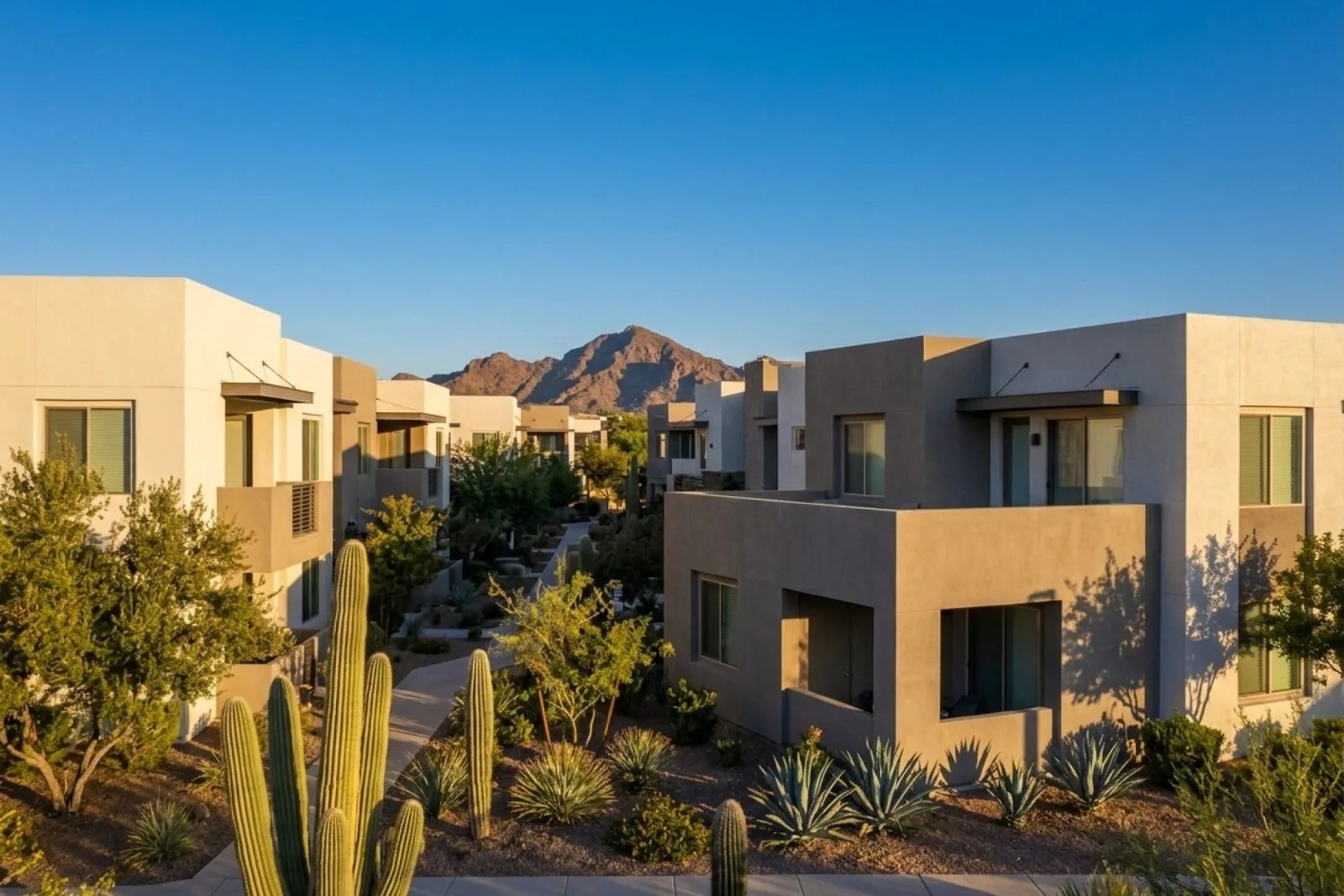
Arizona's red-hot multifamily market combines 6-7.99% DSCR loan rates with powerful cost segregation tax benefits under restored 100% bonus depreciation. We're seeing sophisticated investors deploy this dual strategy to achieve 15-25% first-year tax savings on Phoenix and Scottsdale acquisitions while maintaining strong cash flow. The key is timing your cost segregation study with loan closing to maximize immediate write-offs. Arizona's landlord-friendly environment and growing tech sector make it particularly attractive for out-of-state investors seeking both appreciation and tax optimization through strategic financing.
Arizona DSCR Loan Market Overview
Arizona's DSCR loan market has stabilized at competitive rates following the 2022-2023 interest rate volatility. Current DSCR rates range from 6.75% to 7.99% for well-qualified multifamily investors, with loan-to-value ratios reaching 80% on stabilized properties. Phoenix and Scottsdale lead origination volume, accounting for 68% of Arizona DSCR activity in Q1 2026.
The state's landlord-friendly legal framework attracts institutional and private capital alike. Arizona requires no rent control ordinances, allows market-rate increases with proper notice, and maintains efficient eviction processes averaging 45 days compared to 180+ days in California markets. These fundamentals support strong debt service coverage ratios that DSCR lenders favor.
We've seen particular strength in the Class B workforce housing segment, where properties built between 1995-2010 trade at 5.8-6.4% cap rates with 1.35-1.45x debt service coverage. These fundamentals create ideal conditions for DSCR financing paired with aggressive tax optimization strategies.
Cost Segregation Study Fundamentals
Cost segregation delivers 4-15x ROI in year one alone — the $300-500 study cost is dwarfed by $2,000-4,500 per unit tax savings
Cost segregation transforms real estate from 27.5-year straight-line depreciation into accelerated write-offs by identifying components that qualify for 5, 7, or 15-year depreciation schedules. Multifamily properties typically yield 25-35% of total basis in accelerated depreciation through detailed engineering analysis of electrical, plumbing, flooring, and specialized building systems.
The restored 100% bonus depreciation effective through 2026 allows immediate expensing of all 5, 7, and 15-year components in the year placed in service. This creates massive first-year tax benefits for investors in higher tax brackets, particularly those combining federal and state liability exposure.
Arizona properties perform exceptionally well in cost segregation due to newer construction standards and extensive HVAC systems required for desert climate control. We consistently see $300-500 per unit in annual study costs generating $2,000-4,500 per unit in first-year tax savings on properties acquired after January 1, 2023.
Study Timing and Documentation
The IRS requires cost segregation studies to be completed by the tax return due date (including extensions) for maximum benefit. For properties acquired mid-year, this compressed timeline demands immediate coordination between acquisition teams, engineering firms, and tax advisors. Studies typically require 45-60 days from property access to final report delivery.
Essential documentation includes original construction drawings, contractor invoices, permit records, and detailed property inspections. Arizona's digital permit systems in Phoenix and Scottsdale streamline this process compared to other markets, reducing study timelines and associated professional fees.
Optimal DSCR Financing Structure
The most effective Arizona DSCR structure for cost segregation optimization involves 75-80% loan-to-value financing with interest-only periods during the first 1-2 years. This maximizes cash flow while the cost segregation benefits offset tax liability, creating a powerful wealth acceleration mechanism for sophisticated investors.
Arizona DSCR lenders increasingly offer cash-out refinance options within 6-12 months of acquisition, allowing investors to extract tax-advantaged equity created through forced appreciation and market gains. The combination of immediate cost segregation benefits and accessible refinancing creates compelling investment arbitrage opportunities.
Key structuring considerations include entity selection (LLC vs partnership), investor tax bracket analysis, and coordination with 1031 exchange timelines. We recommend Delaware LLC structures for out-of-state investors to optimize Arizona state tax treatment while maintaining operational flexibility.
DSCR Underwriting Requirements
Arizona DSCR lenders focus primarily on property cash flow rather than personal income documentation. Minimum debt service coverage ratios range from 1.20x to 1.35x depending on property class, location, and borrower experience. Scottsdale and Phoenix core locations command the most favorable underwriting terms.
Required documentation includes rent rolls, operating statements (12-24 months), property appraisal, and environmental assessments. Unlike traditional commercial mortgages, personal financial statements and tax returns are typically optional, making DSCR financing particularly attractive for privacy-focused investors and international capital.
Phoenix and Scottsdale Market Dynamics
Phoenix multifamily fundamentals support aggressive DSCR leverage strategies with population growth averaging 2.1% annually and job creation outpacing housing supply by significant margins. The metro area added 47,000 net new residents in 2025 while delivering only 31,000 new housing units, creating sustained rental demand pressure across all property classes.
Scottsdale's luxury multifamily segment commands particular investor interest due to limited new supply and high-income demographic concentration. Average rents exceed $2,850 per unit in North Scottsdale, supporting debt service coverage ratios above 1.45x even with aggressive 80% LTV financing structures.
The broader Phoenix MSA benefits from continued corporate relocations, with companies like Charles Schwab, Honeywell, and multiple tech firms establishing significant operations. This employment base supports Class A rent growth of 4.2% annually and occupancy rates consistently above 94% across institutional-quality properties.
Submarket Performance Analysis
Tempe and Chandler submarkets offer compelling value opportunities for cost segregation strategies due to newer construction (post-2000) and lower basis costs relative to Scottsdale. Average price per unit ranges $185,000-225,000 compared to $285,000+ in prime Scottsdale locations, creating more favorable cost segregation returns on invested capital.
Mesa's rapid gentrification presents emerging opportunities, particularly in areas adjacent to light rail expansion. Properties acquired at current valuations benefit from both immediate cost segregation tax advantages and longer-term appreciation potential as infrastructure improvements enhance accessibility to Phoenix employment centers.
Advanced Tax Strategy Implementation
Successful cost segregation implementation requires careful coordination between acquisition timing, entity structuring, and broader portfolio tax planning. High-income investors in the 37% federal bracket combined with Arizona's 2.5% state rate achieve total tax savings of 39.5% on accelerated depreciation amounts, creating immediate cash flow equivalent to equity contributions.
The strategy becomes particularly powerful when combined with active real estate professional status under IRC Section 469. Investors meeting the 750-hour annual participation requirement can offset unlimited amounts of other income through real estate losses generated by cost segregation acceleration.
Arizona's favorable depreciation recapture treatment upon sale provides additional strategic value. The state's capital gains treatment and 1031 exchange accessibility allow investors to defer recognition while continuously upgrading portfolio quality through tax-advantaged transitions.
Multi-Property Portfolio Strategies
Investors acquiring multiple Arizona properties can stagger cost segregation studies to optimize tax benefits across multiple years. Strategic timing spreads large depreciation deductions to maximize utilization against varying income levels and avoid alternative minimum tax complications.
The combination of Arizona DSCR financing and cost segregation creates compelling cash-on-cash returns, particularly for investors utilizing the savings to acquire additional properties. This compounding effect accelerates portfolio growth while maintaining tax-advantaged wealth accumulation through real estate ownership.
Arizona-Specific Investment Advantages
Arizona's regulatory environment strongly favors multifamily investment compared to coastal markets. The state prohibits rent control ordinances, maintains streamlined eviction processes, and offers predictable property tax assessments that support long-term investment planning. Effective property tax rates average 0.65% compared to 1.2%+ in comparable growth markets.
The absence of state-level rent stabilization allows investors to implement value-add strategies without regulatory constraints. Properties acquired through DSCR financing can undergo immediate capital improvements with corresponding rent increases, supported by strong job growth and limited housing supply in desirable submarkets.
Arizona's water rights and infrastructure investments provide long-term sustainability advantages often overlooked by investors focused solely on current fundamentals. The Central Arizona Project and emerging desalination technologies ensure continued population and economic growth supporting multifamily investment thesis over decades rather than typical 5-7 year hold periods.
Institutional Competition and Opportunity
Institutional capital increasingly targets Arizona multifamily assets, creating pricing pressure in trophy markets but generating opportunity in emerging submarkets and value-add properties. DSCR financing provides speed and certainty advantages over institutional capital constrained by committee decision-making and extensive due diligence requirements.
Private investors utilizing DSCR loans with cost segregation optimization can compete effectively against institutions by accepting lower initial yields in exchange for superior tax benefits and operational flexibility. This strategy proves particularly effective in properties requiring moderate capital investment to achieve institutional-quality performance metrics.
Implementation Timeline and Cost Analysis
The optimal implementation timeline begins 60-90 days before property acquisition to align cost segregation study completion with tax filing deadlines. Engineering firms require property access within 30 days of closing to document existing conditions and gather necessary technical specifications for IRS compliance.
Total implementation costs typically range $15,000-25,000 for properties valued $2-5 million, including cost segregation study fees ($8,000-12,000), legal entity structuring ($3,000-5,000), and ongoing tax compliance support ($4,000-8,000 annually). These costs generate 8-12x returns through first-year tax savings alone, with continued benefits throughout the depreciation period.
DSCR loan closing timelines average 30-45 days compared to 60-90 days for traditional commercial financing, providing crucial timing advantages for cost segregation implementation. Faster closings allow more comprehensive study completion and better coordination with year-end tax planning strategies.
Professional Team Coordination
Success requires seamless coordination between acquisition specialists, cost segregation engineers, tax advisors, and financing professionals. We recommend establishing these relationships before beginning property search activities to ensure rapid execution when opportunities arise in competitive Arizona markets.
Due diligence should include preliminary cost segregation assessment during the inspection period to validate study potential and associated tax benefits. This analysis influences offer pricing and ensures the investment thesis accounts for total after-tax returns rather than simply cash flow metrics.

Risk Management and Exit Strategy Planning
While cost segregation provides immediate tax benefits, investors must plan for depreciation recapture upon property sale. Current tax law requires recapture of accelerated depreciation at 25% federal rates plus applicable state taxes, creating future tax liability that influences hold period and exit strategy decisions.
DSCR financing structures should accommodate this reality through conservative loan-to-value ratios that preserve equity for future tax obligations. Recommended maximum LTV of 75% provides sufficient cushion for depreciation recapture while maintaining attractive cash-on-cash returns during the hold period.
1031 exchange strategies effectively defer depreciation recapture indefinitely, making them particularly valuable for investors utilizing aggressive cost segregation. Arizona's liquid multifamily market provides numerous exchange opportunities within required timelines, supporting long-term wealth accumulation through tax-deferred transitions.
Market Cycle Considerations
Arizona's multifamily market exhibits cyclical patterns tied to broader economic conditions and migration trends. Cost segregation benefits provide downside protection during market corrections by reducing taxable income and preserving cash flow for debt service and capital improvements.
The strategy proves most effective during periods of economic growth when investors have substantial tax liability to offset. Current conditions with strong Arizona job creation and limited housing supply create ideal circumstances for aggressive cost segregation implementation paired with DSCR financing leverage.
Arizona vs California Tax Benefits
Arizona's multifamily investment tax strategy offers compelling advantages compared to California markets, particularly regarding arizona vs california real estate taxes and regulatory burden. Arizona's 2.5% maximum state income tax rate compared to California's 13.3% creates immediate advantages for high-income investors utilizing cost segregation strategies.
Property tax differentials further enhance Arizona's appeal, with effective rates 40-50% below comparable California markets. This fundamental advantage compounds annually, creating significant cash flow improvements that support higher leverage ratios and more aggressive acquisition strategies through DSCR financing.
The absence of rent control in Arizona allows investors to capture market rent growth immediately, unlike California markets where regulatory constraints limit income optimization. This flexibility proves particularly valuable when implementing value-add strategies funded through cost segregation tax savings.
For investors seeking to diversify beyond California while maintaining strong multifamily investment tax strategy fundamentals, Arizona provides an ideal combination of cash flow, appreciation potential, and tax optimization opportunities through strategic DSCR financing and cost segregation implementation.
Frequently Asked Questions