











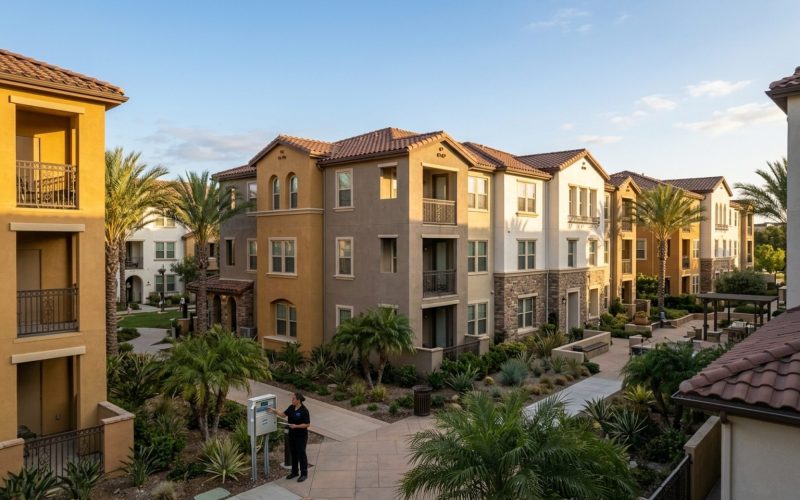








Orange County multifamily submarkets map showing ROI comparison across OC cities
Market Insights — Apr 2026

OC Multifamily Submarket ROI: Best Cash Flow Cities 2026

Compare cap rates and cash flow across Anaheim, Santa Ana, Irvine, and Fullerton. Data-driven submarket analysis for OC multifamily investors seeking optimal...

NextGen Properties has managed rental real estate across Orange County since 2000 — 750+ units, six states, one disciplined philosophy. This publication is our team's working notebook: submarket vacancy data, OC rent trend analysis, property management operating guides, multifamily investment frameworks, and development intelligence for landlords and investors navigating California's most supply-constrained coastal market. Every article is written by practitioners actively acquiring, operating, and improving real estate assets. Browse by topic below, or filter by market insights, property management, investing, or development.

Latest Articles

In Depth

Worth the full read.

Longer-form guides from our team on the topics that matter most to OC landlords and investors.

Property Management 7 min read

The Real Cost of a Bad Tenant: What OC Landlords Lose

Most landlords think about tenant screening as a compliance exercise. The ones who have been through a California eviction think about it as risk management. The difference between a qualified tenant and the wrong tenant in an OC rental can be $15,000–$40,000 — and several months of your life. Here’s what the numbers actually look like.

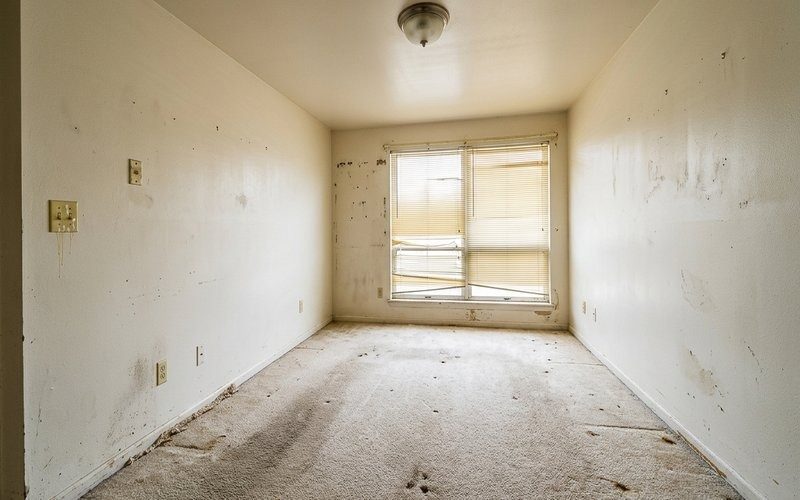
Landlords who have never had to evict a tenant tend to think about tenant screening as a formality — a credit check and employment verification, done in 20 minutes, box checked. Landlords who have been through a California eviction view it very differently. They’ve sat in court. They’ve paid the attorney. They’ve walked into a unit after the sheriff’s lockout and seen the damage. They don’t rush the screening process anymore.

A single bad tenancy — eviction, lost rent, damages — typically costs $12,000–$20,000. Four months of lost rent at OC averages exceeds $10,000 alone. Screening is always cheaper.

A realistic scenario for a 2-bedroom apartment in Costa Mesa renting at $2,800/month:

California has one of the longer eviction timelines in the country. After a tenant fails to pay rent, the process typically runs:


Continue reading → full 7-minute guide
Property Management 10 min read

California Eviction Process: Step-by-Step Guide

A California eviction ? done correctly ? takes a minimum of 5?8 weeks from initial notice to sheriff lockout. Done incorrectly, it starts over. Every step has specific legal requirements. Here is the complete process, with the mistakes that derail it at each stage.

California has some of the most tenant-protective eviction laws in the country. The process is lengthy, procedurally rigid, and unforgiving of landlord mistakes. A defective notice, improper service, or missed filing deadline resets the clock. Understanding each step — and the failure points at each — is essential for any OC landlord.

3-Day Notice to Pay Rent or Quit: Specifies the exact amount owed, gives tenant three business days to pay or vacate. Must include name and address where rent can be paid. 3-Day Notice to Cure or Quit: For curable violations — unauthorized pets, noise. 3-Day Unconditional Quit: For uncurable violations — illegal activity, major damage. 30/60-Day Notice: For no-fault terminations; 30 days under one year, 60 days over one year. Service must be done correctly: personal delivery, substituted service (adult at property plus mailing), or posting plus mailing. Improper service is the most common reason evictions get thrown out.

The three days on a pay-or-quit notice begin the day after service, excluding weekends and court holidays. If the tenant pays all rent owed, the process stops. If not, proceed to filing.

File the unlawful detainer (UD) complaint at Orange County Superior Court. Filing fees run $240–$450. The tenant has 5 business days after being served with the UD to file a written response. Service of the UD must be done by someone other than you — a registered process server or a non-party adult over 18.

Continue reading → full 10-minute guide
750+
Units Managed
CA, AZ, NV, UT, TX & FL
25
Years in OC
Costa Mesa HQ since 2000
98%
Resident Satisfaction
Portfolio-wide, annual survey
6
States
Western US & Sun Belt
Coverage Areas

What we write about.

Market Insights 27 articles

Submarket vacancy rates, rent trends, cap rate benchmarks, and CoStar data analysis for Orange County's most active rental corridors — from Costa Mesa to Irvine and beyond.

Explore Market Insights
Property Management 33 articles

CA AB 1482 compliance, maintenance cost control, resident screening, and operations guidance for landlords managing multifamily and single-family rentals in Southern California.

Explore Property Management
Investing 27 articles

Cash-on-cash return models, 1031 exchange strategy, value-add acquisition frameworks, and deal analysis tools designed for OC and Sun Belt multifamily investors.

Explore Investing
Development 18 articles

ADU permitting, entitlement timelines, construction cost breakdowns, and mixed-use development strategy for Orange County and inland Southern California markets.

Explore Development
FAQ

Common questions from OC landlords.

As of early 2025, average asking rents in Orange County range from roughly $2,100/month for a studio to $3,600/month for a two-bedroom, depending on submarket. Coastal cities like Newport Beach and Laguna Beach command significant premiums over inland submarkets like Anaheim and Orange. Vacancy remains historically low at 3–4%, which continues to support landlord pricing power despite broader softening in some metros.

AB 1482 applies to most residential rentals in California that are not otherwise exempt. Key exemptions include single-family homes and condos where the owner has served a proper notice of exemption, buildings constructed within the last 15 years, and owner-occupied properties with no more than two units. For covered properties, annual rent increases are capped at 5% plus local CPI, with an overall maximum of 10%. Non-compliance can expose landlords to significant liability.

Cap rates in Orange County typically run between 3.5% and 5.5% for residential multifamily, with coastal submarkets often at the lower end and inland markets higher. A "good" cap rate depends on your strategy: value-add investors often target 4–5%+ going-in with a path to 6%+ stabilized, while long-term hold investors may accept lower initial yields in prime locations. Always analyze net operating income (NOI) carefully — gross rent minus vacancy, taxes, insurance, and management fees.

Full-service property management in Orange County typically costs 7–10% of collected monthly rent, plus leasing fees (often one half to one full month's rent per new tenant). On top of that, budget for maintenance reserves (typically $100–200/unit/month for older buildings), capital expenditure reserves, and landscaping or common-area costs for larger properties. Self-managing can save 8–10% annually but requires significant time, local vendor relationships, and compliance expertise.

A 1031 exchange (named after IRC Section 1031) allows you to defer capital gains taxes when selling an investment property, provided you reinvest the proceeds into a "like-kind" replacement property. Key rules: you must identify potential replacement properties within 45 days of closing on the sale, and complete the purchase within 180 days. The replacement property must be of equal or greater value to fully defer taxes. Working with a qualified intermediary (QI) is required — you cannot take constructive receipt of the funds yourself.

For cash-flow-focused investors, inland submarkets like Anaheim, Santa Ana, and Garden Grove typically offer higher cap rates and lower entry prices than coastal cities. For appreciation-driven strategies, markets near major employment corridors — Irvine's tech hub, the Anaheim/Orange medical district, and South County coastal cities — have historically outperformed. We regularly publish submarket-level vacancy, rent, and cap rate data in our Market Insights section to help investors track trends.

A real estate agent primarily handles buying and selling transactions. A property manager handles the ongoing operations of a rental — tenant screening, lease execution, rent collection, maintenance coordination, and legal compliance. In California, property managers must hold a real estate broker's license (or work under one). For investors with multiple units or out-of-area owners, a professional property manager can significantly reduce hands-on demands while maintaining compliance with California's complex landlord-tenant laws.

ADU (accessory dwelling unit) regulations in California were significantly liberalized by state law starting in 2020, overriding many local restrictions. Under current rules, most single-family lots can add at least one ADU and one JADU (junior ADU). Owner-occupancy requirements for ADUs were eliminated through 2025. Cities like Irvine, Costa Mesa, and Huntington Beach have adopted state minimums, while some cities have added local design standards. ADU permits typically take 3–6 months, and construction costs in OC range from $200–400 per square foot depending on site conditions and unit type.

Weekly intelligence

The OC Real Estate Brief.

Market data, investment analysis, and property management insights. No noise. Direct to your inbox every week.

OC submarket vacancy & rent data
Cap rate & deal analysis
CA landlord law updates
No spam, cancel anytime