Modular construction has been promoted as a solution to California’s housing cost crisis for the better part of a decade. The pitch is compelling: factory-built modules assembled on-site faster, cheaper, and with less weather exposure than traditional stick-frame. The reality is more nuanced. Here’s a frank assessment from developers who have evaluated both methods seriously.
The promise of modular construction in California is straightforward: build housing faster and cheaper by moving construction from a weather-exposed job site into a controlled factory environment. In a state where multifamily construction costs regularly exceed $400–$600 per square foot and timelines stretch 18–24 months, any approach that reduces either number meaningfully is worth taking seriously. The reality is that modular has genuine advantages in certain contexts — and genuine constraints that make it the wrong choice in others.
How Modular Construction Works
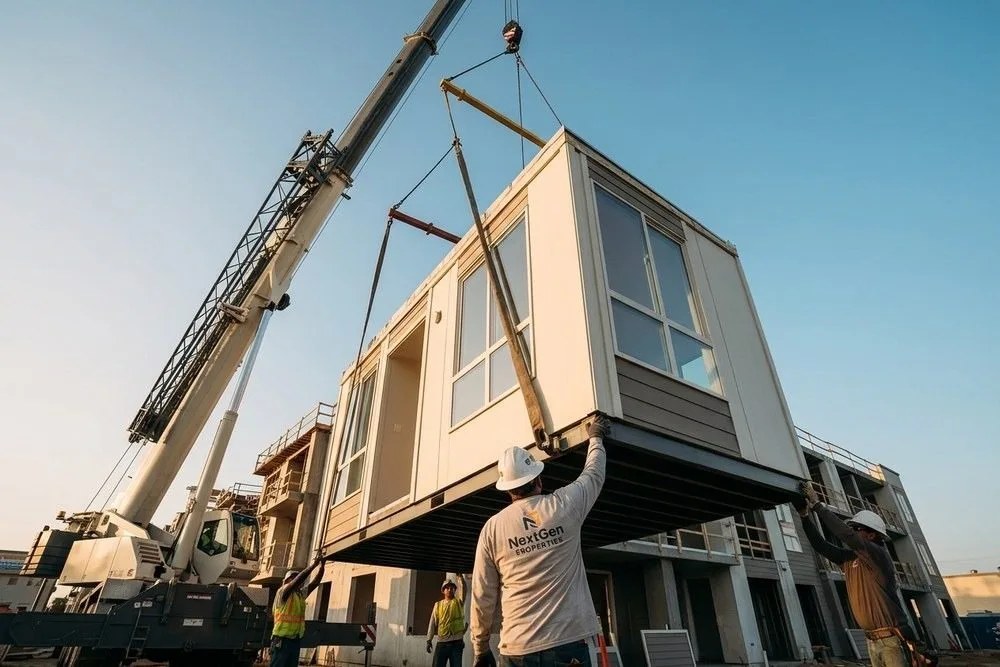
Modular (or manufactured) construction involves building individual units or significant structural sections in a factory, then transporting the completed modules to the site for assembly. Modules arrive largely complete: framed, insulated, drywalled, with electrical, plumbing, and HVAC roughed in and often with fixtures and finishes installed. On-site, a crane sets the modules on a traditional foundation and contractors connect them — joining electrical, plumbing, and structural elements — and complete exterior and common area finishes. The site phase is significantly faster because most work is done before the module arrives.
Modular saves roughly 8 months on a typical California multifamily project — 14 months vs. 22 months for stick-built. That compression reduces carry costs and accelerates lease-up.
| Method | Months |
|---|---|
| Modular | 14 |
| Stick-Built | 22 |
Cost Comparison: The Real Numbers
The theoretical cost savings from modular construction are frequently cited as 20–40%. The actual savings in California multifamily are typically 10–20% at best — and sometimes modular costs more than stick-frame. The reasons the gap is smaller than advertised:
Modular runs $45/SF cheaper on hard costs ($310 vs. $355) and $45/SF cheaper all-in ($385 vs. $430). Both advantages compress on complex urban infill sites in California.
| Cost Type | Modular ($/SF) | Stick-Built ($/SF) |
|---|---|---|
| Hard Cost | $310 | $355 |
| Total Incl. Soft Cost | $385 | $430 |
Transportation costs in California are significant. Modular factories are typically located in regions with lower land and labor costs — Central Valley, Nevada, Pacific Northwest. Shipping oversized modules to coastal California sites can add $15,000–$30,000 per module in freight. On a 20-unit project, that’s $300,000–$600,000 in added transportation cost that erodes factory labor savings.
Stick-built leads on design flexibility and lender acceptance. Modular closes the gap on build quality and dominates on schedule reliability and cost certainty.
| Metric | Modular | Stick-Built |
|---|---|---|
| Design Flexibility | 4 | 9 |
| Lender Acceptance | 5 | 9 |
| Build Quality | 7 | 8 |
| Schedule Reliability | 9 | 5 |
| Cost Certainty | 8 | 5 |
Factory labor is not dramatically cheaper in California. The labor savings argument assumes factory workers earn significantly less than unionized California construction workers. In California, with its higher minimum wage affecting factory wages too, the differential is smaller than in states like Idaho or Texas.
Site work and foundation costs are the same. Whether you build modular or stick-frame, you still need to prepare the site, pour foundations, and connect utilities — representing 20–30% of total construction cost that modular doesn’t reduce.
Design flexibility is limited. Modular factories build efficiently when producing similar units at scale. Custom, architecturally distinctive designs are either not achievable in modular or cost far more than catalog-design alternatives.
Timeline: Where Modular Has a Genuine Edge
The timeline advantage is more reliably realized than the cost advantage. Because factory construction proceeds simultaneously with site preparation, overall project timeline from permit to occupancy is typically 30–50% shorter than equivalent stick-frame.
| Phase | Stick-Frame | Modular |
|---|---|---|
| Foundation and site prep | 2–3 months | 2–3 months (concurrent with factory) |
| Framing, rough MEP, drywall | 6–9 months | Completed in factory during site prep |
| Module delivery and setting | N/A | 1–2 weeks |
| Interior finish and close-out | 3–4 months | 1–2 months |
| Total construction | 14–18 months | 8–12 months |
On a $5,000,000 construction loan at 7%, 6 months of compressed construction timeline saves $175,000 in carry cost — which can meaningfully close the gap between modular and stick-frame economics.
Quality Considerations
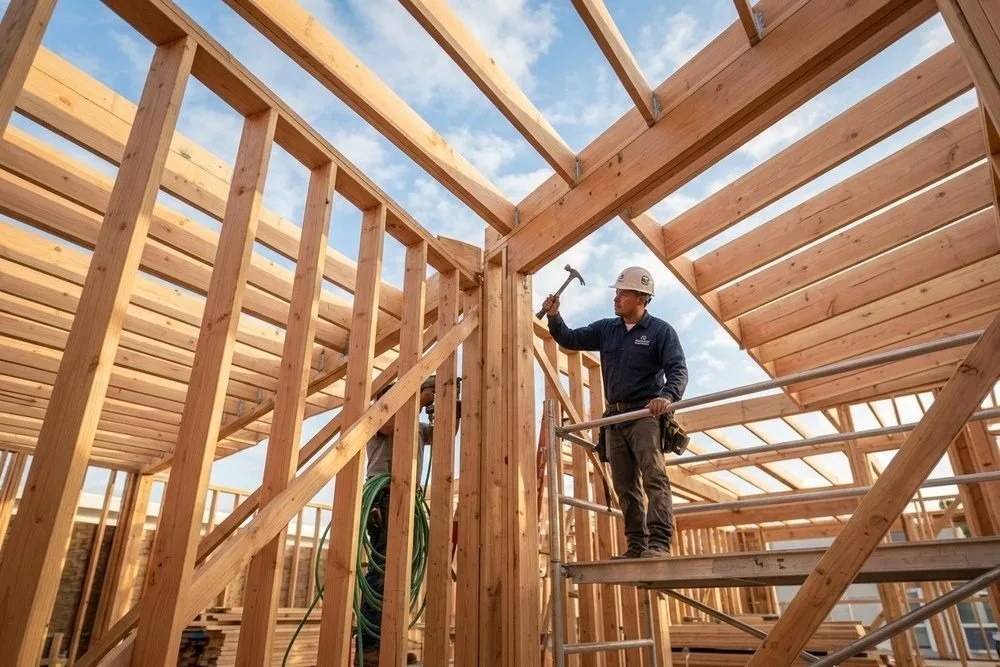
Modern modular from reputable factories produces buildings indistinguishable from stick-frame to occupants. Factory construction in a controlled environment with consistent quality control can actually exceed site construction quality — consistent framing dimensions, better moisture control, factory QC catching issues before they become on-site problems.
Quality concerns that do exist: module connections require careful detailing and inspection (poorly executed connections create air infiltration and acoustic issues); transportation damage to modules is a significant problem if it occurs; and some lenders and appraisers still apply a modest discount to modular construction, though this is less common as the industry has matured.
California-Specific Factors
Seismic requirements: California’s high seismic zone requires structural connections between modules to be engineered for seismic performance standards — adding engineering cost and creating complications for off-the-shelf factory designs developed for lower-seismic markets.
Title 24 energy compliance: California’s Title 24 energy code is among the most stringent globally. Factory-built modules must comply with California Title 24 specifically — limiting how much a developer can use a standard factory design without California-specific modifications.
Labor union considerations: In certain California jurisdictions, modular construction using out-of-state factory labor can create labor relations complications on projects receiving public financing or in union-dense markets.
When Modular Actually Makes Sense
Modular is most compelling in California when: the project is relatively simple and repetitive in design; speed to market is critically important; the site is accessible for large module delivery; the factory is within reasonable transportation distance (ideally within 300 miles); and the developer can accept some design constraints in exchange for timeline and cost benefits.
The Dwell by NextGen Approach
Modular construction is the backbone of Dwell by NextGen, our affordable housing brand focused on factory-built modular home communities. The Dwell model uses modular specifically because our communities are designed around standardized, catalog-design units that maximize factory efficiency — and because our mission of producing housing at up to 50% below conventional construction cost requires extracting every available advantage from the method. The model works because we’ve designed the whole project around modular’s strengths and constraints from the start — not taken a conventionally designed project and asked whether it could be built modular.
For most conventional multifamily development in California — mixed-use urban infill, podium construction, architecturally complex boutique projects — stick-frame built by an experienced construction team with strong subcontractor relationships will typically produce better outcomes. For the right project type, modular can be a genuine competitive advantage.
Frequently Asked Questions