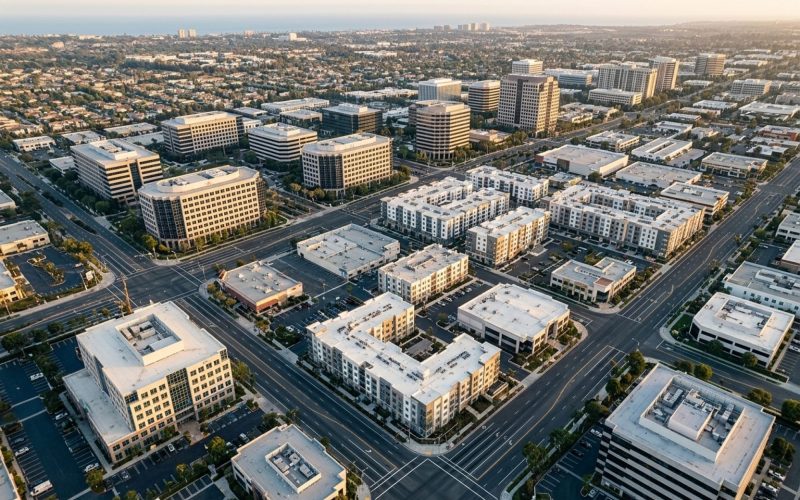
Orange County faces an unprecedented workforce housing crisis, with only 21% of households able to afford the median home price of $1.2 million. This affordability gap has created massive demand for multifamily housing targeting middle-income earners?teachers, nurses, firefighters, and tech workers earning $80,000-$150,000 annually. While developers have focused on luxury units and subsidized affordable housing, the profitable "missing middle" market represents the largest opportunity in OC's development landscape. New state legislation, local incentive programs, and innovative financing mechanisms are finally making workforce housing development financially viable for private developers willing to adapt their strategies.
The Workforce Housing Gap in Orange County
Orange County's workforce housing crisis stems from a fundamental mismatch between housing costs and middle-income wages. Workforce housing typically serves households earning 80-150% of Area Median Income (AMI)—in Orange County, that's $80,000 to $190,000 for a family of four. These earners make too much to qualify for traditional affordable housing but can't afford market-rate units priced for luxury buyers.
The numbers paint a stark picture. While the median household income in Orange County reached $95,000 in 2026, the median home price sits at $1.2 million. Even rental housing has become unattainable—the average two-bedroom apartment rents for $3,200 monthly, requiring an annual income of $128,000 to meet the 30% income-to-rent ratio. This leaves teachers earning $75,000, nurses at $85,000, and firefighters at $95,000 priced out of the communities they serve.
We've seen this impact firsthand in our property management portfolio. Tenant applications increasingly come from households earning $100,000+ who still struggle to qualify for market-rate units. The demand far exceeds supply, creating 95%+ occupancy rates but also highlighting the urgent need for appropriately priced workforce housing.
The gap between workforce incomes and housing costs reveals the scale of Orange County's missing middle housing crisis.
| Housing Category | Annual Income Required |
|---|---|
| Affordable Housing (60% AMI) | $60,000 |
| Workforce Target (100% AMI) | $95,000 |
| Market Rate Rental | $128,000 |
| Median Home Purchase | $240,000 |
The Missing Middle Market Opportunity
The missing middle housing segment represents Orange County's largest untapped development opportunity. This market targets households earning 80-150% AMI who need housing priced 15-25% below current market rates. Unlike subsidized affordable housing with complex compliance requirements, workforce housing can generate market returns while serving a critical community need.
Market research shows Orange County needs approximately 47,000 new workforce housing units by 2030 to meet current demand. Cities like Irvine, Costa Mesa, and Anaheim have identified workforce housing as their top development priority, creating new incentive programs to attract private investment. The key is understanding how to make the economics work without traditional subsidies.

The target demographic includes essential workers, young professionals, and growing families who form the backbone of Orange County's economy. Teachers, healthcare workers, public safety personnel, and tech employees represent stable, long-term tenants with strong credit profiles. This tenant quality translates to lower turnover, reduced vacancy, and more predictable cash flows compared to luxury housing targeting transient high earners.
Key Market Segments
Essential Workers: Teachers, nurses, firefighters, and police officers earning $70,000-$120,000 annually. Many receive employer housing assistance programs that can supplement rent payments, improving tenant quality and payment reliability.
Young Professionals: Entry to mid-level workers in tech, finance, and professional services earning $80,000-$140,000. Often prioritize location and amenities over space, making them ideal tenants for well-designed smaller units in transit-accessible locations.
Growing Families: Dual-income households earning $100,000-$180,000 combined who need family-sized units but can't afford single-family home purchases. This segment drives demand for two and three-bedroom workforce housing units.
Legislative Framework and Incentives
California's recent legislative changes have created unprecedented opportunities for workforce housing development. SB 9 and SB 1211 have streamlined approval processes and expanded development potential, while new local programs offer direct financial incentives for middle-income housing projects.
SB 1211's ADU expansion rules particularly benefit workforce housing strategies. Properties with existing multifamily buildings can now add one detached ADU per unit, capped at eight maximum total ADUs. A six-unit building can add six ADUs, while an eight-unit or larger property maxes out at eight additional units. These ADUs can be deed-restricted for workforce housing while generating additional rental income.
Local jurisdictions have launched targeted workforce housing programs. Costa Mesa's Workforce Housing Overlay allows increased density and reduced parking requirements for projects serving 80-120% AMI households. Anaheim's Teacher Housing Program provides land cost subsidies for developments reserving 25% of units for school district employees. These programs stack with state incentives to significantly improve project economics.
State-Level Incentives
The California Housing Finance Agency (CalHFA) expanded its workforce housing programs in 2026. The Middle Income Housing Program provides 3% interest rate loans for developments where 40% of units serve households earning 80-150% AMI. Projects qualify for streamlined environmental review and expedited permitting through the state's housing accountability programs.
AB 2097's parking requirement elimination applies statewide to developments within half-mile of transit. This reduces construction costs by $15,000-$25,000 per unit in Orange County's high-cost construction market. Combined with workforce housing income targeting, these savings can be passed through to tenants as below-market rents.
Innovative Financing Strategies
Workforce housing development requires creative financing to bridge the gap between construction costs and achievable rents. Traditional bank financing often falls short because underwriters struggle to evaluate below-market rent assumptions. Successful developers are combining multiple funding sources to make projects pencil.
Successful workforce housing projects combine multiple funding sources to achieve viable economics while serving middle-income tenants.
| Funding Source | Percentage of Total |
|---|---|
| Traditional Construction Loan | 45% |
| CalHFA Workforce Housing Loan | 25% |
| Local Housing Trust Fund | 15% |
| Developer Equity | 15% |
CalHFA Middle Income Housing Program provides the foundation with 3% fixed-rate loans up to 90% of total development cost. These loans require 40% of units to serve 80-150% AMI households for 45 years, but allow market-rate rents on remaining units to support project returns.
Local housing trust funds add another layer. Orange County Housing Trust distributes $50 million annually to workforce housing projects, providing gap financing of $25,000-$50,000 per workforce unit. Santa Ana, Huntington Beach, and Irvine maintain separate trust funds with similar programs targeting essential worker housing.
Private sector partnerships are emerging as game-changers. Major employers like Kaiser Permanente, Disney, and UC Irvine are providing master lease guarantees or direct investment in workforce housing projects. These arrangements guarantee occupancy and rent levels, making projects more attractive to traditional lenders.
Employer Partnerships
Forward-thinking employers are recognizing workforce housing as a recruitment and retention tool. Hospital systems struggling to hire nurses are partnering with developers to create dedicated housing complexes. School districts are using bond funding to support teacher housing developments near campus locations.
The most successful partnerships involve long-term lease commitments rather than ownership. Employers agree to lease 25-50% of units in new developments for employee housing, guaranteeing occupancy and rent levels that support project financing. Employees benefit from below-market rents and convenient locations, while developers gain financing certainty.
Strategic Site Selection for Workforce Housing
Successful workforce housing development starts with strategic site selection that balances construction costs, regulatory environment, and target tenant needs. Unlike luxury housing that can command premium rents regardless of location, workforce housing must optimize for affordability while maintaining desirability for middle-income professionals.

Transit accessibility ranks as the top site criterion for workforce housing. Target tenants often commute to job centers in Irvine, Newport Beach, or Los Angeles, making proximity to Metro lines, bus rapid transit, or major highways essential. Sites within half-mile of transit also qualify for AB 2097 parking reductions and local density bonuses.
We've identified several prime workforce housing corridors in Orange County. The Harbor Boulevard corridor from Costa Mesa to Anaheim offers excellent transit connections, lower land costs than coastal areas, and supportive local policies. The Katella Avenue corridor provides access to major employment centers while maintaining affordable land basis. These locations serve workforce tenants' needs while generating developer returns.
Zoning considerations matter significantly more for workforce housing than luxury development. Projects need sufficient density to achieve economies of scale—minimum 25-30 units per acre to support below-market rents. Mixed-use zoning allows ground-floor retail that can subsidize residential rents above. Look for sites where current zoning supports target density or where jurisdiction has indicated willingness to approve increases.
Market-Specific Opportunities
Costa Mesa: The city's Workforce Housing Overlay Zone allows up to 87 units per acre for projects targeting 80-120% AMI. Sites near the OC Fairgrounds and Metro stations offer excellent connectivity to major employment centers. Land costs remain 20-30% below Newport Beach and Irvine.
Anaheim: The city prioritizes workforce housing near transit stations and entertainment district. Teacher Housing Program provides land cost subsidies for education-focused developments. Stadium area redevelopment creates opportunities for mixed-use workforce housing with retail components.
Huntington Beach: Beach proximity commands higher rents while city's inclusionary ordinance provides in-lieu fee alternatives that can fund workforce housing elsewhere. Target sites inland from PCH where land costs support workforce housing economics while maintaining HB school access.
Design and Development Strategies
Workforce housing design requires balancing cost efficiency with quality amenities that attract and retain middle-income tenants. The key is identifying which features provide the highest value to target tenants while controlling construction costs. Smart design choices can reduce per-unit costs by 15-20% compared to luxury multifamily while still delivering an attractive living environment.
Unit mix optimization starts with understanding workforce tenant needs. Target one-bedroom units at 650-750 square feet for young professionals, two-bedroom units at 900-1,100 square feet for couples and small families, and limited three-bedroom units at 1,200-1,400 square feet for larger families. This mix maximizes rental income per square foot while serving diverse household types.
Amenity selection should focus on practical benefits over luxury features. High-speed internet infrastructure, dedicated workspace areas, and package management systems address remote work needs. Fitness centers and community spaces build resident satisfaction without ongoing operational costs. Skip resort-style pools and concierge services that add construction and operational expense without proportional rent premiums.
Cost-Effective Construction Methods
Modular and prefabricated construction methods can reduce workforce housing costs by 10-15% while accelerating delivery timelines. Type V wood-frame construction over concrete podiums provides the most cost-effective approach for 4-5 story buildings. Standardized unit layouts and repetitive design elements further reduce both design and construction costs.
Value engineering should target systems and finishes that don't impact tenant experience. Specify durable but modest interior finishes—luxury vinyl plank flooring instead of hardwood, quartz countertops instead of natural stone, and efficient appliance packages rather than premium brands. Focus upgrade spending on items tenants interact with daily like plumbing fixtures and HVAC systems.
Parking strategy significantly impacts project economics. Utilize tandem parking, compact spaces, and mechanical systems to maximize parking efficiency. In transit-accessible locations, pursue parking reduction variances that can save $20,000+ per eliminated space. Consider unbundling parking from rent to offer car-free tenants lower base rents.
Regulatory Navigation and Approvals
Workforce housing projects face unique regulatory challenges that require specialized navigation strategies. While these developments serve community needs, they still encounter NIMBY opposition and complex approval processes. Success depends on building early stakeholder support and leveraging available streamlining programs.
Start community engagement before formal application submission. Present workforce housing as addressing local needs—teacher housing, nurse housing, essential worker housing. Frame projects around specific community benefits rather than generic affordable housing. Partner with local employers, unions, or community organizations to demonstrate support and need.
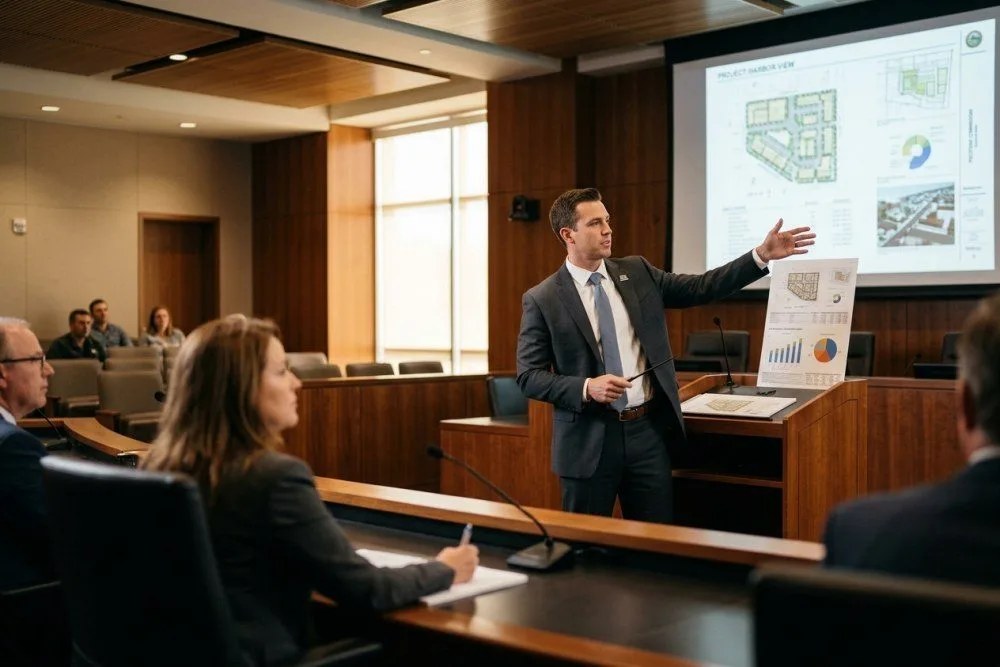
Utilize available streamlining programs aggressively. SB 35 provides ministerial approval for projects where 50% of units serve below 80% AMI. While this threshold exceeds typical workforce housing targeting, hybrid projects can qualify by including some deeper affordability units. AB 2162 offers streamlined approvals for 100% affordable developments that can include workforce housing components.
Environmental review strategy matters significantly for project timelines and costs. Pursue CEQA exemptions where available—infill developments, transit-oriented projects, and sites with existing environmental clearances offer the best opportunities. Budget $150,000-$300,000 for environmental review and mitigation depending on site complexity and local requirements.
Municipal Partnership Strategies
Build genuine partnerships with municipal staff and elected officials rather than treating approvals as adversarial processes. Offer to exceed minimum workforce housing requirements, provide community benefits like childcare facilities or retail spaces, or contribute to local housing trust funds. These gestures build goodwill that smooths approval processes.
Consider public-private partnerships for particularly challenging or strategic sites. Cities increasingly want private partners to deliver workforce housing on publicly-owned land. These arrangements can provide favorable land costs in exchange for longer-term affordability commitments or public benefit components.
Financial Projections and Returns
Workforce housing development can generate attractive returns when properly structured, though the approach differs significantly from luxury multifamily development. Success requires accepting lower rent premiums in exchange for stable, long-term cash flows and potential appreciation upside as workforce housing becomes increasingly valuable.
Workforce housing delivers competitive returns with lower volatility and stronger long-term appreciation potential as demand exceeds supply.
| Development Strategy | Target IRR |
|---|---|
| Workforce Housing (80-150% AMI) | 16.5% |
| Market Rate Luxury | 18.2% |
| Value-Add Existing | 15.8% |
| Subsidized Affordable Housing | 12.4% |
Target workforce housing rents typically run 15-25% below market rate while construction costs remain within 5-10% of comparable market-rate buildings. The key to profitability lies in reducing land costs through municipal partnerships, accessing lower-cost financing through CalHFA and local programs, and achieving operational efficiencies through stable tenant bases.
Our underwriting models show workforce housing developments in Orange County can achieve 15-17% IRRs when properly structured. A 100-unit workforce housing project with total development costs of $65 million can generate stabilized NOI of $3.9 million, assuming average rents of $2,400 for one-bedroom units and $3,200 for two-bedroom units—approximately 20% below current market rates.
Long-term appreciation potential may exceed market-rate housing as workforce housing becomes increasingly scarce. Limited new supply combined with growing demand from middle-income households suggests workforce housing values will outpace general market appreciation over 10+ year hold periods. This dynamic supports buy-and-hold strategies over quick development exits.
Cash Flow Considerations
Workforce housing generates more stable cash flows than luxury housing due to tenant demographics and longer lease terms. Essential workers and established professionals exhibit lower turnover rates, reducing vacancy losses and turnover costs. Many workforce tenants sign 18-24 month initial leases to secure below-market rents, improving cash flow predictability.
Operating expense ratios typically run 35-40% for workforce housing compared to 30-35% for luxury properties. Higher expenses reflect tenant services, property management intensity, and compliance monitoring requirements. However, lower turnover and vacancy losses often offset higher operating ratios, resulting in comparable net operating margins.
Implementation Timeline and Next Steps
Successful workforce housing development requires a carefully orchestrated implementation timeline that coordinates site acquisition, financing, and regulatory approvals. The California development timeline averages 36-48 months from land acquisition to certificate of occupancy, but workforce housing projects can often move faster due to municipal support and streamlined approval programs.
Phase 1 (Months 1-6): Market analysis, site identification, and preliminary financial modeling. Establish relationships with CalHFA, local housing agencies, and potential employer partners. Complete initial site due diligence and zoning analysis. This phase should result in site control and preliminary project feasibility.
Phase 2 (Months 7-18): Formal entitlement process, architectural design development, and construction document preparation. Submit financing applications to CalHFA and local housing trust funds. Finalize employer partnerships and tenant pre-leasing arrangements. Secure construction financing and development permits.
Phase 3 (Months 19-36): Construction phase with regular monitoring of costs, timeline, and quality. Begin marketing to target workforce tenants 6-9 months before completion. Finalize permanent financing and property management arrangements. Prepare for stabilized operations and ongoing compliance monitoring.
The most successful workforce housing developers start with pilot projects of 50-100 units to establish track records and refine operational processes. This approach builds credibility with lenders, municipalities, and community stakeholders while minimizing initial risk exposure. Subsequent projects can scale up based on proven models and established relationships.
Frequently Asked Questions