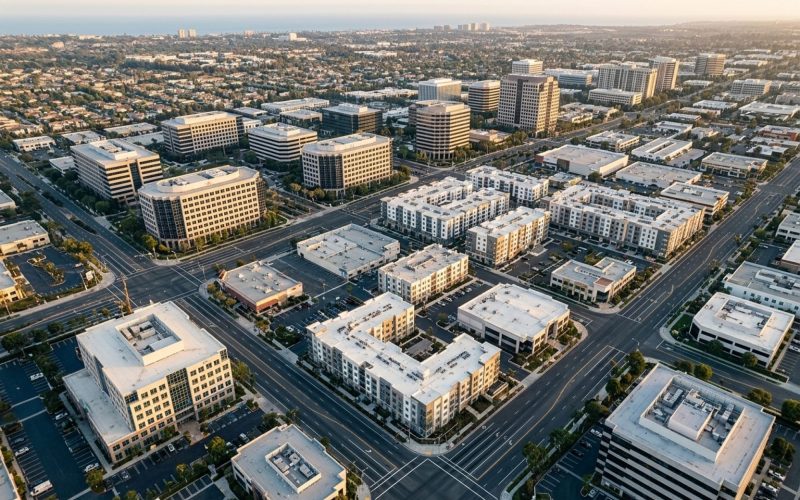
Orange County's multifamily development sector faces unprecedented construction debt challenges in 2026, with traditional lenders tightening requirements and construction costs remaining elevated. Developers who adapt their financing strategies?leveraging alternative capital sources, public incentives, and refined underwriting approaches?maintain competitive advantages in this constrained environment. We're seeing successful projects emerge from developers who diversify funding sources, optimize project timing, and align with California's housing policy incentives. This crisis demands strategic pivots rather than project abandonment.
Orange County Construction Debt Landscape
The construction lending environment has fundamentally shifted since 2024. Traditional bank lenders have pulled back significantly from multifamily construction loans, with many requiring loan-to-cost ratios below 70% and pre-leasing requirements exceeding 50%. Regional banks that historically funded 80% of Orange County's multifamily pipeline now demand additional equity injections mid-construction.
Interest rates on construction loans range from 8.5% to 12% across Orange County submarkets, compared to 6% to 8% in 2022. The construction-to-permanent loan structure has become increasingly rare, forcing developers to secure separate takeout financing upfront. Lenders require detailed stress testing scenarios, including 20% cost overruns and six-month lease-up delays.
We've tracked over $400 million in stalled OC multifamily projects since Q3 2025, with Costa Mesa, Anaheim, and Santa Ana representing the highest concentration of delayed starts. Projects in Newport Beach and Huntington Beach face additional scrutiny due to coastal construction complexities and elevated land basis.

Alternative Construction Financing Sources
Private credit funds have emerged as primary alternatives to traditional bank construction lending. Funds like Blackstone Real Estate Debt Strategies and Starwood Property Trust actively lend on Orange County multifamily projects, typically at 200-400 basis points above bank rates but with faster execution and more flexible terms.
Hard money lenders now handle projects banks previously funded, with established OC lenders offering 18-24 month construction loans at 10-14% interest. These bridge solutions allow developers to maintain momentum while securing permanent financing. Mezzanine debt fills gap financing needs, though at 15-18% returns plus equity participation.
Joint Venture Partnerships
Institutional capital partners increasingly co-develop OC multifamily projects rather than providing traditional debt. Equity partners contribute 40-60% of total project costs in exchange for 50-70% ownership stakes. This structure reduces developer risk while accessing patient capital sources.
Family offices and high-net-worth individuals actively seek direct multifamily development opportunities in Orange County. These relationships often provide more flexible terms and faster decision-making than institutional sources. Regional developers successfully tap local investment groups familiar with OC market dynamics.
Alternative financing sources command premium pricing but offer greater availability than traditional bank construction loans.
| Financing Source | Typical Interest Rate |
|---|---|
| Bank Construction Loan | 8.5% |
| Private Credit Fund | 11.2% |
| Hard Money Lender | 12.5% |
| Mezzanine Debt | 16.5% |
Leveraging Public Incentives and Programs
California's housing crisis has generated substantial public funding for multifamily development. The Multifamily Housing Program (MHP) provides low-cost permanent financing for developments with affordable components. Projects incorporating 15% affordable units access 3% interest rate loans covering up to 50% of total development costs.
Orange County cities increasingly offer fee deferrals, expedited permitting, and tax increment financing for multifamily projects. Anaheim's Housing Opportunity Zone program reduces impact fees by $15,000-25,000 per unit for developments exceeding 50 units. Costa Mesa's streamlined approval process cuts entitlement timelines from 18 months to 10 months for qualifying projects.
State and Federal Tax Credits
Low-Income Housing Tax Credit (LIHTC) projects access both 4% and 9% credit structures, generating equity contributions covering 30-50% of development costs. California's Tax Credit Allocation Committee prioritizes projects in high-opportunity areas, including most Orange County jurisdictions.
Opportunity Zone investments provide tax deferral and elimination benefits for developments in qualified OC census tracts. Santa Ana, portions of Anaheim, and Garden Grove contain designated Opportunity Zones attractive to capital gains investors seeking tax-advantaged multifamily development exposure.

Strategic Underwriting Adjustments
Successful developers have fundamentally adjusted underwriting assumptions to reflect current market realities. Construction cost escalation assumptions now include 15-20% contingencies, compared to 10% historically. Labor cost inflation receives separate line-item treatment given California's construction workforce constraints.
Pro forma rent assumptions incorporate longer lease-up periods and higher concession packages. Orange County multifamily projects now underwrite 12-18 month absorption periods, compared to 8-12 months previously. Initial occupancy assumptions rarely exceed 92-95%, accounting for sustained market competition.
Value Engineering Focus
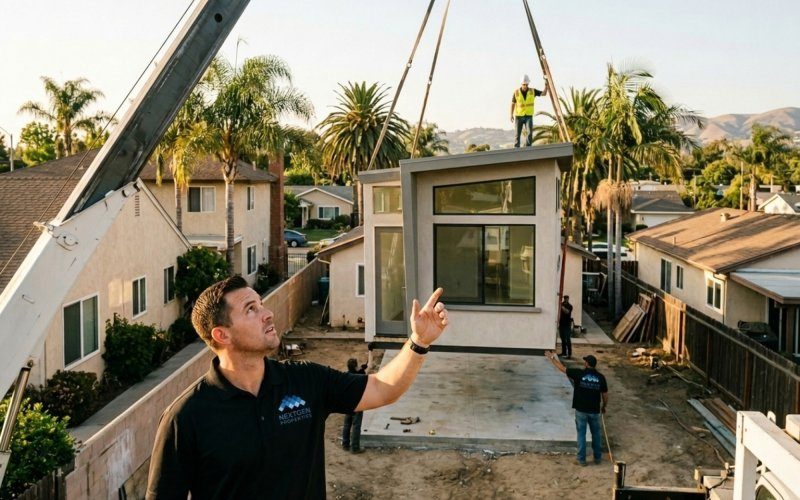
Developers aggressively value-engineer projects without compromising marketability. Modular construction approaches reduce on-site labor requirements and accelerate delivery timelines. Prefabricated bathroom pods and kitchen assemblies cut construction costs by 8-12% while maintaining quality standards.
Unit mix optimization focuses on studio and one-bedroom units commanding highest rent-per-square-foot metrics in OC markets. Two and three-bedroom units require careful market analysis given changing household formation patterns and work-from-home trends affecting space requirements.
Land and construction costs dominate project economics, with financing representing increased share of total development expense.
| Cost Category | Percentage of Total |
|---|---|
| Land Acquisition | 35% |
| Construction | 45% |
| Financing | 12% |
| Soft Costs & Permits | 8% |
Project Phasing and Timing Strategies
Large-scale developments benefit from phased construction approaches that spread risk and capital requirements across multiple years. Phase I completion generates cash flow supporting Phase II financing, while market feedback informs subsequent phase design and unit mix decisions.
Developers time construction starts to optimize labor availability and material costs. Winter construction starts avoid peak summer concrete costs while accessing contractor availability during slower periods. Material procurement strategies include bulk purchasing agreements and long-term supplier contracts locking favorable pricing.
Market Timing Considerations
Economic cycle timing influences construction debt availability and project feasibility. Developers who initiated projects in late 2024 and early 2025 face current financing constraints mid-construction. New project starts benefit from adjusted underwriting reflecting current market conditions.
Interest rate cycle positioning affects construction loan timing and takeout financing strategies. Developers increasingly negotiate rate lock options and interest rate caps protecting against further rate increases during construction periods. Forward rate agreements provide certainty for permanent financing transitions.

Risk Mitigation and Contingency Planning
Enhanced due diligence processes now include detailed subcontractor financial analysis and supply chain risk assessment. Performance bonds and completion guarantees provide additional protection against contractor default or project delays. General contractors with strong balance sheets command premium selections despite higher bid prices.
Developers maintain larger cash reserves throughout construction periods, typically 10-15% of total project costs beyond traditional contingencies. These reserves address unforeseen cost overruns, permit delays, or market timing adjustments without compromising project completion.
Insurance and Hedging Strategies
Comprehensive insurance coverage includes builder's risk, general liability, and professional liability policies with enhanced coverage limits. Delay in start-up insurance protects against revenue losses from extended construction periods or lease-up delays exceeding projected timelines.
Interest rate hedging through caps and collars protects against rate volatility during construction periods. Currency hedging addresses material cost fluctuations for imported building components, while commodity price hedging covers steel, lumber, and concrete cost variations.
Competitive Market Positioning
Successful OC multifamily developments differentiate through amenity packages and location advantages rather than competing solely on rental rates. Pet-friendly policies, electric vehicle charging, and work-from-home accommodations address evolving tenant preferences while supporting premium pricing.
Location selection emphasizes transit accessibility and walkability scores, aligning with California's housing policy priorities while appealing to target demographics. Projects near Orange County's major employment centers command higher rents and faster lease-up despite elevated land costs.
Technology Integration
Smart building systems reduce operating expenses while attracting tech-savvy tenants willing to pay premium rents. Property management technology integration includes automated rent collection, maintenance request systems, and energy management platforms reducing operational complexity.
Virtual touring and leasing capabilities accelerated during the pandemic continue providing competitive advantages in lease-up periods. Developers who invest in comprehensive digital marketing and leasing platforms achieve faster stabilization and reduced marketing costs.
Orange County Success Stories
A 120-unit Costa Mesa project successfully navigated financing challenges by combining private credit fund construction financing with LIHTC equity and local fee deferrals. The developer secured $32 million in total funding despite three traditional bank rejections, achieving groundbreaking in Q4 2025.
In Anaheim, a 85-unit development utilized Opportunity Zone investor equity covering 60% of project costs, eliminating construction debt requirements entirely. The structure provided investors significant tax benefits while ensuring project completion despite market uncertainties.
Our portfolio includes a 65-unit Huntington Beach project that overcame financing obstacles through strategic joint venture partnership with local family office. The partnership structure provided development expertise and local market knowledge while accessing patient capital unavailable through traditional lending channels.
These success stories demonstrate that creative financing solutions and strategic partnerships enable project completion even in challenging capital markets. Developers who remain flexible and explore multiple financing avenues find viable paths forward despite industry headwinds.
Frequently Asked Questions