With 100% bonus depreciation permanently reinstated in 2025, Orange County multifamily investors have unprecedented opportunities to accelerate tax benefits from capital expenditures. The key lies in understanding which improvements qualify, how to properly categorize expenses, and timing strategies that maximize deductions. In our portfolio, we've seen investors reduce taxable income by $200,000 to $500,000 annually through strategic CapEx planning. This guide covers the essential depreciation strategies every OC multifamily owner needs to know, from component segregation to cost basis optimization, ensuring you capture every available tax benefit in 2026.
Understanding CapEx Depreciation Basics
Capital expenditures represent improvements that extend a property's useful life or enhance its value beyond original condition. Unlike repairs and maintenance, which provide immediate tax deductions, CapEx must be depreciated over time—unless you leverage accelerated depreciation strategies.
The distinction matters significantly for Orange County multifamily investors. A $50,000 HVAC system replacement qualifies as CapEx, while a $500 filter change counts as maintenance. Understanding this difference determines whether you take immediate deductions or spread benefits over multiple years.
Depreciation methods vary based on improvement type. Structural components typically depreciate over 27.5 years for residential rental property, while personal property items like appliances and flooring can qualify for accelerated schedules. The IRS requires consistent application of chosen methods across similar property types.
100% Bonus Depreciation Opportunities
The permanent reinstatement of 100% bonus depreciation under the OBBBA (signed July 2025) transformed multifamily investment strategies. The provision applies to qualified property acquired and placed in service after January 19, 2025. This provision allows immediate deduction of qualified property's full cost basis in the year placed in service, rather than spreading deductions over decades.
Qualified property includes most tangible personal property with recovery periods of 20 years or less. For multifamily properties, this covers appliances, carpeting, certain lighting systems, and many building components that don't constitute structural elements.
We've seen Costa Mesa investors apply bonus depreciation to $100,000+ in property improvements, creating substantial tax shields. A 24-unit complex receiving new appliances, flooring, and landscaping improvements can generate immediate deductions exceeding $200,000.
Qualifying vs Non-Qualifying Improvements
Not all capital improvements qualify for bonus depreciation. Structural components like foundations, walls, and roofs typically remain subject to 27.5-year depreciation schedules. However, many items multifamily investors commonly upgrade do qualify.
Qualifying improvements include kitchen appliances, window treatments, certain lighting fixtures, carpeting, and removable flooring systems. Non-qualifying items encompass permanent structural elements such as foundations, walls, roofs, plumbing rough-in, and electrical systems integrated into building structure. Note that parking lots and driveways are classified as 15-year land improvements and do qualify for bonus depreciation.
Component Segregation Strategies
Cost segregation studies identify building components eligible for accelerated depreciation schedules. These engineering-based analyses separate a property's cost basis into categories with different depreciation periods, maximizing near-term tax benefits.
For Orange County multifamily properties, cost segregation typically identifies 15% to 25% of a building's value as personal property or land improvements eligible for shorter depreciation periods. On a $3 million Newport Beach apartment complex, this could reclassify $500,000 to $750,000 from 27.5-year to 5, 7, or 15-year schedules.
The process involves detailed property inspections, construction document reviews, and engineering analysis to support IRS scrutiny. We recommend cost segregation studies for properties exceeding $1 million in value, where potential tax savings justify the $8,000 to $15,000 study cost.
Common Segregation Categories
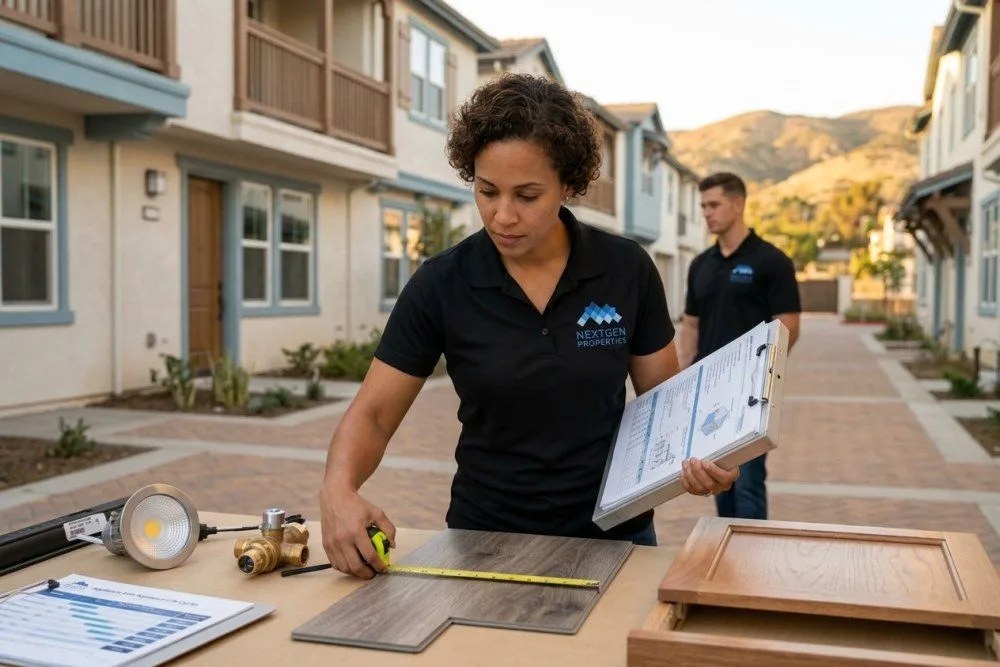
Five-year property typically includes carpeting, window treatments, decorative lighting, and certain appliances. Seven-year property encompasses most furniture and equipment not permanently attached to the building structure.
Fifteen-year property covers land improvements like landscaping, parking lots, sidewalks, and certain site utilities. These items often represent substantial portions of multifamily property values, particularly in landscaped Orange County communities.
Renovation Depreciation Timing
Timing strategies significantly impact depreciation benefits. Properties placed in service late in the tax year still qualify for full-year depreciation deductions, creating opportunities for strategic renovation scheduling.
December property improvements can generate maximum first-year benefits when combined with bonus depreciation. We've helped Irvine investors time $200,000+ renovation projects to capture full depreciation deductions while minimizing vacancy periods.
However, the mid-month convention applies to real property, treating all property as placed in service mid-month regardless of actual dates. This affects structural improvements but not personal property eligible for bonus depreciation.
Multi-Phase Renovation Planning
Large renovation projects benefit from multi-phase timing strategies. Breaking $500,000+ improvements across tax years can optimize depreciation benefits while managing cash flow and financing requirements.
Phase one might focus on qualifying personal property items eligible for bonus depreciation, while phase two addresses structural improvements in subsequent tax years. This approach maximizes immediate deductions while spreading major expenses across multiple periods.
Specific Improvement Categories
Kitchen renovations represent the most common multifamily capital improvements in Orange County. Appliances, countertops, cabinets, and flooring each carry different depreciation treatments requiring careful categorization.
Appliances qualify for bonus depreciation as personal property. Countertops and cabinets may qualify depending on installation methods—permanently attached items typically follow building depreciation schedules, while removable components may qualify for accelerated treatment.
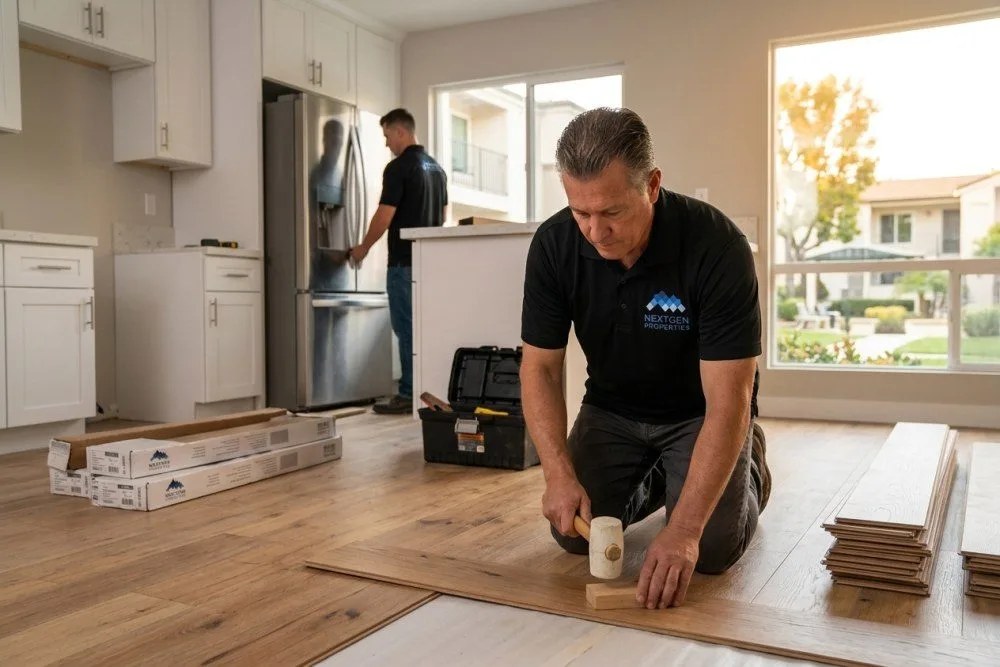
Flooring presents complex categorization challenges. Carpeting clearly qualifies as personal property eligible for five-year depreciation. Hardwood, tile, and luxury vinyl plank flooring may qualify for accelerated schedules if installed as removable systems rather than permanent building components.
HVAC System Improvements
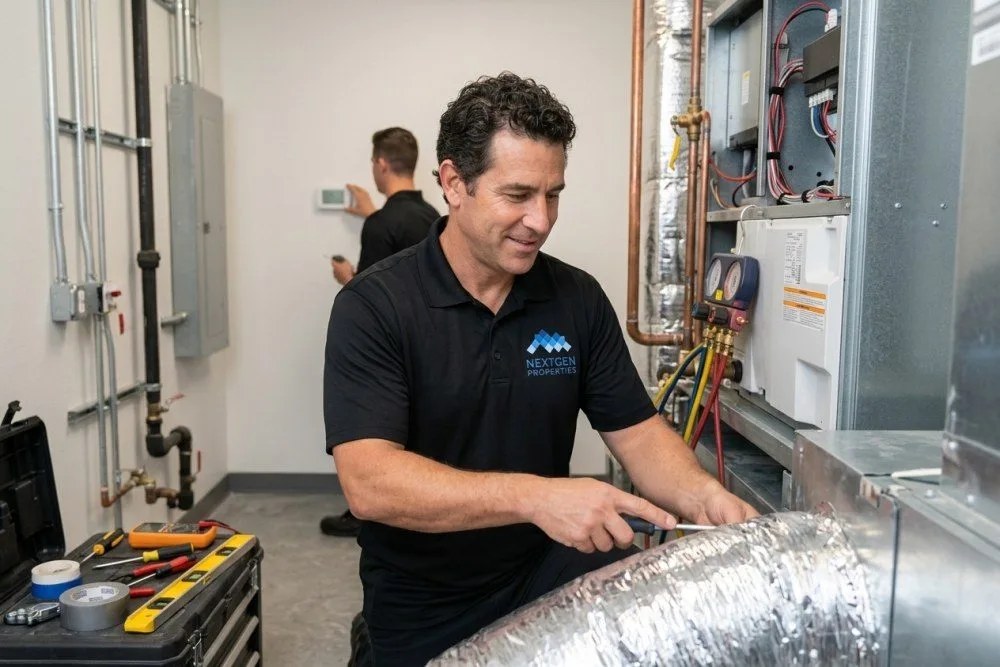
HVAC upgrades represent substantial capital expenditures for Orange County multifamily properties. Central air conditioning systems typically integrate into building structure, requiring 27.5-year depreciation schedules.
However, individual unit systems, ductwork modifications, and certain control systems may qualify for shorter depreciation periods. Window units and portable systems clearly qualify as personal property eligible for bonus depreciation.
Documentation and Compliance Requirements
Proper documentation proves essential for defending depreciation positions during IRS audits. Investors must maintain detailed records showing improvement costs, installation dates, useful life determinations, and depreciation method selections.
Required documentation includes contractor invoices, material receipts, before-and-after photographs, and engineering studies supporting cost segregation positions. We recommend maintaining separate files for each major improvement category with clear cost basis calculations.
The IRS scrutinizes bonus depreciation claims, particularly for large deductions. Detailed contemporaneous records demonstrating qualified property status and proper cost allocation provide essential audit defense.
Professional Support Requirements
Cost segregation studies require qualified engineering or architectural professionals to ensure IRS compliance. These studies must include detailed methodology descriptions, property inspections, and supportable cost allocations based on construction industry standards.
Tax preparation requires experienced professionals familiar with multifamily depreciation rules. The complexity of component segregation, bonus depreciation elections, and timing strategies demands expertise beyond basic tax preparation services.
Common Mistakes to Avoid
Misclassifying repairs as capital improvements represents the most frequent error among multifamily investors. Routine maintenance, minor repairs, and replacements maintaining original property condition qualify for immediate deductions, not depreciation.
The IRS applies strict standards distinguishing repairs from improvements. Replacing a broken window constitutes repair; upgrading all windows to energy-efficient models represents capital improvement. The difference affects both deduction timing and amounts.
Another common error involves improper cost basis calculations. Investors often include soft costs like permits, design fees, and temporary housing expenses in depreciation calculations when some items may qualify for different treatments.
Election and Method Consistency
Depreciation method elections require consistency across similar properties and tax years. Investors cannot arbitrarily change methods without IRS approval, making initial elections critically important for long-term tax strategies.
Bonus depreciation elections apply to entire classes of property, not individual items. Electing bonus depreciation for appliances requires applying it to all qualifying appliances placed in service during the tax year.
Advanced Strategies and Optimization
Like-kind exchanges under Section 1031 can defer depreciation recapture while preserving accumulated tax benefits. Orange County investors upgrading from smaller to larger multifamily properties often utilize exchanges to maintain depreciation advantages.
However, improvements made during exchange periods require careful timing and documentation. The 180-day exchange deadline affects renovation scheduling and may limit improvement scope during transition periods.
We've structured exchanges where Huntington Beach investors sold renovated properties and purchased larger assets, deferring both capital gains and depreciation recapture while scaling their portfolios.
Tax Loss Harvesting
Accelerated depreciation can generate tax losses exceeding current income, creating net operating losses (NOLs) available for carryforward. These losses offset future income, providing ongoing tax benefits beyond immediate deduction years.
The strategy works particularly well for high-income investors facing substantial tax liabilities from other sources. Real estate losses can offset ordinary income up to passive activity loss limitations, with excess losses carrying forward indefinitely.

Implementation and Action Steps
Start with property assessment to identify capital improvement opportunities and potential depreciation benefits. Document current conditions, estimate improvement costs, and evaluate timing considerations for maximum tax advantages.
Engage qualified professionals including tax preparers experienced with real estate, engineers for cost segregation studies, and contractors familiar with depreciation implications of different installation methods.
Develop multi-year improvement plans coordinating renovation timing with tax strategies, financing availability, and market conditions. The goal balances immediate depreciation benefits with long-term property value enhancement and cash flow optimization.
In our portfolio management experience, properties with systematic capital improvement programs paired with strategic depreciation planning consistently outperform those focused solely on operational improvements. The tax benefits provide additional capital for reinvestment, creating compounding returns over time.
Frequently Asked Questions