Orange County multifamily insurance costs jumped 18% in 2025, with wildfire and earthquake coverage driving increases across all property classes. While California doesn't mandate specific rental property insurance beyond basic liability, smart landlords layer multiple coverage types to protect against the region's unique risks. From Huntington Beach coastal properties facing flood exposure to Anaheim complexes in wildfire interface zones, your location drives coverage needs and costs. We'll break down required versus recommended coverage, cost reduction strategies that actually work, and the regulatory changes hitting OC landlords in 2026.
Required Coverage: What California Law Mandates
California doesn't require landlords to carry rental property insurance, but operating without it exposes owners to catastrophic, often portfolio-ending losses. General liability coverage becomes mandatory if you have employees—even part-time maintenance staff triggers workers' compensation requirements under Labor Code Section 3700. Most lenders require comprehensive coverage as a loan condition, making insurance practically mandatory for leveraged properties.
If your property has one or more employees, workers' compensation insurance is legally required. This includes property managers, maintenance staff, leasing agents, and even contracted cleaning crews who work exclusively for your property. Penalties can reach $10,000 per employee under Labor Code §3722, plus stop-work orders; failure to secure workers' compensation is a misdemeanor under §3700.5, and uninsured employers remain personally liable for the full cost of employee injuries.
Fair housing liability coverage isn't legally mandated but has become essential after recent California court decisions. We've seen discrimination lawsuits cost landlords $50,000+ even when claims were questionable. This coverage typically adds $200-400 annually per property but can save six figures in legal costs.
Property Coverage: Protecting Your Physical Assets
Replacement cost coverage is non-negotiable for Orange County multifamily properties. Construction costs hit $450+ per square foot in 2025, making actual cash value policies inadequate for total loss scenarios. We recommend coverage limits at 125% of estimated replacement cost to account for construction inflation and permit delays.
Building ordinance coverage adds 15-20% to premiums but covers costs when rebuilding requires compliance with newer codes. Several Orange County jurisdictions — including Santa Ana — have adopted or proposed soft-story retrofit ordinances, and substantially damaged older buildings typically must be rebuilt to current code during repairs. This coverage pays for the difference between basic rebuilding and code-compliant reconstruction.
Loss of rents coverage should match 12-18 months of gross rental income. Orange County's permit process averages 8-14 months for major reconstruction, and supply chain delays can extend timelines further. This coverage pays ongoing expenses and lost rental income during rebuild periods.
Special Perils Coverage
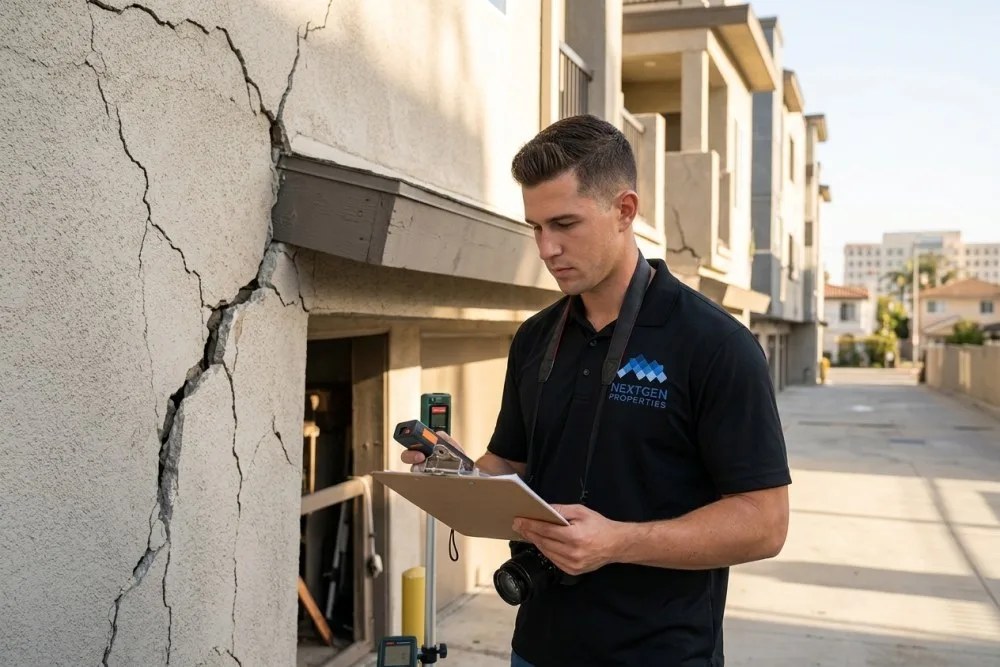
Standard property policies exclude many California-specific risks. Earthquake coverage requires separate policies, but the California Earthquake Authority (CEA) only covers residential properties—homeowners, renters, and condo owners. CEA does not cover commercial multifamily buildings, so apartment owners must obtain earthquake insurance through private carriers, where premiums can be significantly higher and underwriting more restrictive.
Wildfire coverage becomes essential for properties in State Responsibility Areas or near wildland interfaces. Anaheim Hills, Yorba Linda, and parts of Fullerton fall into high-risk zones where some insurers won't write new policies. We've seen premiums increase 40% annually in these areas since 2023.
Flood insurance through NFIP covers up to $500,000 per building and $500,000 for contents for commercial and non-residential multifamily properties (residential 1-4 family limits are lower at $250,000/$100,000). Coastal properties in Huntington Beach and Newport Beach need this coverage despite being outside traditional flood zones—storm surge and king tides cause increasing damage. Private flood insurance offers higher limits but costs 2-3x NFIP rates.
Liability Coverage: Your Legal Protection Shield
Illustrative annual premiums for a stabilized 20-unit Orange County multifamily outside very-high fire and SFHA flood zones, with one part-time maintenance employee. Totals roughly $39,200 per year, or about $1,960 per unit. Scale up roughly linearly with unit count; add 25–40% for wildfire/coastal exposure and 10–20% for properties with full on-site staff.
General liability limits should start at $2 million per occurrence for small properties, scaling to $5 million+ for larger complexes. Orange County's litigious environment and high attorney costs make adequate limits crucial. Umbrella policies provide additional coverage at relatively low cost—typically $300-500 annually for an extra $10 million in protection.
Professional liability coverage protects against property management errors, lease violations, and fair housing claims. This coverage costs $400-800 annually per property but covers legal defense costs that easily exceed $25,000 for minor disputes. It's especially important if you self-manage or use smaller property management companies.
Cyber liability insurance emerged as essential after California's Privacy Rights Act took effect in 2023. Multifamily properties store sensitive tenant data, making them targets for ransomware and data breaches. Coverage typically costs $200-400 per property annually and covers notification costs, credit monitoring, and business interruption from cyber attacks.

Employment Practices Liability
If you employ on-site staff, employment practices liability insurance (EPLI) protects against discrimination, harassment, and wrongful termination claims. California's employee-friendly laws make this coverage increasingly important. Premiums range from $1,500-3,500 annually depending on employee count and property size.
EPLI coverage should include third-party liability protection—covering claims by tenants against your employees. We've handled cases where residents alleged harassment by maintenance staff, leading to costly settlements even when claims were unfounded.
Cost Reduction Strategies That Actually Work
Risk mitigation provides the best long-term cost control. Security system installations can reduce liability premiums by 5-15%. Modern systems with 24/7 monitoring, key fob access, and comprehensive camera coverage demonstrate proactive risk management to insurers.
Raising deductibles from $2,500 to $10,000 delivers the biggest single-lever savings, while claims-free history and package bundling each contribute double-digit discounts
Preventive maintenance programs show insurers you're serious about loss prevention. Properties with documented HVAC maintenance, regular roof inspections, and proactive plumbing care qualify for loss-control credits. We track maintenance in property management software and provide annual reports to insurers during renewal negotiations.
Higher deductibles significantly reduce premiums but require careful cash flow planning. Increasing deductibles from $2,500 to $10,000 typically saves 15-25% on property coverage premiums. However, ensure you can handle multiple claims in a single year—earthquake damage often affects entire regions simultaneously.
Shopping and Negotiation Tactics
Insurance markets are hardening, but competition still exists for well-maintained properties. Package policies bundling property, liability, and auto coverage often provide 10-20% savings compared to separate policies. However, avoid sacrificing coverage quality for bundling discounts.
Annual shopping pays dividends in California's volatile insurance market. We recommend getting renewal quotes 90 days early and shopping with at least three carriers. Switching costs are minimal, but improved coverage terms often matter more than premium savings.
Multi-year rate guarantees locked in favorable terms before recent increases. Some carriers offer 2-3 year rate locks in exchange for slightly higher initial premiums. This strategy worked well for our portfolio—properties locked in 2023 rates avoided 2025's 18% average increases.
The Great California Carrier Pullout: Who's Still Writing?
Orange County multifamily owners are shopping into a market that looks nothing like it did five years ago. The national carriers that used to anchor the admitted market in California have either stopped writing new business, stopped renewing existing policies, or quietly tightened underwriting to the point of de facto exit.
State Farm — historically the largest property insurer in California — announced in May 2023 that it would stop accepting new applications for property insurance in the state, including business lines, citing construction cost inflation, catastrophe exposure, and a hardening reinsurance market. In March 2024, State Farm General followed up by non-renewing roughly 72,000 home and apartment policies in California beginning mid-2024. For multifamily owners whose policies renew on the wrong side of that wave, replacement coverage has been the single biggest renewal headache of the last two years.
Allstate paused writing new homeowners, condo, and commercial property policies in California in November 2022 and has remained largely closed to new business since. Farmers capped new homeowner policies in California at 7,000 per month starting July 2023 and significantly tightened commercial appetite at the same time. Liberty Mutual, USAA, AIG, and Chubb have all pulled back on higher-value and catastrophe-exposed risks, and several surplus-lines carriers have non-renewed entire books of California multifamily business.
The practical impact for Orange County owners: the admitted market for multifamily has shrunk dramatically, binding timelines have stretched from days to weeks, and many properties — especially older buildings, wildfire-exposed assets, and anything with prior claims — now live in the surplus-lines and excess & surplus (E&S) markets, where coverage is narrower, deductibles are higher, and premiums run 30–80% above historical admitted-market rates. The California FAIR Plan has become the property-insurer-of-last-resort for thousands of formerly insurable buildings, but FAIR Plan policies cover only basic perils (fire, lightning, internal explosion) and nothing else — you still need a separate "difference-in-conditions" (DIC) policy for water, theft, liability, and the rest.
What this means for your renewal strategy: start shopping 120 days out, not 90; work with a broker who has live appointments in both the admitted and E&S markets; and don't let a policy lapse waiting for a better quote. Going uninsured for even a day in this market can void your lender covenants and make you effectively uninsurable at renewal.
The Habitability Coverage Gap Nobody Tells You About
Here's the dirty secret of the current California multifamily insurance market: most general liability policies now exclude habitability claims entirely. If you're renewing with the same broker you've used for a decade and haven't read the exclusion schedule line-by-line, you probably have this gap and don't know it.
"Habitability" claims are lawsuits brought by tenants under California Civil Code §§1941–1942 and the implied warranty of habitability — alleging that the landlord failed to maintain the premises in a habitable condition. In practice, that means claims tied to mold, bed bugs, cockroach and rodent infestations, water intrusion, lack of heat or hot water, sewage backups, lead paint exposure, and failure to repair. California plaintiffs' firms have industrialized this area of law, and a single habitability lawsuit involving a handful of units can settle for six or seven figures.
Starting around 2021–2022, admitted carriers began adding absolute habitability exclusions to commercial general liability policies covering California multifamily — often buried in a "Fungi, Bacteria, and Habitability" exclusion endorsement. Some policies exclude only mold and bacteria; others exclude the entire category of habitability-based tenant claims, including defense costs. If your GL policy has one of these exclusions and you get sued for habitability, your insurer will deny the claim and walk away from the defense, leaving you to fund both the settlement and the legal bills out of pocket.
The fix is a separate habitability policy or endorsement. A handful of surplus-lines carriers (and a growing number of specialty MGAs) write standalone "habitability liability" or "tenant discrimination and habitability" policies specifically designed to fill this gap. Typical limits run $1M–$5M per occurrence, with premiums ranging from $2,500 to $8,000+ annually depending on unit count, building age, prior claims history, and whether the policy includes defense inside or outside the limit. Buildings with prior habitability claims, properties over 40 years old, and portfolios in Santa Ana or older parts of Anaheim tend to land at the top of that range.
What to do right now: pull your current CGL policy and search the declarations and exclusion pages for the words "habitability," "fungi," "bacteria," or "pollution." If any of those appear in an exclusion endorsement, assume you have a gap and ask your broker — in writing — whether habitability claims are covered, whether defense is covered, and what it would cost to add a standalone habitability policy. Get the answer in writing before you renew.
2026 Regulatory Changes: New Requirements
Wildfire risk areas face the steepest insurance cost increases at 25-40%, while general market increases of 18% affect all Orange County properties
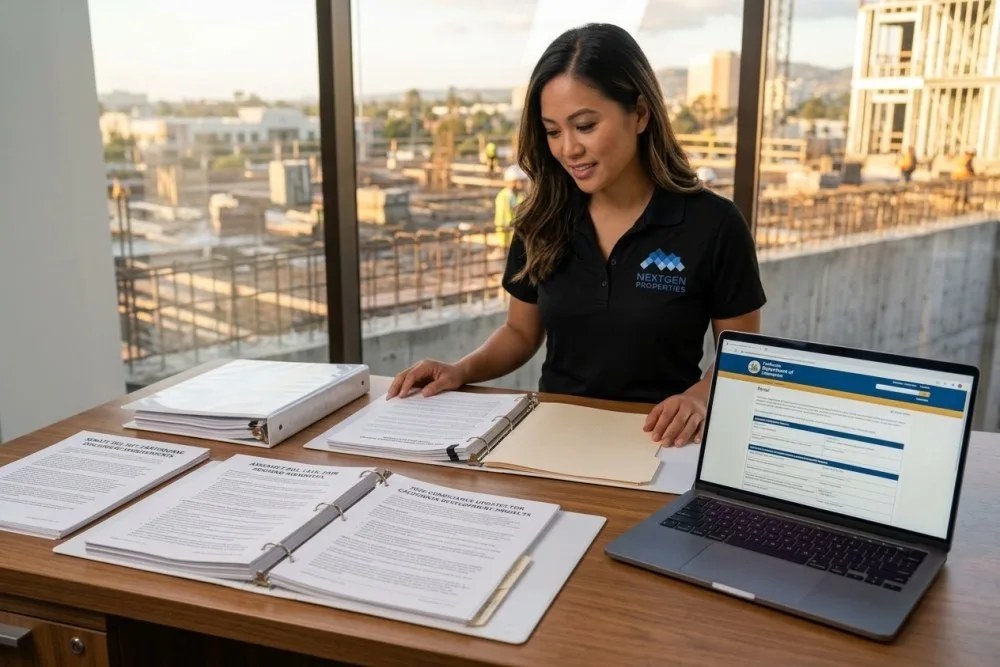
California's Natural Hazard Disclosure Statement (Civil Code §1103) requires sellers to disclose whether a property sits within a mapped earthquake fault zone, seismic hazard zone, or wildfire/flood hazard area. While the formal NHDS is a sales-transaction requirement rather than a lease requirement, multifamily owners should still document each property's hazard-zone status in their files — it directly drives earthquake and wildfire insurance pricing, informs reserve planning, and becomes critical during any future sale or refinance.
The California Department of Insurance expanded wildfire risk mapping in 2025, adding previously unclassified areas to high-risk zones. Properties in newly designated areas face mandatory wildfire coverage requirements and premium increases averaging 25-40%. Check CAL FIRE Fire Hazard Severity Zone maps (fire.ca.gov) annually, and remember the California FAIR Plan remains the insurer of last resort when admitted carriers decline coverage in very high fire hazard severity zones.
Workers' compensation auditing intensified under new Labor Code amendments. The state now cross-references property management contracts with employment records to identify misclassified workers. Independent contractors performing regular maintenance duties may be reclassified as employees, triggering retroactive premium assessments.
Fair Housing Insurance Expansion
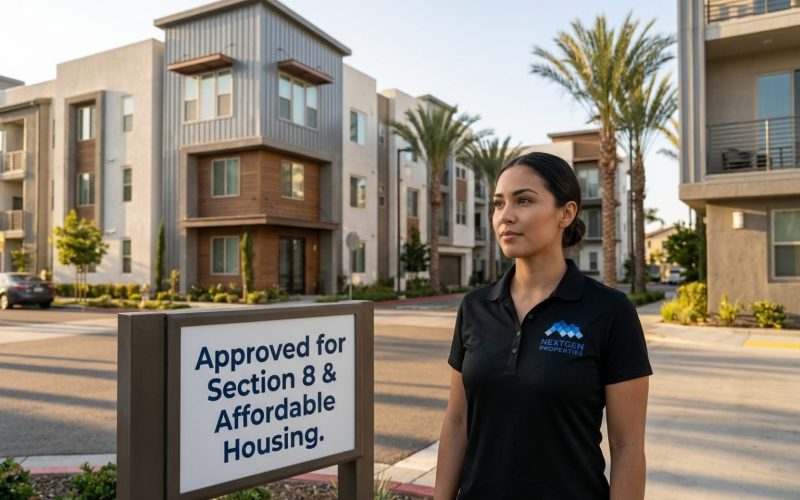
SB 329 (2019) established broad "source of income" protections, making it illegal to discriminate against tenants using housing vouchers such as Section 8. Fair housing liability insurance now covers legal costs when landlords face discrimination claims for refusing housing vouchers, and compliance is mandatory statewide regardless of local ordinances.
Enforcement has expanded as well: HCD and local fair-housing agencies now investigate source-of-income complaints aggressively, and insurers increasingly require documented fair-housing training and written screening criteria before binding or renewing liability coverage. Keep dated training records, uniform written screening policies, and voucher-acceptance language in all advertisements — these are the artifacts underwriters and plaintiff attorneys both look for.
Location-Specific Risks Across Orange County
Blended all-in annual insurance cost per unit (property + GL + earthquake + umbrella + specialty) for a stabilized 20-unit multifamily property. Coastal and wildfire-exposed cities carry the steepest premiums; inland, low-hazard submarkets run 25–30% cheaper for the same coverage stack.
Coastal properties from Huntington Beach to San Clemente face unique flood and erosion risks. NFIP flood insurance rate maps in much of coastal Orange County predate the latest sea-level-rise and storm-surge modeling, leaving many properties technically outside mapped flood zones despite growing real-world exposure. Private flood insurance provides broader coverage but costs 2-3x NFIP premiums.
Inland properties near Cleveland National Forest or other wildland interfaces need specialized wildfire coverage. Anaheim Hills, Orange Hills, and parts of Yorba Linda fall into "very high fire hazard severity zones" where some insurers won't write new policies. Existing policies face non-renewal notices as carriers reassess California wildfire exposure.
Airport proximity affects coverage for properties near John Wayne Airport. Aircraft liability exclusions in standard policies may leave gaps for properties within flight paths. Specialized aviation liability coverage costs $300-600 annually but covers risks standard policies exclude.
Submarket Premium Variations
Insurance costs vary significantly across Orange County submarkets. Newport Beach and Huntington Beach coastal properties pay 20-30% premiums above inland averages due to flood and wind exposure. However, these areas often have lower crime rates, reducing liability costs.
Santa Ana and parts of Anaheim see higher liability premiums due to crime rates and lawsuit frequency. However, these areas typically avoid wildfire and flood surcharges, creating complex cost trade-offs when evaluating properties across different submarkets.
Claims Management: Protecting Your Interests
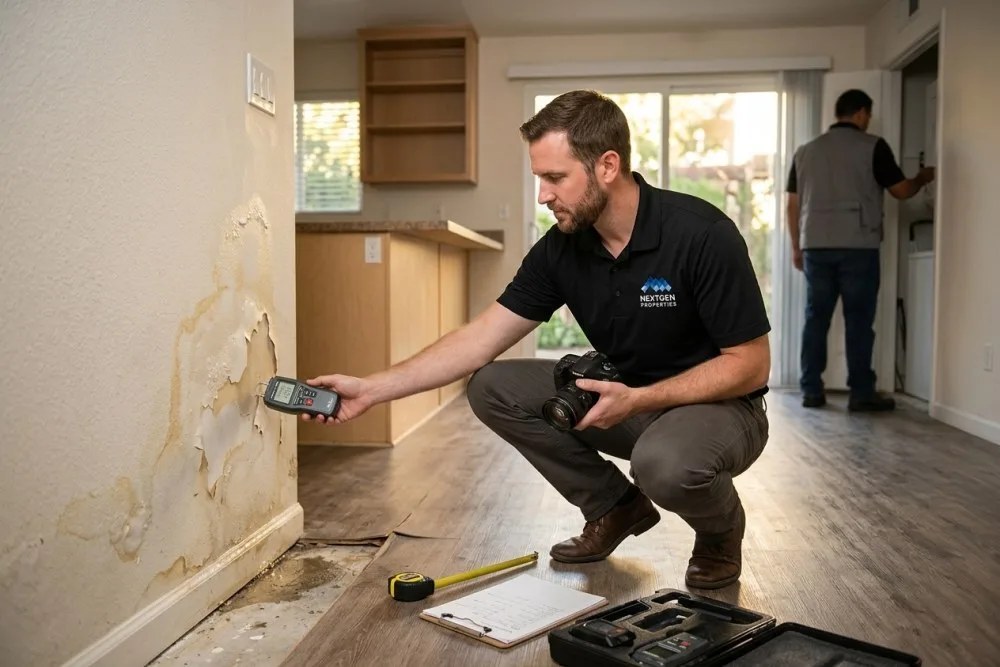
Immediate response protocols can make or break large claims. Document everything with photos, preserve evidence, and notify insurers within required timeframes—typically 24-72 hours for property damage. Late notification can void coverage even for valid claims.
Public adjusters can be valuable for complex claims but charge 10-15% of settlement amounts. We recommend public adjusters for claims exceeding $100,000 or when dealing with coverage disputes. For smaller claims, work directly with insurance company adjusters but document all conversations in writing.
Vendor management during claims prevents inflated repair costs and ensures quality work. Insurance companies often recommend contractors, but you're not required to use them. Get multiple bids, verify licenses and insurance, and maintain control over the repair process.
Tenant Communication During Claims
Clear tenant communication prevents liability issues during claims. Provide written notices about repairs, temporary relocations, and expected timelines. California's habitability laws require alternative housing for displaced tenants, and these costs should be covered under loss of rents provisions.
Document all tenant interactions during claims. Verbal promises about repair timelines or compensation can create legal obligations beyond insurance coverage. Use written communication and have tenants acknowledge receipt of important notices.
Future-Proofing Your Coverage Strategy
Climate change continues altering California risk profiles. Wildfire zones expand annually as drought conditions persist and development pushes into wildland interfaces. Properties currently outside high-risk areas may face reclassification within 3-5 years, triggering mandatory coverage requirements and premium increases.
Earthquake science evolves constantly, with new fault discoveries and risk modeling updates. The Puente Hills fault system running through Orange County receives increased attention from geologists, potentially affecting earthquake premium calculations for properties in previously lower-risk areas.
Technology integration in insurance continues expanding. Smart building sensors can provide real-time risk monitoring and potentially reduce premiums through demonstrated loss prevention. Water leak sensors, smart locks, and environmental monitoring systems increasingly factor into underwriting decisions.
Legislative Trends
California continues expanding tenant protection laws, creating new liability exposures for landlords. Future legislation may require additional insurance disclosures, mandate specific coverage types, or expand fair housing liability beyond current requirements. Stay connected with industry associations and legal counsel to anticipate changes.
Climate adaptation requirements may soon mandate specific coverage types for properties in vulnerable areas. Sea level rise planning documents already identify areas requiring future adaptation measures, and insurance requirements may follow zoning and building code changes.
Your 2026 Insurance Action Plan
Start with a comprehensive coverage audit comparing current policies against the recommendations in this guide. Coverage gaps are common in older policies that haven't kept pace with California's evolving risk landscape and regulatory requirements.
Schedule annual insurance reviews 90 days before renewal dates. Market conditions change rapidly, and carriers regularly adjust appetite for California multifamily risks. Early shopping provides leverage in negotiations and ensures adequate time for thorough coverage evaluation.
Document everything related to risk mitigation efforts. Maintenance records, security system reports, employee training certificates, and safety improvements all support premium negotiations and claims defense. What's not documented didn't happen in insurance companies' eyes.
Orange County property management requires sophisticated insurance strategies matching the region's unique risk profile. From earthquake exposure to regulatory complexity, proper coverage protects both your assets and your ability to operate profitably in California's challenging market environment.
Frequently Asked Questions