Huntington Beach offers coastal OC returns at a more accessible price point than Newport ? with a tenant profile spanning young professionals, military families, and aerospace workers. Here's what HB landlords should know about managing property effectively in this market.
Huntington Beach is one of Orange County's most active and distinctive rental markets — a coastal city with strong tenant demand across a genuinely wide range of price points, a building stock that spans beach bungalows to 1980s apartment complexes, and a landlord environment shaped by California's statewide tenant protection laws. Managing HB rental property well means understanding the city's submarket dynamics, the marine environment's effect on maintenance, and the specific STR regulatory landscape that shapes long-term rental demand. NextGen Properties provides expert Huntington Beach property management across this high-demand coastal market.
Huntington Beach by Neighborhood
The rent spread across Huntington Beach is among the widest of any OC city — driven by proximity to the ocean and the downtown corridor.
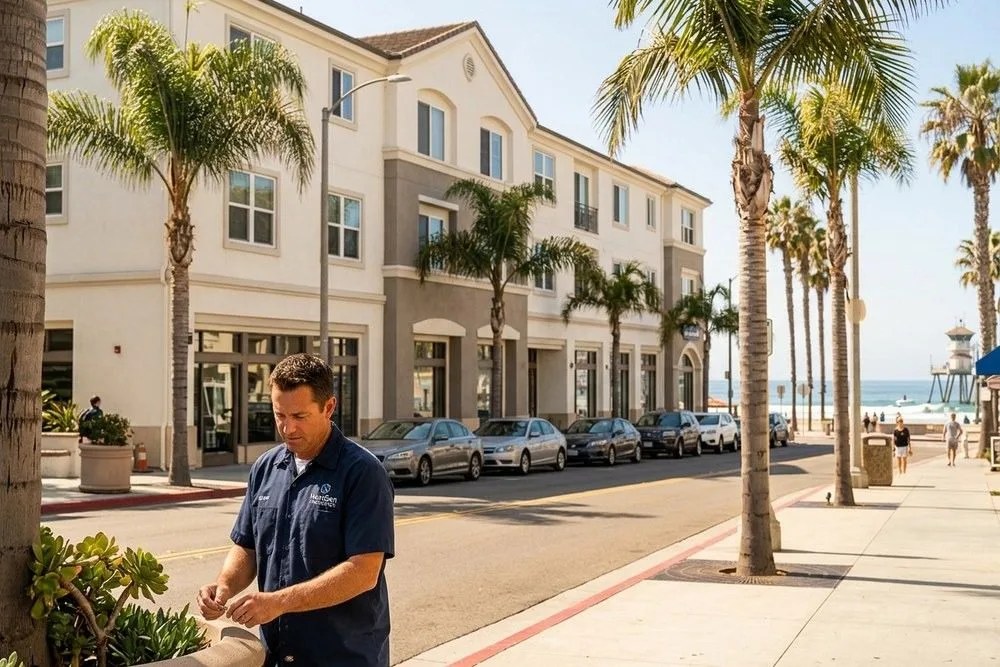
Downtown and beach corridor (Main St–Pacific Coast Hwy). The highest-demand pocket in HB. 2BR rents run $2,800–$4,000+ for well-positioned units. Walkability to the beach, pier, and restaurant district commands a premium that holds even in softer markets. Tenant demand is intense; vacancy is effectively zero for well-maintained units at market rent.
South Huntington Beach. South of Atlanta Ave, closer to Bolsa Chica and the quieter stretches of beach. More residential character, strong family demand, 2BR rents of $2,400–$3,200. Excellent tenant stability — families who settle here don't move often.
North Huntington Beach (above Slater Ave). Transitions toward the 405 corridor and more inland character. Rents $2,100–$2,700 for 2BRs. Broader tenant pool including commuters, working families, and healthcare workers from nearby HBMC. Higher turnover than south HB but also more supply and faster leasing.
Huntington Harbour. The only waterfront community in HB proper — a marina community with a distinctly different tenant profile (boating lifestyle, higher income, longer tenancy). Limited supply; premium rents.
Rental Market Fundamentals
Huntington Beach rental demand is driven by the lifestyle draw of its surf culture, walkable downtown, and access to miles of Pacific coastline. Average 2BR rents run $2,400–$3,400/month across the city, with beachfront properties commanding meaningful premiums. The tenant base is broad — young professionals, families, and lifestyle renters drawn to the beach-town character — which makes HB more resilient to demand shocks than more narrowly targeted markets. Vacancy typically runs 2–3%, with the beach corridor tighter than inland neighborhoods. Cap rates range from 4.0–4.8%, with coastal properties at the tighter end of the range.
Building Stock: What You're Actually Buying and Managing
Huntington Beach's housing inventory spans several decades with meaningfully different management implications by era.
Beach bungalows and small-lot cottages (pre-1970). Character-rich, often with below-market rents from long-term tenants. The management challenge is bringing these to current habitability and maintenance standards without triggering Costa Mesa-style gentrification dynamics. Excellent long-term hold properties when managed correctly.
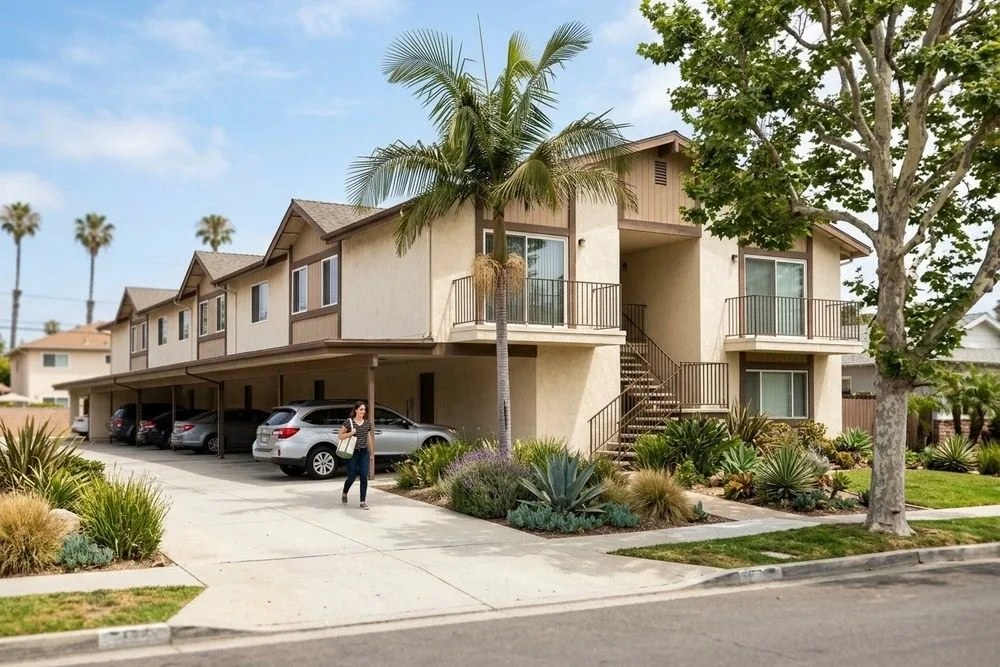
1970s–80s apartment complexes. The largest share of HB's rental supply. Typically 8–24 units, stucco construction, carports, pool where the lot allows. These buildings require active maintenance management — galvanized plumbing is common, electrical panels may be undersized, and the coastal environment accelerates exterior wear.
1990s–2000s townhome and condo communities. Newer construction, often HOA-governed, higher rents. Attract professionals who want more space and private garage. Less maintenance intensive but add HOA coordination complexity.
Post-2010 construction. Limited supply in HB proper due to coastal land constraints. Where it exists, it commands premium rents and draws tenants who compare it directly to institutional coastal apartments in Newport Beach.
The Marine Environment and Your Maintenance Budget
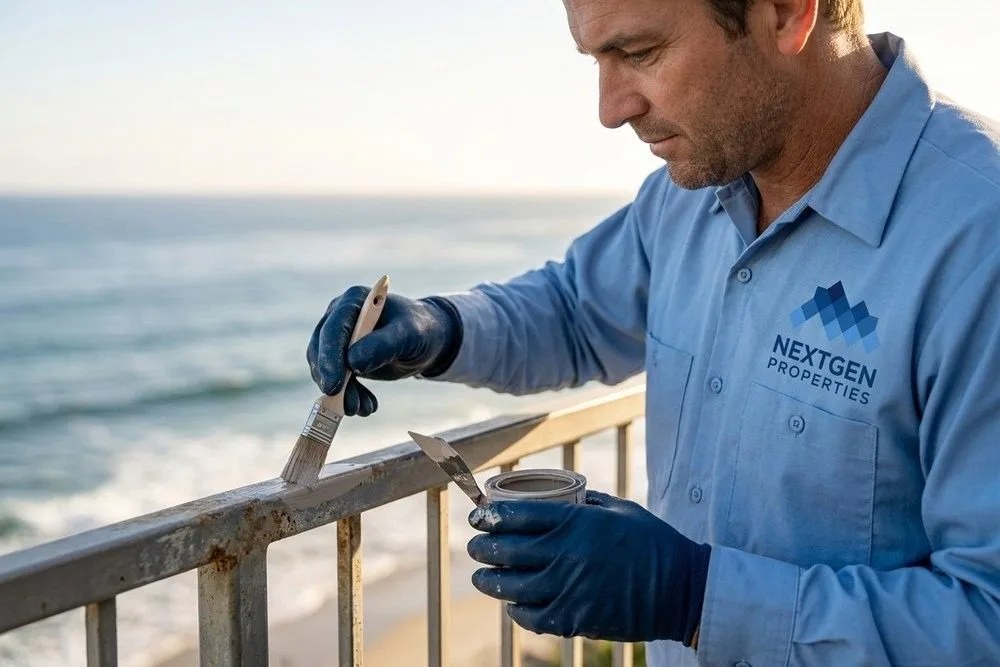
Huntington Beach's coastal position creates a specific maintenance challenge that inland OC landlords don't face: salt air. Salt air is corrosive to metal, and in a typical HB apartment complex, that means accelerated wear on exterior railings, HVAC condenser units, door hardware, exterior light fixtures, and window frames. What looks cosmetic often isn't — surface rust on structural railings is a safety and liability issue, not just an aesthetic one.
A proactive coastal maintenance program for a typical HB apartment complex includes: annual exterior inspection with focus on metal components, repainting on a 5–7 year cycle (not 10+), HVAC service contracts that include coastal environment-specific checks, and stainless steel or galvanized hardware at replacement. The cost of this program is meaningfully lower than the cost of deferred maintenance at coastal properties — where a single structural railing replacement on a balcony-heavy 1980s building can run $30,000–$80,000.
Huntington Beach Short-Term Rental Regulations
Huntington Beach regulates STRs with a permit system that has meaningful restrictions for non-owner-occupied properties. Owner-occupied STRs are permitted citywide with a valid permit. Non-owner-occupied STRs are prohibited in most residential zones — only legacy-permitted properties in the Sunset Beach area are allowed to operate. Enforcement is active, particularly in neighborhoods adjacent to the downtown corridor.
The practical effect: long-term rental operators in HB compete for qualified tenants in a market where the STR supply is constrained, particularly near the beach. A well-managed long-term rental in the beach corridor attracts quality tenants who want to live — not just visit — in Huntington Beach. That's a strong demand dynamic for landlords who manage their properties well.
If you're considering converting a property from STR to long-term rental, or you're acquiring a property that was operated as an STR, NextGen can advise on the compliance transition, lease positioning, and tenant qualification strategy for your specific location and building type.
AB 1482 and Tenant Compliance in HB
Most Huntington Beach rental properties built more than 15 years ago are subject to AB 1482's annual rent cap of 5% + local CPI and just cause eviction requirements after 12 months. Huntington Beach does not have its own local rent control ordinance — AB 1482 is the framework that governs most landlord-tenant relationships in the city. Proper notice procedures, current lease documentation, and rent increase tracking are the compliance basics that most self-managing landlords get wrong over time, particularly as tenancy timelines extend.

Why NextGen Properties for Huntington Beach
NextGen Properties manages rental properties across Orange County's coastal and mid-county markets, with active inventory in Huntington Beach spanning beach corridor units to inland complexes. Our team understands HB's submarket rent dynamics, the city's STR regulatory environment, the marine maintenance requirements specific to coastal properties, and the tenant profile that makes HB's long-term rental market one of the strongest in OC.
No vendor markups. Full transparency on fees. Real-time owner reporting. Thirty-day mutual termination. That's how we operate in every market we manage.
Talk to NextGen about managing your Huntington Beach property.
Frequently Asked Questions