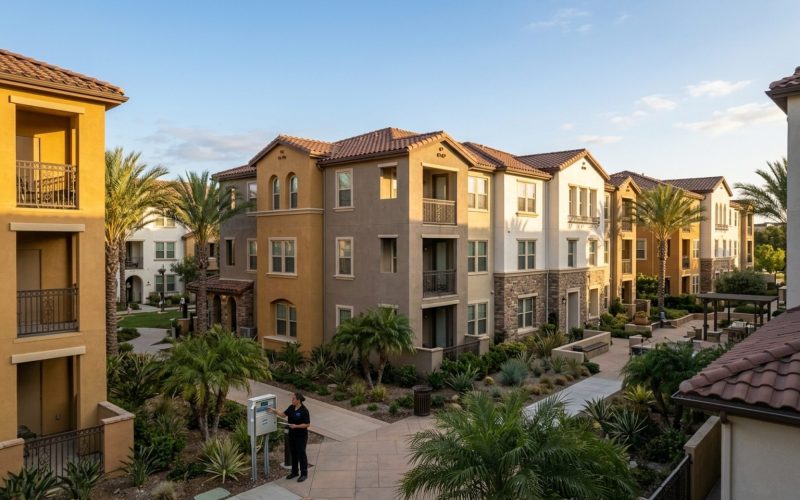
Short-term rental (STR) regulations in Orange County vary dramatically by city ? from active permit programs in Newport Beach and Laguna Beach to restrictive stances in inland cities. Before listing any OC property on Airbnb or VRBO, you need to know your city's specific rules. Here's the city-by-city breakdown for 2025.
Orange County's coastal cities have been managing short-term rental regulation for years. The tension between property rights, housing availability, and neighborhood character has produced a patchwork of rules that differ significantly from one city to the next. Getting this wrong means fines, permit revocation, and forced listing removal.
Newport Beach
Newport Beach has one of the most active short-term rental markets in California. The city allows STRs through a permit program with specific requirements: a valid business license, transient occupancy tax (TOT) registration, compliance with maximum occupancy limits, and noise and parking compliance. The city actively enforces STR rules — permits can be suspended or revoked. Newport Beach collects TOT on all STR income and requires hosts to file quarterly. The Peninsula and Balboa Island are particularly active STR markets. New operators should expect neighbor scrutiny and active city oversight.
Tap any bar to see the specific rules for that city. Scale of 1–10 reflects permit difficulty, enforcement activity, and operational restrictions. Data as of early 2026.
| Category | Regulatory Complexity (1–10 scale) |
|---|---|
| Newport Beach | 9 |
| Laguna Beach | 8 |
| Huntington Beach | 7 |
| Dana Point | 7 |
| Anaheim | 6 |
| San Clemente | 5 |
| Costa Mesa | 4 |
| Irvine | 9 |
| Unincorp. OC | 3 |
Huntington Beach
Huntington Beach's STR regulations have been more restrictive and subject to change. The city has historically required permits for STRs in the Coastal Zone and has at various points restricted new permit issuance. As of 2025, prospective STR operators in HB should verify current permit availability directly with the city — the regulatory environment has been in flux. Unregistered STR operation in HB carries significant fines.
Laguna Beach
Laguna Beach allows STRs but requires a short-term rental permit, business license, and TOT registration. The city has enacted significant restrictions — including owner-occupancy requirements in some zones and prohibition of STRs in certain residential districts. The Coastal Zone adds another layer: some coastal properties require Coastal Development Permits for STR operations. Laguna Beach enforcement is active and neighbor complaints are taken seriously.
Anaheim and Inland OC
Anaheim has been more restrictive with STRs in residential neighborhoods despite having Disney tourism demand. The city has not established a broad STR permit program for residential zones, and operating without authorization risks code enforcement action. Other inland OC cities including Irvine, Orange, and Fullerton have generally restrictive stances on residential STRs.
Unincorporated Orange County
Properties in unincorporated OC areas — parts of Coto de Caza, Ladera Ranch, Foothill Ranch — are governed by county regulations rather than city rules. The county has its own STR permit program. Check with OC Planning and Development Services for current requirements.

Key Compliance Requirements Across OC
Regardless of city, virtually all OC STR programs require: a permit or license, TOT registration and remittance, maximum occupancy limits (typically 2 per bedroom plus 2), noise and parking compliance, a local contact reachable 24/7, and liability insurance. Platforms like Airbnb collect and remit TOT in some jurisdictions — but the permit and compliance obligations remain with the property owner regardless of what the platform does.
Frequently Asked Questions