Market data, investment analysis, and landlord intel — direct to your inbox every week. No spam.
OC submarket vacancy & rent data
Cap rate & deal analysis
CA landlord law updates
Tenant Retention in Orange County The True Cost of Losing a Good Tenant
Chris Kerstner
6 min read
30-Second Summary
A single vacancy in Orange County costs $3,500–$7,000+ when you account for lost rent, turnover prep, leasing fees, and marketing time. Most of that cost is preventable. Fast maintenance response, proactive renewal outreach 90 days out, included amenities like WiFi, and fair rent increases are the four levers that move retention most in the OC market.
Most landlords think about vacancy as the cost of an empty unit. The real number is significantly higher, and most of the cost is in places that don't show up on a simple rent calculation.
Cost Breakdown
True Cost of a Single Tenant Turnover in OC
The average OC turnover costs $5,530 in direct expenses. One retained tenant per year more than covers 2–3 years of professional management fees.
The True Cost of One Vacancy
For a typical Costa Mesa 2-bedroom at $2,800/month: Lost rent (30 days): $2,800. Unit turnover and prep: $1,200. Leasing fee: $2,800. Marketing: $300–$500. Total: $7,100–$7,300 per turnover.
$7,000+
True all-in cost of a single vacancy on a typical OC 2-bedroom unit
Why Tenants Actually Leave
Exit surveys consistently show the same top reasons: rent increase perceived as unfair, maintenance issues not resolved promptly, feeling ignored by management, and finding a comparable unit with better amenities at a lower effective cost. People don't move for fun. When a tenant doesn't renew, something became worth leaving — and the most common drivers are entirely within the landlord's control.
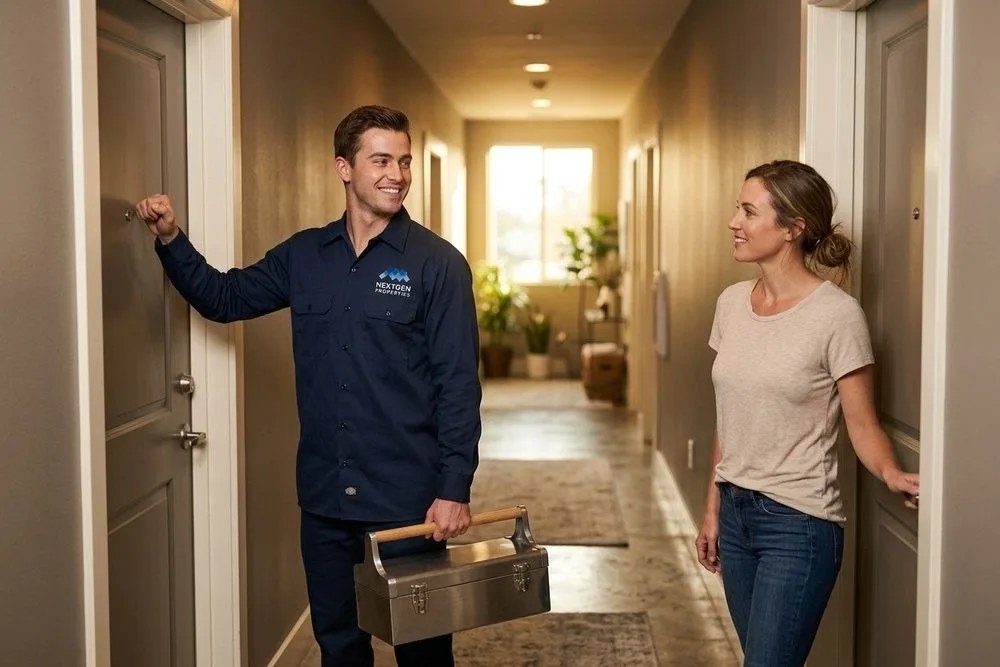
Same-day or next-day maintenance response is the single biggest driver of tenant renewal decisions.
1. Maintenance Response Time Is the Most Important Variable
A tenant whose issue is acknowledged within 24 hours and resolved within 72 hours feels taken care of — and that feeling translates directly to renewal intent. Properties that consistently hit 24-hour acknowledgment and 48-72 hour resolution have measurably higher renewal rates.
2. Start Renewal Conversations 90 Days Early
Waiting until 30 days before lease expiration to discuss renewal is too late. By then, a tenant who's considering leaving has already toured alternatives. Start the conversation at 90 days: reach out personally, acknowledge the relationship, discuss renewal terms transparently, and give them time to decide without pressure.
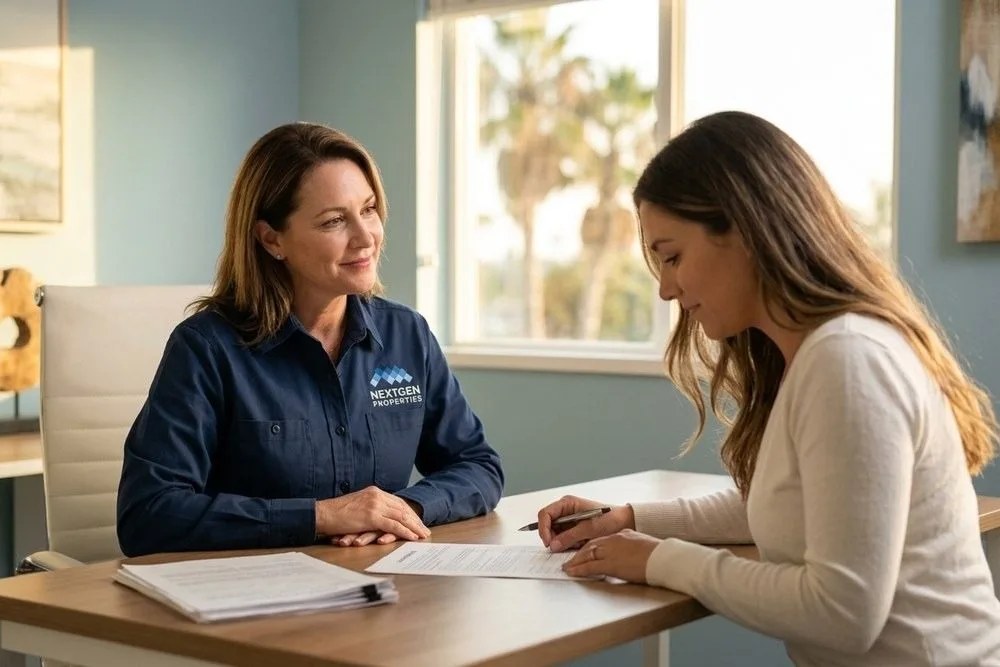
Proactive renewal outreach 90 days before expiration reduces vacancy exposure and gives leverage on rent increases.
3. How You Raise Rent Matters as Much as How Much
A rent increase communicated as "here's why, here's what you're getting for it, and here's what we're doing to continue improving the property" is absorbed differently than a form letter with a dollar amount. Same increase, different outcomes.
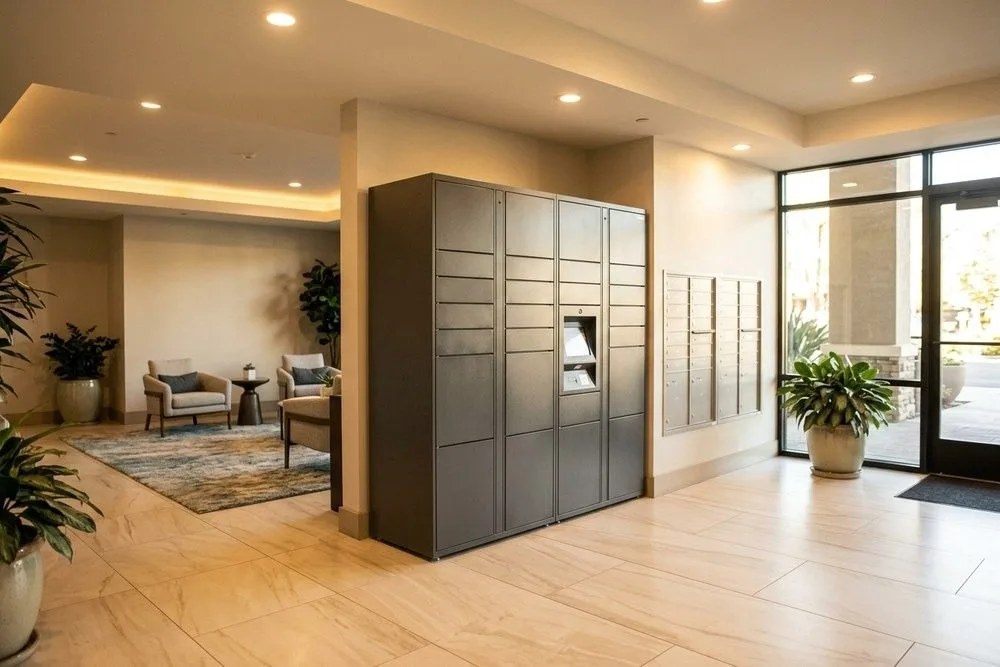
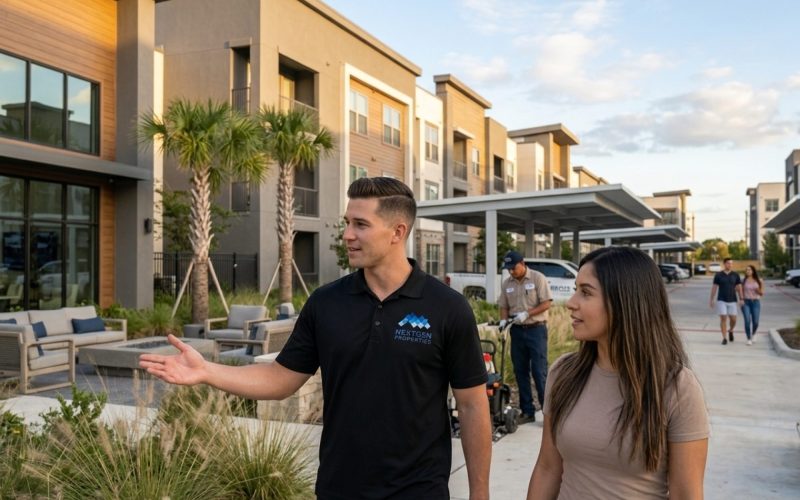
Package lockers and updated common areas add measurable value without the cost of unit renovations.
4. Amenities That Create Switching Costs
Included WiFi through NextGen WiFi is the clearest example: a tenant leaving your property to one without included internet is immediately adding $100–$150/month in ISP costs back to their budget. That switching cost is real and measurable in renewal decisions.
“We've never lost a tenant to a competing property over rent alone. We've lost tenants to a management experience that made them feel the grass was greener. Fix the experience and the renewals follow.”
On a 10-unit building, reducing annual turnover from 3 units to 1.5 units saves $10,000–$12,000/year — the equivalent of a $100/month rent increase across the entire building, with none of the risk. If you want an honest assessment of your current retention practices, reach out to our team.
Frequently Asked Questions
A single turnover in OC typically costs $4,500–$7,000 in direct expenses — leasing fees, make-ready costs, and vacancy loss. In coastal markets where rents average $2,800–$3,800/month, the all-in cost can exceed $10,000. This is why retaining a proven tenant for even one additional year generates substantial NOI that outweighs almost any reasonable retention concession.
California requires at least 30 days written notice for increases under 10% of the lowest rent charged in the prior 12 months, and 90 days for increases of 10% or more. For AB 1482-covered properties, increases are capped at 5% plus local CPI (maximum 10%) annually. Notice must be in writing — text or email alone is not sufficient under California law.
Responding within 24 hours and resolving non-emergency issues within 72 hours measurably improves renewal rates. Tenants who experience slow maintenance response are 3–4x more likely to move at lease end even if they like the unit. A property manager with a dedicated maintenance coordination system is the most reliable way to hit these benchmarks at scale.
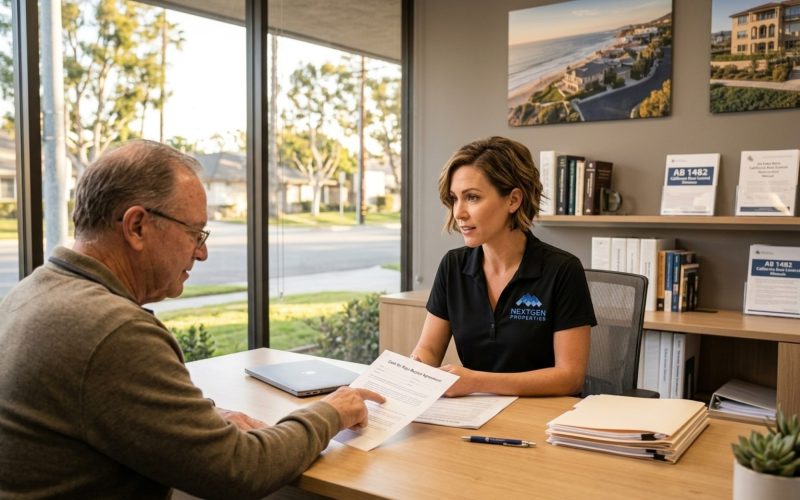
Almost always yes — financially. If market rent is $2,400 and your tenant stays for $2,200, the $200/month discount costs $2,400 annually versus $5,000–$8,000 for a turnover. Be selective: offer concessions to tenants with strong payment history and low maintenance demand, not as blanket policy. Even a one-time lease renewal incentive (appliance upgrade, parking credit) is often more cost-effective than a full vacancy.
The highest-impact retention strategies in Orange County are: (1) proactive maintenance with fast response times, (2) reasonable and predictable rent increases within AB 1482 limits, (3) personal outreach 90–60 days before lease expiration, (4) small unit upgrades at renewal (new fixtures, fresh paint), and (5) offering flexible lease terms for longer commitments. Professional property management that executes all five consistently outperforms self-management on retention by a wide margin.
Share
Chris Kerstner
CEO, NextGen Properties — Costa Mesa, CA
Chris Kerstner founded NextGen Properties in 2000 and has spent 25 years acquiring, developing, and managing real estate across California, Arizona, Nevada, Utah, Texas, and Florida. He has personally transacted over $750 million in real estate deals—spanning multifamily acquisitions, ground-up development, and value-add repositioning—and currently oversees a portfolio of 750+ units. Chris began his career underwriting commercial assets in Orange County and built NextGen into one of the region’s most active private operators. He leads the firm’s acquisition strategy, investor relations, and asset management, and is a licensed California real estate broker.