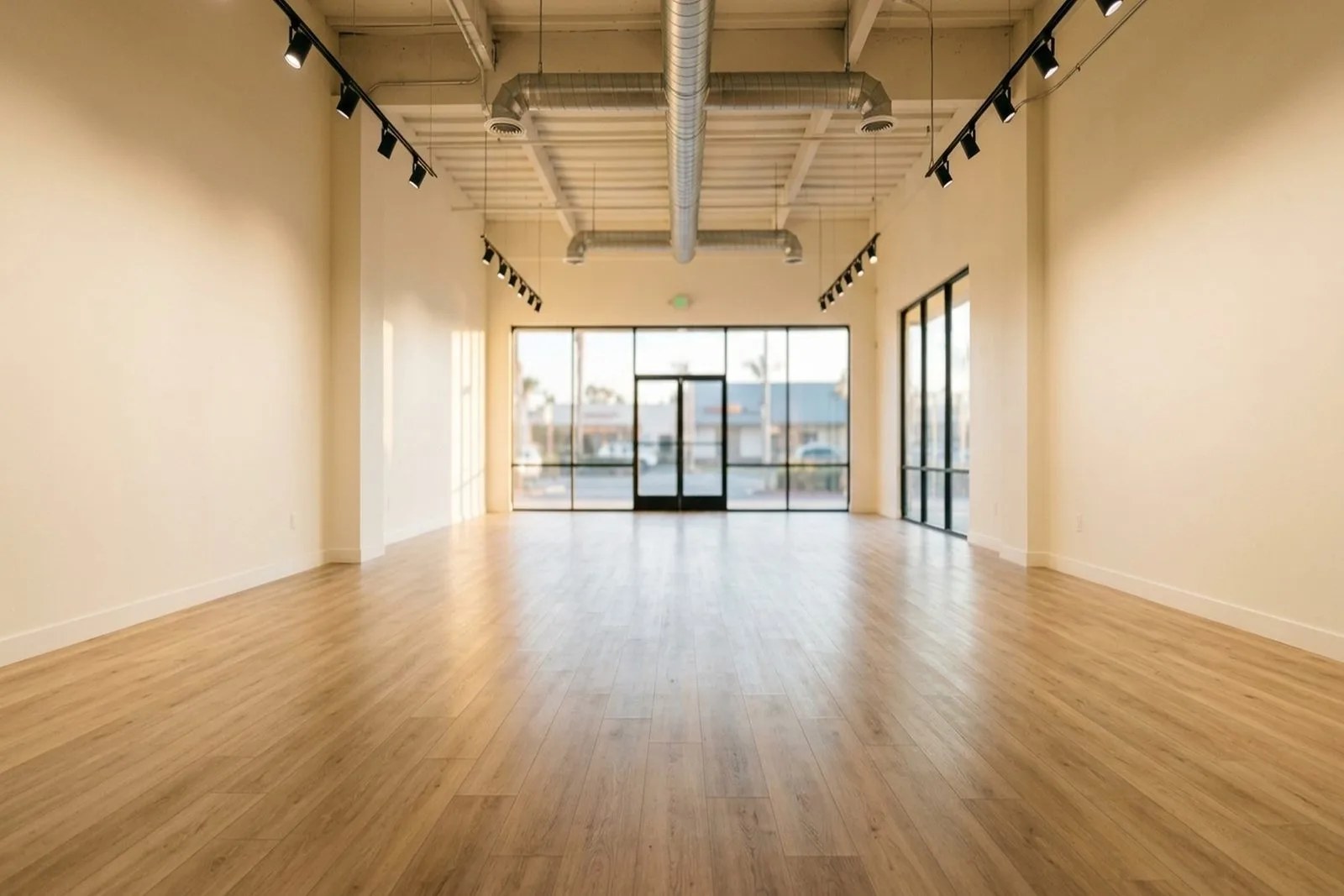
Tenant improvement (TI) allowances are one of the most significant — and most frequently misunderstood — financial tools in commercial real estate leasing. For landlords, TI is a capital investment that reduces near-term cash flow in exchange for securing a long-term, creditworthy tenant. Done right, it’s an excellent trade. Done poorly, it’s an expensive lesson in commercial lease negotiation.
In commercial real estate, the lease negotiation isn’t just about the rent. It’s about the total economic package — rent, term, options, expense allocation, and critically, the tenant improvement allowance. For a landlord leasing vacant commercial space, the TI allowance is often the largest capital expenditure associated with the transaction, and the terms under which it’s structured, disbursed, and documented can make a significant difference to the landlord’s long-term position.
National credit retail commands $80–$150/SF TI. Class A office $60–$100/SF. Industrial rarely exceeds $15–$20/SF. TI is priced into lease economics — higher TI typically means higher base rent or longer term.
What Is a Tenant Improvement Allowance?
A tenant improvement (TI) allowance is a sum of money provided by the landlord to help a tenant build out or customize a commercial space for their specific use. The TI typically covers construction work necessary to make a vanilla shell or base-build space functional: walls, flooring, ceilings, lighting, HVAC distribution, electrical, plumbing, and sometimes fixtures and furniture.
The TI is a capital investment by the landlord. The tenant spends it (with landlord approval) on improvements that become the property of the landlord at the end of the lease. In exchange, the landlord typically achieves higher rent, a longer term, or both — because the tenant is receiving something of value that offsets total occupancy cost. For landlords with professionally managed commercial assets, TI allowances are a routine and important tool for keeping space leased and competitive.

How TI Allowances Are Structured
TI allowances are typically expressed as a dollar amount per rentable square foot. Common structures:
- Fixed dollar amount: “Landlord shall provide Tenant an allowance of $X per rentable SF.” The simplest and most common structure.
- Landlord-built turnkey: Landlord directly constructs improvements to an agreed specification. Landlord controls the budget and contractor; tenant gets a specified finished space.
- Phased allowance: Funds released in installments tied to construction milestones.
- Above-standard allowance: Base allowance covers a defined scope (standard lighting, carpet, paint); additional customization above that scope is at the tenant’s expense.
Market-Rate TI in OC (2026)
| Space Type | Typical Market TI |
|---|---|
| Class A office — new tenant, long term | $80–$120/SF |
| Class B office — standard build-out | $45–$75/SF |
| Retail strip center — vanilla shell | $25–$50/SF |
| Restaurant (high-cost build-out) | $80–$150+/SF |
| Industrial / flex — minimal finish | $5–$20/SF |
| Medical office — specialized MEP | $80–$150+/SF |
Renewal TI for an existing tenant in good standing is typically 30–60% lower than new lease TI, since the existing build-out reduces the scope of required work.
Disbursement Conditions and Controls
How and when the TI is disbursed is critical. The safest structure for landlords is a reimbursement model: tenant completes work using their own funds, then submits invoices and lien waivers for reimbursement after inspection confirms work is complete. Regardless of structure, always require:
- Paid contractor lien waivers (both conditional and unconditional) before releasing each payment
- Certificates of insurance from all contractors and subcontractors before work begins
- Landlord approval of all contractor selection, construction plans, and material specifications before work begins
- Building permits pulled and final inspection passed before final disbursement
Protecting the Landlord’s Investment
Ownership of improvements: The lease must clearly state that all improvements funded by TI become the property of the landlord upon installation and remain so at lease expiration.
Quality standards: The lease should require all TI work meet a specified quality standard, comply with applicable codes, and use materials consistent with the building’s existing character and systems.
Recapture provisions: If the tenant defaults or terminates early, the unamortized portion of the TI should be recoverable. Model TI amortization over the initial lease term — if a tenant defaults in year 3 of a 5-year lease, they owe 40% of the TI as liquidated damages or as part of the early termination calculation.
Restoration obligation: Whether the tenant is required to restore the space at lease end or leave improvements in place should be explicitly addressed. For most commercial spaces, leaving improvements in place benefits the next tenant and the landlord.

Key Negotiating Points for Landlords
- Tie TI to lease term. A $75/SF TI is reasonable on a 10-year lease; it’s very aggressive on a 3-year lease. Model the TI as an effective rent reduction: $75/SF amortized over 10 years at 6% equals approximately $0.83/SF/month in additional occupancy cost to the landlord.
- Require credit review for large TI. The larger the TI, the more important the tenant’s creditworthiness.
- Limit eligible uses. Define what the TI can be spent on — construction, hard costs, permits — and what it cannot: furniture, moving expenses, IT equipment.
- Negotiate a completion deadline. The TI allowance should expire if not used within a defined period (typically 12–18 months from lease commencement).
Tax Treatment for Landlords
TI allowances paid by a landlord are generally treated as a capital expenditure — depreciable over the applicable property life (39 years for commercial real estate improvements under MACRS). The specific tax treatment depends on the structure of the TI arrangement and requires qualified tax advice for your specific situation.
For a broader understanding of commercial property management and the operational complexity of commercial assets, see our guide to commercial vs. residential property management. Our commercial management team works with owners’ accountants to ensure TI expenditures are properly classified and documented in owner financial reporting.
Frequently Asked Questions