Multifamily due diligence in OC has four dimensions: financial (does the income match what's represented?), physical (what does the building actually need?), legal (are there encumbrances or compliance issues?), and operational (how has this property been managed?). Miss any of these and you'll find the problem after closing ? when it's your problem.
Buying an apartment building is different than buying a house. The seller is presenting a business — with income, expenses, tenants, leases, maintenance history, and legal obligations. Your job in due diligence is to verify every representation and discover everything the seller isn't volunteering.
Financial Due Diligence
Rent roll: Request the current rent roll listing every unit, tenant name, lease start and end date, monthly rent, security deposit on hand, and payment status. Verify it against actual bank statements — every unit should show a deposit on the date rent was due. Cross-reference with a physical unit walkthrough to confirm occupancy.
Tap any bar for the negotiation logic. On a $3M OC property at 4.5% cap, a $10k/yr NOI reduction = $222k in lower value at the same cap rate.
| Category | Typical Price Impact ($) |
|---|---|
| Below-market rents | $180,000 |
| Deferred maintenance | $95,000 |
| Problem tenant | $65,000 |
| Unpermitted work | $45,000 |
| Environmental | $120,000 |
| Overstated income | $80,000 |
Operating statements: Request 2–3 years of actual operating statements (T-12, T-24, T-36). Compare each line against market benchmarks for OC. Red flags: unusually low maintenance expenses (deferred maintenance won't show up on the P&L), management fees below market (expect costs to increase), or inconsistent income (vacancies or non-payment hidden by unit-level analysis).
Utility bills: Request 12 months of utility bills — water, gas, electricity, trash. Verify actual amounts against what's on the operating statement. Utility understatement is one of the most common ways sellers inflate NOI.
Service contracts: Get copies of all existing vendor contracts — landscaping, pest control, laundry, elevator (if applicable), HVAC maintenance. Some may auto-assign to the new owner; some have cancellation penalties.
Physical Due Diligence
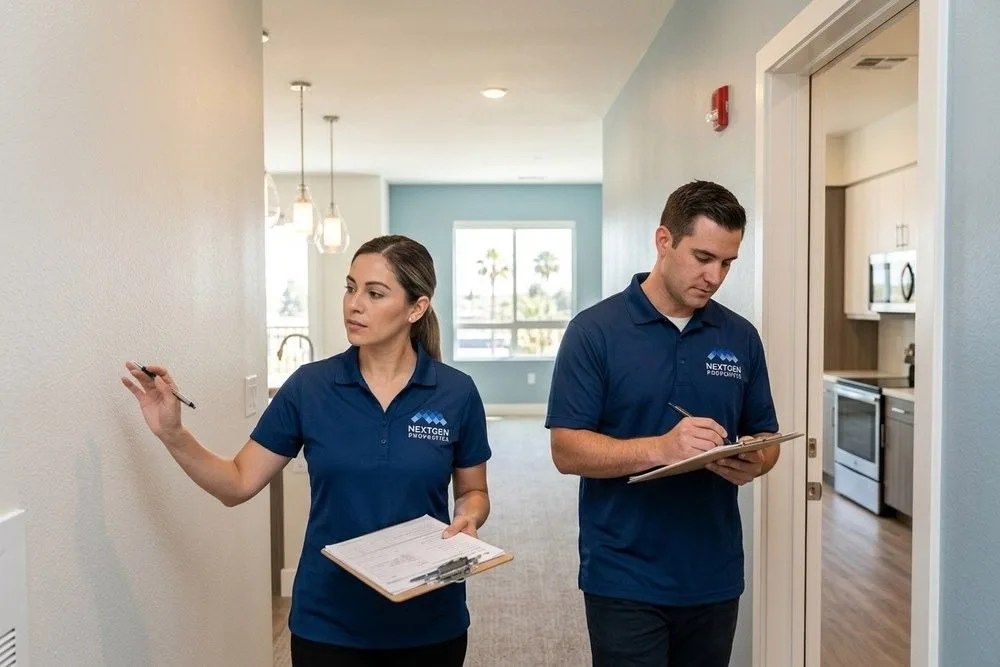
Unit inspections: Walk every unit. Not a sampling — every unit. Note condition of appliances, flooring, plumbing fixtures, windows, HVAC, and any deferred maintenance. Give proper 24-hour notice in California.
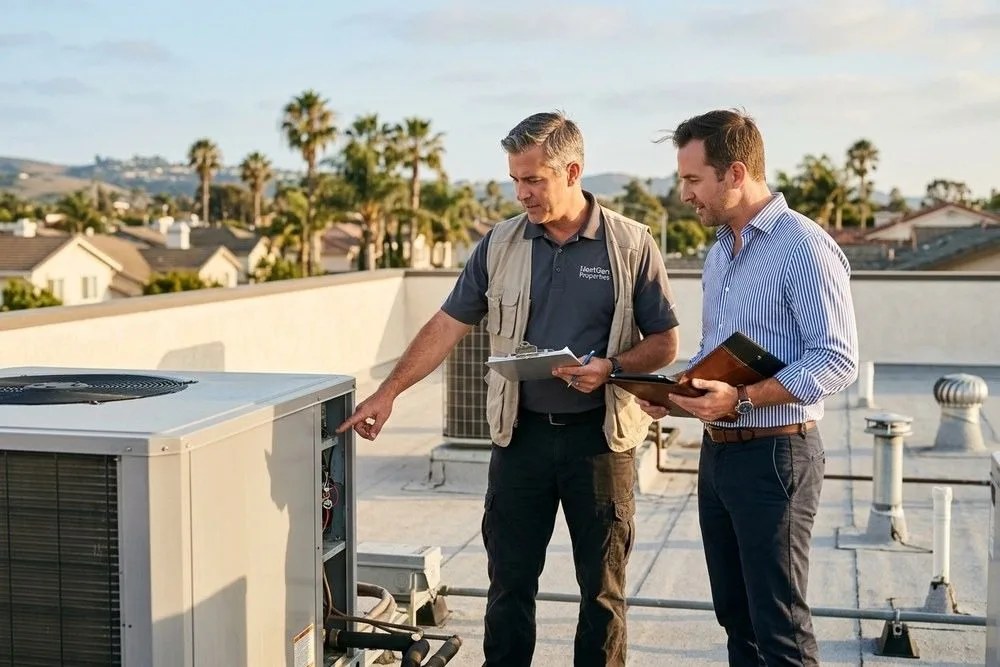
Building systems: Inspect the roof (get a roof inspection report), plumbing (scope main sewer lines on older buildings), electrical panels (flag Federal Pacific, Zinsco), HVAC systems, parking and paving, and any pool or spa.
SB 721 compliance: For any building with 3+ units and decks or balconies, verify SB 721 exterior elevated element inspections have been completed. Request the inspection report. Non-compliance is a liability at closing and a negotiating point.
Environmental: Phase I Environmental Site Assessment is standard on any commercial multifamily acquisition. Older buildings may have asbestos-containing materials or lead paint — standard disclosures in California, but worth knowing before closing.
Legal Due Diligence
Title review: Order preliminary title early. Look for easements, CC&Rs, IRS liens, judgment liens, mechanic's liens, and any restrictions on use. Resolve all issues before close — title insurance doesn't cover known issues that weren't cleared.
Lease review: Read every lease. Look for below-market rents, extended fixed terms, unusual tenant rights, or concessions. Verify lease terms match the rent roll. Obtain estoppel certificates from tenants — signed statements confirming rent, deposit, lease term, and absence of landlord defaults.
Litigation and code enforcement: Ask directly whether there are pending lawsuits, discrimination claims, habitability complaints, or code enforcement actions. Run the property address through OC Superior Court and check with the city's code enforcement department.

Operational Due Diligence
Payment history: Request 12 months of payment history by unit. Note any pattern of late payments, NSF checks, or partial payments. These tenants become your problem at closing.
Maintenance history: What repairs have been made in the past 2 years? What capital expenditures are upcoming? Get any warranty documentation for recent major work — roof, HVAC, plumbing.
AB 1482 status: Determine whether the property is covered by AB 1482. If yes, identify any units where rent is below market — and calculate the restriction on your ability to bring them to market. This directly affects your underwriting.
Frequently Asked Questions