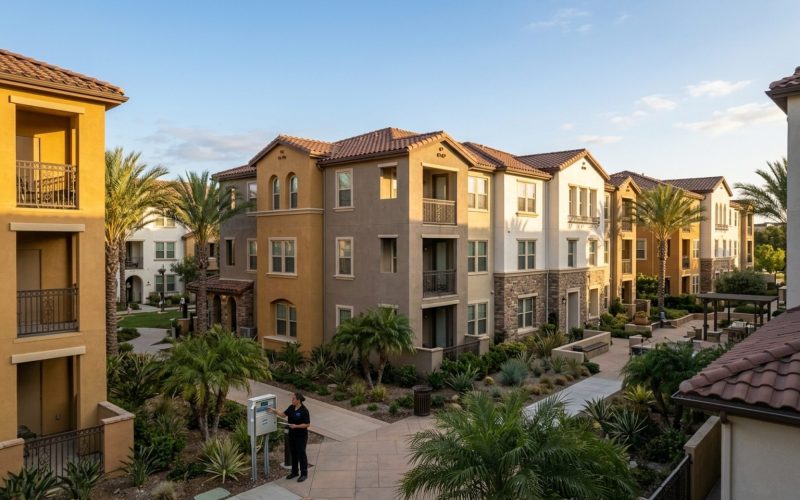
Santa Ana remains Orange County's only city with comprehensive rent stabilization, creating unique compliance challenges that go far beyond state-level AB 1482 requirements. The city's Rental Stabilization Ordinance (RSO) governs over 35,000 rental units with strict registration mandates, enhanced tenant protections, and penalties reaching $1,000 per violation. Unlike neighboring OC cities operating under state rent control alone, Santa Ana landlords face dual-layer regulations requiring separate compliance strategies for rent increases, just cause evictions, and annual reporting. Understanding these RSO-specific requirements isn't optional?it's essential for avoiding costly violations while maintaining profitable operations in Orange County's largest rental market.
Santa Ana RSO: Beyond State Rent Control
Santa Ana's Rental Stabilization Ordinance creates a regulatory framework that exceeds California's statewide AB 1482 protections in scope and enforcement. Adopted by the City Council in September 2021 and effective November 19, 2021, with ongoing updates through 2026, the RSO covers approximately 35,000 rental units across the city—making it the most comprehensive local rent control system in Orange County.
The ordinance applies to multifamily properties built before February 1, 1995, as required by the Costa-Hawkins Rental Housing Act. Properties with 2+ units and manufactured housing spaces fall under RSO jurisdiction. Single-family homes and condominiums are generally exempt under Costa-Hawkins, while AB 1482 covers a broader range of properties built more than 15 years ago.
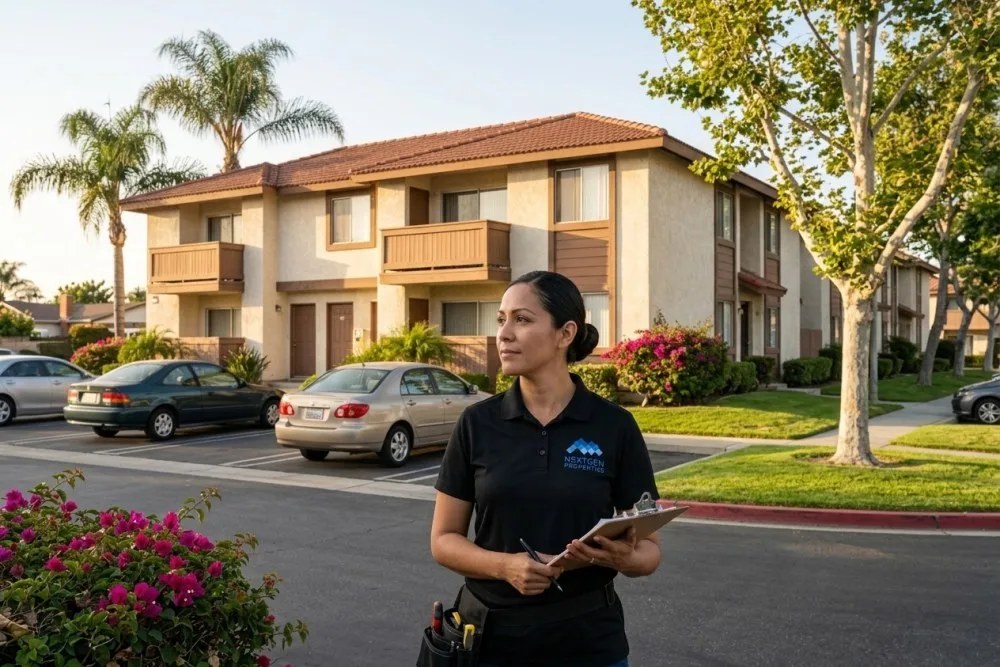
Key RSO distinctions include mandatory annual registration, stricter rent increase procedures, and enhanced just cause eviction requirements. The city collected over $2.1 million in registration fees and penalties during 2025, demonstrating active enforcement that catches non-compliant landlords.
Mandatory Rental Registry: Registration Process
Every RSO-covered property must complete annual registration with the City of Santa Ana by March 31st each year. The registration fee is a flat $100 per unit for the 2025–2026 program year (July 1 through June 30). Landlords may pass through up to 50% of the fee ($50) to tenants, collected in twelve equal monthly installments.
Registration requires detailed property information including current rent amounts, tenant move-in dates, utility arrangements, and property manager contact details. Landlords must also submit a Rent Registry Statement documenting all rent increases implemented during the previous 12-month period.
Late registration triggers automatic penalties of $100 per month per unit until compliance is achieved. Properties remaining unregistered after June 30th face additional violations and potential legal action. The city maintains an active audit program that cross-references utility records and building permits to identify non-compliant properties.
Registration Documentation Requirements
Complete registration packets must include current lease agreements, utility billing arrangements, and property management authorization forms. Out-of-state landlords must designate a local agent for service within Santa Ana city limits—a requirement that doesn't exist under state law alone.
Properties undergoing renovation or rehabilitation can request temporary registration deferrals, but must maintain detailed construction documentation. The city requires 30-day advance notice for any changes to registered information, including rent amounts, tenant turnover, or management company transitions.
RSO Rent Increase Rules vs AB 1482
Santa Ana's rent increase procedures exceed state requirements in both notification timing and tenant protections. While AB 1482 allows annual increases up to 5% plus local inflation (capped at 10%), the RSO adds procedural hurdles that affect implementation timing and documentation.
RSO-covered properties follow California Civil Code Section 827 notice requirements: 30-day written notice for increases of 10% or less and 90-day notice for increases above 10%. Because the RSO caps increases well below 10%, the 30-day notice period applies in practice. The notice must include specific RSO disclosure language explaining tenant rights and city contact information for complaints.

The city maintains a Rent Increase Appeal Process that allows tenants to challenge increases they believe exceed RSO limits. Landlords facing appeals must provide detailed justification including comparable rent analysis, capital improvement documentation, or utility cost increases.
Maximum Allowable Increases
Santa Ana’s RSO caps annual rent increases at the lower of 3% or 80% of the CPI change over the most recent 12-month period. For the period effective September 1, 2025 through August 31, 2026, the maximum allowable increase is 2.42%. This is far more restrictive than the statewide AB 1482 formula of 5% plus CPI (capped at 10%).
Capital improvement pass-throughs require separate RSO approval through a formal petition process. Unlike state law, which allows immediate pass-through of qualifying improvements, Santa Ana requires 60-day city review and tenant notification periods before implementation.
Enhanced Just Cause Eviction Protections
Santa Ana's just cause eviction requirements expand beyond AB 1482's state-level protections, creating additional procedural steps and tenant safeguards. The RSO recognizes 15 specific grounds for eviction compared to state law's broader categories, requiring precise documentation for each cause type.
No-fault evictions under the RSO require the owner to either provide 3 months’ rent as relocation assistance or waive payment of rent for the final 3 months of the tenancy. The tenant chooses which option to accept, and the amount is based on the tenant’s actual monthly rent at the time of notice.
The RSO requires 120-day notice for owner move-in evictions and substantial rehabilitation projects—double the state requirement. Landlords must also provide detailed documentation proving legitimate need and demonstrate good faith efforts to relocate affected tenants.
Ellis Act Restrictions
While California's Ellis Act allows property owners to exit the rental business, Santa Ana's RSO adds local restrictions and reporting requirements. Properties withdrawn from rental use under Ellis Act provisions face 10-year deed restrictions preventing conversion to short-term rentals or luxury condominiums.
Ellis Act evictions require city notification 120 days before tenant notices are served. The city maintains a public database of Ellis Act properties to monitor compliance and prevent abuse of the withdrawal process.
RSO Enforcement and Violation Penalties
Santa Ana maintains active RSO enforcement through dedicated code compliance officers and tenant complaint investigations. The city processed over 1,200 RSO-related complaints during 2025, resulting in $480,000 in assessed penalties against non-compliant properties.
Violation penalties follow a graduated structure: $500 for first violations, $750 for second violations within 24 months, and $1,000 for subsequent violations. Properties with multiple units can face per-unit penalties, creating substantial financial exposure for larger operators.
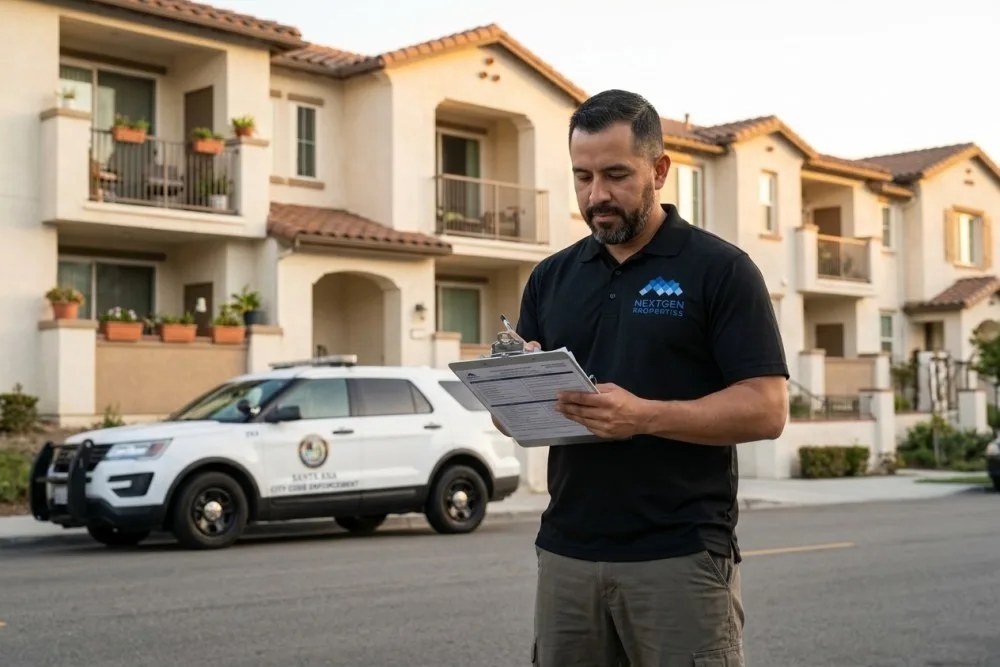
Common violations include failure to register properties, improper rent increase notices, and inadequate just cause eviction documentation. The city also monitors rent gouging through cross-referencing registration data with tenant complaints and market rate analyses.
Violation Appeal Process
Landlords facing RSO violations can appeal penalties through the city's administrative hearing process. Appeals must be filed within 15 days of violation notice and include supporting documentation demonstrating good faith compliance efforts or factual errors in city findings.
Successful appeals often involve properties that can demonstrate technical compliance issues rather than willful violations. The hearing officer considers factors including tenant impact, landlord cooperation with investigations, and steps taken to achieve compliance after violation discovery.
RSO Compliance Implementation Strategy
Effective RSO compliance requires systematic documentation and proactive registration management. We've developed standardized procedures across our Santa Ana portfolio that eliminate common violation triggers while maintaining efficient operations.
Annual compliance calendars track key dates including March 31st registration deadlines, rent increase notice timing, and lease renewal schedules. Properties with RSO coverage require separate tracking from standard AB 1482 compliance to avoid procedural conflicts.
Documentation Systems
RSO compliance demands detailed record-keeping beyond standard property management practices. Essential documentation includes tenant move-in/move-out logs, rent increase justification files, and improvement expenditure tracking for capital improvement pass-throughs.
Digital document management systems should separate RSO properties from non-covered units to prevent cross-contamination of different regulatory requirements. Cloud-based platforms allow real-time access for city inspections and audit requests.
Tenant Communication Protocols
Clear tenant communication prevents many RSO violations while building positive relationships that reduce complaint frequency. Standard protocols include RSO disclosure packets for new tenants, annual reminder notices about tenant rights, and accessible complaint resolution procedures.
Multilingual communications serve Santa Ana's diverse tenant population effectively. The city provides RSO translations in Spanish and Vietnamese, but property-specific notices should match tenant linguistic preferences documented during lease signing.
Professional Management for RSO Compliance
Professional property management becomes essential for RSO compliance given the ordinance's complexity and active enforcement environment. Orange County property management firms with Santa Ana expertise maintain current knowledge of regulatory updates and enforcement trends that individual landlords often miss.
Compliance costs for professional management typically range from $85-125 per unit annually, but violation penalties can exceed $1,000 per unit for simple registration failures. The risk-adjusted value strongly favors professional oversight for portfolios with multiple RSO-covered properties.

Experienced management companies maintain relationships with city officials, understand appeal procedures, and can navigate complex situations like Ellis Act withdrawals or substantial rehabilitation projects. These connections prove valuable during enforcement actions or policy updates.
Technology Integration
Modern property management platforms integrate RSO compliance tracking with standard operations, automatically flagging registration deadlines and rent increase notice requirements. Automated systems reduce human error while ensuring consistent compliance across multiple properties.
Tenant portals can include RSO-specific information and complaint submission systems that satisfy city transparency requirements. These systems also provide documentation trails that support landlord positions during violation investigations or appeals.
RSO Evolution and 2026 Updates
Santa Ana's RSO continues evolving with annual adjustments to fees, penalty structures, and enforcement procedures. The 2026 updates include enhanced digital registration systems, streamlined appeal processes, and expanded tenant protection categories.
Proposed changes for 2027 include rent banking provisions allowing landlords to carry forward unused annual increases, similar to systems in other California rent control jurisdictions. These changes could significantly impact long-term investment strategies and property valuations.
Regional coordination with other California cities implementing local rent control creates potential for standardized procedures and cross-jurisdictional enforcement. Landlords with multi-city portfolios should monitor these developments for compliance efficiency opportunities.
The intersection of RSO requirements with state housing legislation continues creating new compliance obligations. Recent examples include SB 567's tenant notification requirements and AB 2273's rent relief program coordination, both requiring integration with existing RSO procedures.
Frequently Asked Questions