Internet access has shifted from a luxury amenity to a baseline expectation. Properties without it are losing leasing calls and renewal negotiations to competitors who offer it. Whole-complex managed WiFi through NextGen WiFi solves the problem without adding operational burden.
In 2010, apartment listings featured "high-speed internet available" as a nice-to-have. In 2026, a unit without reliable internet access is disqualifying before the prospect even schedules a tour.
What Tenants Actually Expect Today
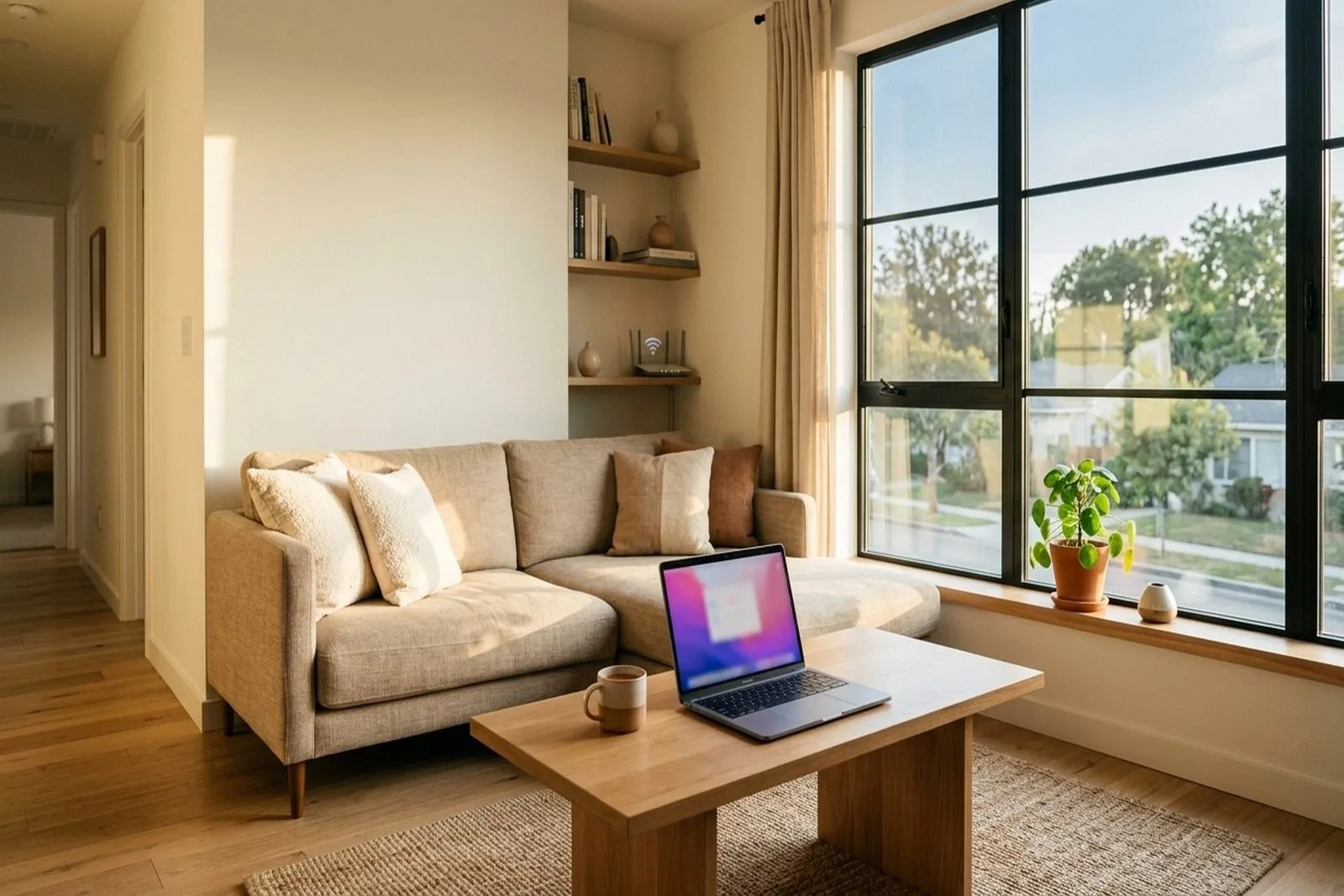
The modern renter is working from home, streaming four devices simultaneously, video-calling family, and running smart home devices. Survey data consistently shows internet quality among the top three most-cited factors in apartment satisfaction, alongside maintenance responsiveness and management communication.
The ISP Coordination Problem
Here's the experience your new tenant has with a traditional ISP: they schedule an appointment two weeks out, take a half-day from work, wait for a technician, get equipment that may or may not work. This friction happens at the exact moment you most need a tenant to feel good about their decision to rent from you — move-in week.
The Managed WiFi Solution
Property-wide managed WiFi from NextGen WiFi eliminates the ISP coordination problem entirely. Access points are installed throughout the building, tenant connects on move-in day, and support is handled by the provider — not your maintenance team, not your leasing staff.
The Leasing Advantage
In a competitive market like Orange County, where comparable units often list within $50–$100 of each other, included amenities drive leasing decisions at the margin. Properties with whole-complex WiFi report faster lease-up on vacancies, higher inquiry-to-tour conversion, and better performance on renewal negotiations.
“When a tenant asks what's included, 'high-speed internet' is a conversation-stopper in the best possible way. It moves the leasing call from features to move-in date.”
— Chris Kerstner, CEO, NextGen Properties
What Implementation Looks Like
NextGen WiFi conducts a site analysis, handles all hardware installation, and provides ongoing monitoring and resident support. The property owner's involvement after setup is essentially zero. The base tier is offered to all tenants as an included amenity. Residents who need higher bandwidth upgrade directly, and a portion of that revenue passes back to the property. Talk to our team about your building.
Remote Work Changed the Equation
Before 2020, apartment internet was a convenience. Post-pandemic, it is workplace infrastructure. Roughly 35% of OC renters now work remotely at least part-time, and that number skews higher in the $2,000–$3,500/month rental band where most Class A and B apartments compete. A dropped Zoom call during a client presentation is not an inconvenience — it is a career-affecting event that your tenant will associate with your building.
Remote workers evaluate apartments differently. They notice upload speeds, not just download. They test WiFi in the bedroom, the kitchen, and the balcony — not just the living room. A property with consistent coverage throughout every unit and common area communicates reliability in a way that "internet available" on a listing never will.
Satisfaction Data: WiFi vs. Other Amenities
National multifamily resident satisfaction surveys consistently rank reliable internet among the top three amenities — ahead of fitness centers, pools, and package lockers. In OC specifically, where the median renter is tech-forward and income-qualified, internet quality correlates more strongly with lease renewal intent than any single physical amenity.
- Internet reliability: 89% of surveyed tenants rate it "very important" to renewal decisions
- Maintenance responsiveness: 84%
- In-unit washer/dryer: 78%
- Fitness center: 52%
- Pool/spa: 47%
The gap between internet and the next physical amenity is significant — and widening as remote work normalizes.
The Retention Math
Vacancy cost in Orange County typically runs $3,000–$6,000 per turnover: lost rent during vacancy (average 18–25 days), unit turn costs (paint, cleaning, repairs), and leasing costs (advertising, agent time, screening). On a 20-unit building with 40% annual turnover, that is 8 turnovers at $4,000 each — $32,000/year in turnover friction.
Properties with included WiFi consistently report 10–15% lower turnover rates. On the same 20-unit building, reducing turnover from 40% to 30% saves 2 turnovers per year — $8,000 in direct costs, plus the compounding benefit of longer average tenancies supporting higher rents at renewal.
What to Look for in a Provider
Not all managed WiFi programs are equal. Key evaluation criteria for OC property owners:
- Coverage guarantee: The provider should guarantee signal strength in every unit and common area, verified by post-installation testing — not just access point placement.
- Resident support model: Support calls should go to the WiFi provider, not your property management team. 24/7 support is non-negotiable for a utility-grade amenity.
- Revenue share transparency: Understand the split on premium upgrades. The best programs share 30–50% of upgrade revenue with the property owner.
- Hardware ownership: Clarify who owns the installed equipment. Some providers retain ownership and remove equipment at contract end — leaving you with nothing.
- Scalability: If you own multiple properties, the provider should support portfolio-wide deployment with consistent service levels and consolidated billing.
Talk to our team about implementing managed WiFi across your OC rental properties.
Frequently Asked Questions