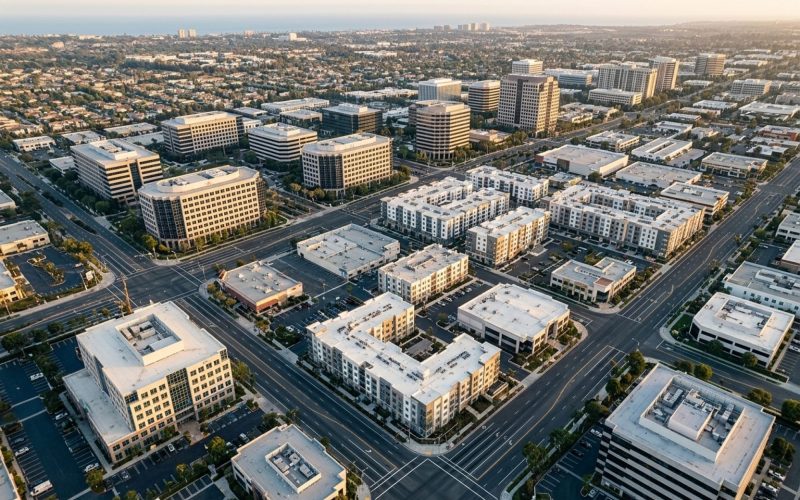
SB 1211 fundamentally changed Orange County's multifamily landscape in 2025, allowing property owners to add up to eight detached ADUs per lot?a massive leap from previous restrictions. For OC's constrained land market where vacant lots trade at $200+ per square foot, this represents the most significant density opportunity in decades. We're seeing savvy landlords in Costa Mesa, Anaheim, and Huntington Beach already capitalizing on these expanded rights to add 3-5 units per property. However, the devil lies in the details: setback requirements, parking ratios, and local overlay zones can make or break project feasibility in Orange County's complex regulatory environment.
SB 1211 Multifamily ADU Expansion Overview
SB 1211 took effect January 1, 2025, dramatically expanding ADU rights for multifamily property owners throughout California. The law allows up to eight detached ADUs per multifamily parcel, compared to the previous limit of two ADUs regardless of property size. For Orange County landlords managing 20+ unit complexes on large lots, this creates unprecedented opportunities to maximize density without acquiring additional land.
The legislation specifically targets multifamily properties, defined as lots containing two or more residential units in the primary structure. In our portfolio, we've identified several Anaheim and Costa Mesa properties where the expanded ADU allowance could increase unit count by 25-40%. The key distinction from previous ADU laws: detached units only, meaning no internal conversions or attached additions qualify under SB 1211.
Orange County cities cannot impose more restrictive ADU limits than state law, though they retain authority over design standards, setbacks, and parking requirements. We've seen Costa Mesa and Irvine quickly adapt their ADU ordinances, while Anaheim and Huntington Beach took several months to align local codes with SB 1211 requirements.
SB 1211 allows exactly one new detached ADU per existing unit — up to a hard cap of eight. A 5-unit building adds 5, a 7-unit building adds 7, and any property with 8 or more units maxes out at 8 new detached ADUs.
| Existing Units on Lot | Max New Detached ADUs | Rule |
|---|---|---|
| 2 units (duplex) | 2 | 1:1 — matches existing count |
| 3 units (triplex) | 3 | 1:1 — matches existing count |
| 4 units | 4 | 1:1 — matches existing count |
| 5 units | 5 | 1:1 — matches existing count |
| 6 units | 6 | 1:1 — matches existing count |
| 7 units | 7 | 1:1 — matches existing count |
| 8+ units | 8 (maximum) | Hard cap — does not scale above 8 |
Key SB 1211 Provisions for OC Multifamily
The law allows one new detached ADU per existing residential unit on the property, up to a hard cap of eight. A duplex can add two, a five-unit building can add five, and any property with eight or more existing units maxes out at eight new detached ADUs. There are no tiers or sliding scales — the ratio is strictly 1:1 up to the cap. Setback minimums remain at four feet from side/rear property lines, critical for maximizing buildable area on expensive OC land.
Parking requirements under SB 1211 allow one space per ADU, but properties within half-mile of transit can reduce this requirement. Given Orange County's extensive bus network and upcoming rail expansions, many multifamily properties qualify for reduced parking ratios. Height limits remain at 16 feet for detached ADUs, accommodating single-story construction with standard 9-10 foot ceilings.
Orange County ADU Market Opportunity Analysis
Orange County's unique market dynamics make SB 1211 particularly valuable compared to other California regions. With median home prices exceeding $1.1 million and rental vacancy rates below 3% across most submarkets, additional housing units command premium rents immediately upon delivery. We're tracking ADU rental rates of $2,800-$4,200 monthly for 1-2 bedroom units in coastal areas, with inland communities achieving $2,200-$3,000.
The constrained land supply amplifies SB 1211's impact in Orange County. Unlike Riverside or San Bernardino counties where vacant land remains available, OC's buildable parcels trade at extraordinary premiums. Adding eight ADUs to an existing multifamily lot essentially captures land value that would cost $400,000-$800,000 to acquire separately in most OC cities.
Submarket analysis reveals the strongest ADU opportunities in Costa Mesa, Anaheim, and Garden Grove, where larger multifamily lots provide adequate space for detached construction. Coastal properties offer higher rents but face more restrictive local design standards, while inland markets provide faster permitting timelines and lower construction costs.
Competitive Rental Market Impact
Orange County's tight rental market creates immediate absorption for new ADU inventory. Our managed properties typically lease new ADUs within 15-30 days at market rates, compared to 45-60 days for comparable units in less constrained markets. The smaller unit sizes appeal to young professionals, graduate students, and downsizing empty nesters—demographics with strong rental demand in OC.
ADU Development Costs and ROI in Orange County
Construction costs for detached ADUs in Orange County range from $180-$280 per square foot for quality finishes that command market rents. A typical 700-square-foot, one-bedroom ADU costs $126,000-$196,000 to build, including permits, utilities, and site preparation. Larger 1,000-square-foot, two-bedroom units run $180,000-$280,000, depending on site complexity and finish level.
Soft costs add another 15-25% to total project budgets in Orange County due to extended permitting timelines and higher professional fees. We budget $18,000-$35,000 for architectural plans, engineering, and permit fees per ADU, with coastal cities typically at the higher end. Site preparation varies dramatically: properties with accessible utilities and level lots might spend $8,000-$15,000, while challenging sites requiring new electrical panels or extensive grading can exceed $40,000.
Return calculations show compelling economics for well-located Orange County ADUs. A $200,000 ADU generating $3,000 monthly rent produces 18% gross annual returns before operating expenses. After property management, maintenance, and vacancy allowances, net returns of 12-15% annually are achievable. These returns significantly exceed Orange County multifamily cap rates of 4.0-5.5%, making ADU development highly accretive to property values.
New ADUs generate gross returns of 15–22% annually — three to five times the going cap rate for OC multifamily acquisitions. The spread is widest in inland markets where construction costs are lower relative to achievable rents.
| Submarket | ADU Gross Return | Acquisition Cap Rate | Return Premium |
|---|---|---|---|
| Coastal OC (Newport Beach / Laguna Beach) | ~15% | 3.8–4.2% | +10–11 pts |
| Mid-OC (Irvine / Costa Mesa) | ~18% | 4.2–4.8% | +13–14 pts |
| Inland OC (Anaheim / Garden Grove) | ~22% | 4.8–5.5% | +16–17 pts |
Financing ADU Development Projects
Most Orange County multifamily owners finance ADU construction through cash-out refinancing or construction loans secured by the underlying property. Current construction loan rates of 7.5-9.0% require careful cash flow analysis, but the permanent rental income typically supports debt service comfortably. We recommend maintaining 20-25% equity buffers given potential cost overruns and permitting delays.
Some lenders offer specialized ADU financing products with streamlined underwriting for experienced multifamily owners. These loans often provide interest-only payments during construction, converting to permanent financing upon occupancy. The key underwriting criterion: demonstrated property management experience and strong rent rolls on existing units.
Orange County ADU Permitting Process
Orange County ADU permitting varies significantly by city, with processing times ranging from 60-180 days for complete applications. Costa Mesa typically processes ADU permits in 8-12 weeks with their streamlined online system, while Anaheim and Huntington Beach average 12-20 weeks. Cities with architectural review requirements, particularly in coastal areas, can extend timelines to 24+ weeks.
The permitting process begins with site plan review to confirm ADU placement complies with setbacks, height limits, and parking requirements. Most Orange County cities require professional architectural plans even for simple ADU designs. We recommend engaging architects familiar with local ADU ordinances early in the process—their relationships with planning staff can expedite reviews significantly.
Utility connections represent a critical permitting consideration often overlooked by first-time ADU developers. Properties adding multiple ADUs may require electrical panel upgrades, new gas meters, or sewer lateral improvements. These infrastructure upgrades require separate permits and utility company coordination, potentially adding 6-12 weeks to overall project timelines.
Permitting speed varies by more than 3× across OC cities. Costa Mesa's streamlined online system and Irvine's pre-approved ADU programs cut timelines nearly in half compared to coastal cities with architectural review requirements.
| City | Avg. Processing Time | Key Factor |
|---|---|---|
| Costa Mesa | 8–12 weeks | Streamlined online system |
| Irvine | 10–12 weeks | Pre-approved ADU programs |
| Anaheim | 12–20 weeks | Standard review process |
| Huntington Beach | 14–22 weeks | Standard review process |
| Newport Beach | 18–26 weeks | Coastal design review |
| Laguna Beach | 22–30 weeks | Historic / design overlay |
Common Permitting Challenges
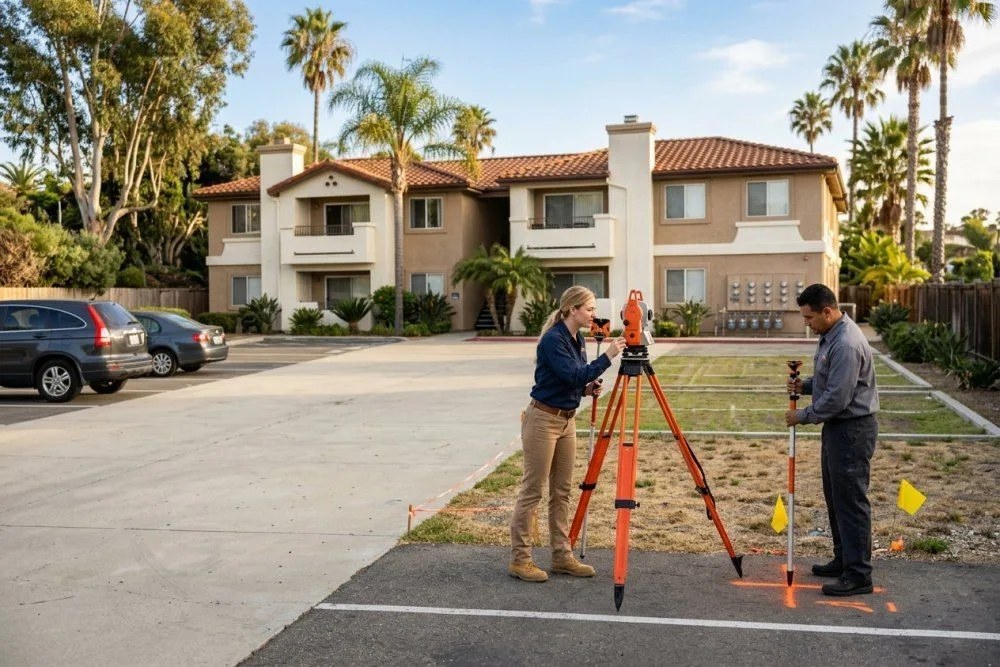
Setback complications arise frequently on irregularly-shaped Orange County lots. The four-foot minimum setback seems straightforward, but corner lots, flag lots, and properties with easements create complex geometry that requires professional surveying. We've seen projects delayed months over setback disputes that could have been resolved with proper survey work upfront.
Parking requirements create another common stumbling block, particularly for coastal properties where street parking is limited. While SB 1211 allows reduced parking near transit, cities retain discretion over what constitutes adequate transit access. Properties near bus routes but distant from rail stations face particular scrutiny from planning departments.
Evaluating Your Property for ADU Development
Lot configuration determines ADU feasibility more than any other factor for Orange County multifamily properties. Successful ADU development requires adequate space for construction access, utility connections, and ongoing maintenance while preserving parking and landscaping for existing tenants. Properties with L-shaped or rectangular lots typically offer better ADU placement options than narrow, linear configurations.
We evaluate existing infrastructure capacity as the second critical factor. Properties built before 1990 often require electrical panel upgrades to support additional units, while older sewer connections may need replacement to handle increased flows. Gas service capacity rarely constrains ADU development, but properties using all-electric ADUs may require substantial electrical infrastructure investments.
Zoning overlays and design restrictions vary dramatically across Orange County cities. Costa Mesa's flexible ADU standards contrast sharply with Laguna Beach's strict architectural requirements. Properties in historic districts or areas with design overlays face additional review processes that can double permitting timelines and increase architectural costs significantly.
Financial Feasibility Analysis
Economic feasibility depends on the relationship between total development costs and sustainable rental income. Orange County ADUs achieving $2,500+ monthly rents can support development costs up to $250,000, assuming conservative 10% vacancy and 25% operating expense ratios. Lower-rent inland locations require proportionally lower construction costs to generate acceptable returns.
Property tax implications deserve careful consideration, as ADUs typically trigger property reassessment at current market values. The additional rental income usually far exceeds incremental property tax costs, but cash flow timing requires planning. We recommend budgeting 1.2-1.4% of ADU construction costs for ongoing annual property tax increases.
Managing ADU Construction Projects
Contractor selection critically impacts both project costs and timelines for Orange County ADU development. We maintain relationships with contractors specializing in small-scale multifamily construction who understand the unique challenges of building on occupied properties. General contractors with single-family residential focus often struggle with tenant relations and site logistics at multifamily properties.
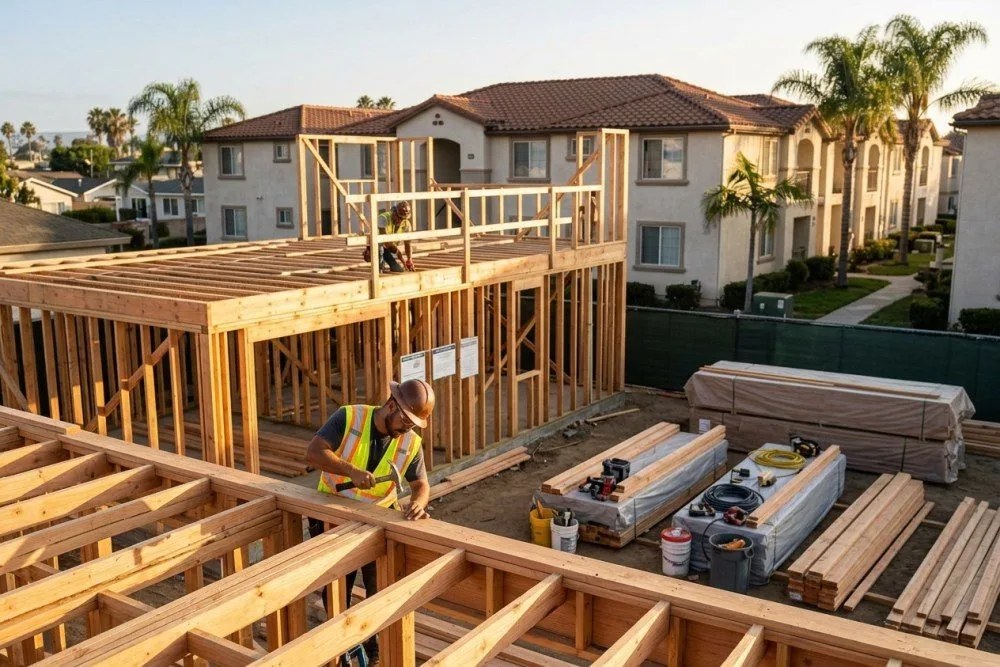
Construction sequencing becomes complex when building multiple ADUs simultaneously on occupied multifamily properties. Noise restrictions, parking disruptions, and dust control require careful coordination to minimize tenant complaints. We typically stagger ADU construction in phases, completing 2-3 units before starting additional buildings to maintain tenant satisfaction.
Material costs in Orange County consistently run 10-15% above inland California markets due to transportation costs and higher labor rates. However, the superior rental income potential justifies these premium costs for most projects. We recommend locking in material prices early in the development process, as Orange County's active construction market creates frequent price volatility.
Tenant Relations During Construction
Successful ADU construction at occupied multifamily properties requires proactive tenant communication and accommodation measures. We provide advance notice of construction schedules, temporary parking arrangements, and noise mitigation plans. Offering small rent concessions or property improvements often prevents tenant turnover that could cost far more than construction accommodations.
Properties managed by professional Orange County property management companies typically experience fewer construction-related tenant issues. Experienced property managers understand how to balance construction needs with tenant satisfaction, often preventing costly disputes or vacancy increases during development periods.
Long-Term ADU Management Strategies
Rental rate optimization for Orange County ADUs requires understanding the distinct market dynamics compared to traditional apartment units. ADUs command premiums for privacy and detached living, but smaller sizes limit rental ceilings. We typically price new ADUs 10-15% below comparable apartment units per square foot, but 20-30% above on a per-bedroom basis due to the premium living experience.
Maintenance considerations differ for detached ADUs versus traditional multifamily units. Individual HVAC systems, private entrances, and separate utility meters create more complex maintenance coordination but reduce tenant complaints about shared systems. We budget 6-8% of rental income for ADU maintenance compared to 4-6% for conventional apartment units.
Property management fees for ADUs typically align with small multifamily rates of 8-10% of rental income, though some companies charge premiums for managing mixed property types. The key advantage: ADUs rarely experience the vacancy clustering that affects larger apartment buildings during economic downturns, providing more stable rental income streams.
Maximizing Long-Term Property Value
Well-executed ADU development can increase Orange County multifamily property values by 15-25% through both income increases and expanded highest-and-best-use potential. Appraisers increasingly recognize ADU income streams as permanent property features rather than temporary improvements. The key requirement: demonstrating consistent rental history and proper permitting documentation.
Future development potential adds another value layer for Orange County multifamily properties with ADU capacity. Properties that haven't maximized their SB 1211 allowances offer expansion opportunities that sophisticated buyers value highly. This optionality becomes particularly valuable as Orange County's housing shortage continues constraining supply.
Risk Management and Common Pitfalls
Regulatory risks remain the primary concern for Orange County ADU development despite SB 1211's state-level protections. Local cities retain significant discretion over design standards, environmental reviews, and impact fees that can derail projects or inflate costs substantially. We recommend engaging local planning departments early to identify potential regulatory obstacles before committing significant development resources.
Construction cost overruns plague many first-time ADU developers who underestimate Orange County's complex building requirements. Site conditions like poor soils, utility conflicts, or drainage issues frequently emerge during construction, requiring expensive solutions. We recommend 15-20% construction contingencies and thorough site investigation before finalizing development budgets.
Market timing risks affect ADU development projects with extended timelines. Orange County rental markets can shift during 12-18 month development cycles, potentially reducing projected rental income. However, the region's structural housing shortage provides some insulation against market corrections compared to more volatile rental markets.
Insurance and Liability Considerations
ADU development increases property insurance requirements and potential liability exposures for multifamily owners. Additional units require coverage increases, while construction periods create temporary risks requiring builder's risk policies. We recommend reviewing California multifamily insurance requirements before starting ADU projects to ensure adequate protection.
Liability issues can arise from tenant injuries during construction or disputes over noise, dust, and access disruptions. Comprehensive general liability coverage and clear tenant communication help mitigate these risks. Professional property management companies typically carry additional insurance specifically covering construction-related tenant issues.
Frequently Asked Questions