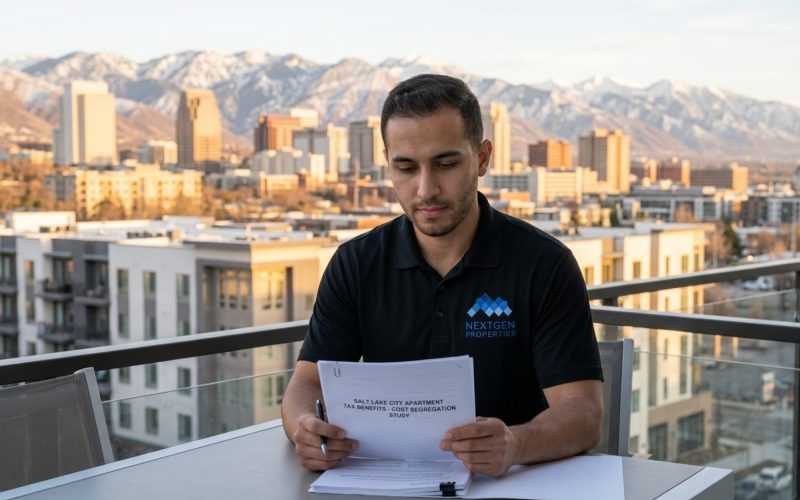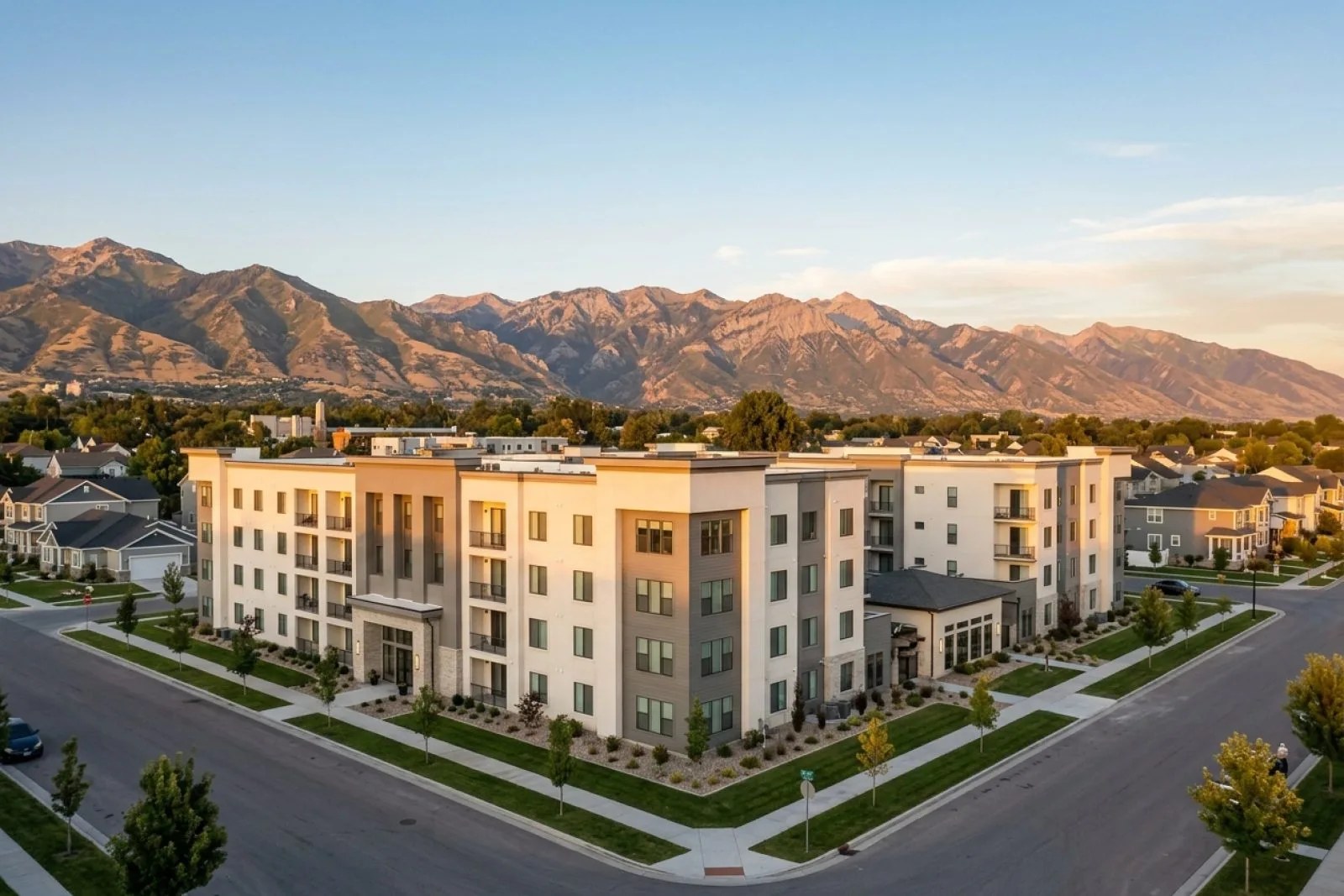
Utah's multifamily market offers compelling 1031 exchange opportunities in 2026, with cap rates averaging 4.4% in Salt Lake City and strong demographic fundamentals driving long-term demand. The One Big Beautiful Bill Act preserved 1031 exchanges without caps, while Section 1031 remains intact as of January 2026 with traditional 45-day identification and 180-day completion deadlines. Utah's effective property tax rate of 0.52% and number one ranking for economic outlook for 18 consecutive years create a favorable investment climate for multifamily exchanges.
Utah 1031 Exchange Fundamentals
The 1031 exchange remains a cornerstone tax strategy for multifamily investors, allowing real estate investors to defer capital gains and depreciation recapture taxes by reinvesting proceeds into another like-kind property. For Orange County investors evaluating Utah markets, understanding the current regulatory landscape is essential.
The One Big Beautiful Bill Act, signed into law in early 2025, kept 1031 exchanges without the $500,000 limit that had been suggested in earlier drafts. This preservation provides critical certainty for investors planning significant portfolio repositioning moves into Utah's growing multifamily sector.
The basic mechanics remain unchanged: Real estate remains eligible when it is held for investment or business use and exchanged for like kind real estate with the 45 day identification period and 180 day exchange period remaining the timing backbone for deferred exchanges. However, success depends on precise execution and understanding state-specific advantages that Utah offers.

Like-Kind Property Requirements
Most real estate held for business or investment purposes is like-kind property, allowing trades of single-family rental homes for multifamily apartment complexes, retail storefronts for industrial warehouse space, or vacant land for developed commercial properties. This broad interpretation enables California multifamily owners to exchange into Utah apartment buildings, office properties, or even land development opportunities.
Critical Timing Requirements
The 1031 exchange operates on two non-negotiable deadlines: Missing either one kills the exchange entirely, and no extensions are granted for any reason. Within 45 days of selling your relinquished property, you must provide a written, signed identification of potential replacement properties to your qualified intermediary. The 180-day completion window includes an important caveat: if you don't ask for an extension, your tax return is due on April 15, 2026, which means you only have until April 15 to finish the exchange, not May 14 for transactions closing late in the year.
Utah Multifamily Market Analysis
The 26% value decline significantly outpaces the 8.25% rent decline, creating compressed entry valuations for patient 1031 exchange investors
Utah's multifamily fundamentals present compelling opportunities for 1031 exchange investors seeking both tax deferral and portfolio appreciation. The state's economic strength underpins rental demand while offering more favorable cap rates than coastal markets.
Salt Lake City Market Fundamentals
Salt Lake City's multifamily market remains one of the most competitive in the nation. Despite a 2.2% vacancy rate, rents have continued to climb, with an average asking rent of $1,632 per unit and rent growth of 15.1% year-over-year. However, investors should note market dynamics are evolving.
Back in 2022, which was the peak of the market, you could underwrite double-digit rent growth on a typical 250-apartment deal Downtown. Now, effective rents are down about 8.25%, with overall multifamily values down 26%, though the glut of new units could last through 2026 and into 2027. This correction creates entry opportunities for patient 1031 exchange investors.
Cap Rate Compression Concerns
Utah's popularity has compressed cap rates relative to risk-adjusted returns available elsewhere. Investors aren't jumping at the 4.6 cap deals they can typically find in Utah today when they could get over 5.5 in other major markets, with some noting "Salt Lake, a 4.6 cap, I personally think it's a little mispriced relative to where else we can put our money".
Despite compression concerns, multifamily cap rates have held steady at 5.7% nationally for seven quarters, but analysts expect cap rates to decline gradually in 2026, with First American's Potential Cap Rate model showing the "true" cap rate supported by market fundamentals at 5.1%, creating a 60-basis-point gap.
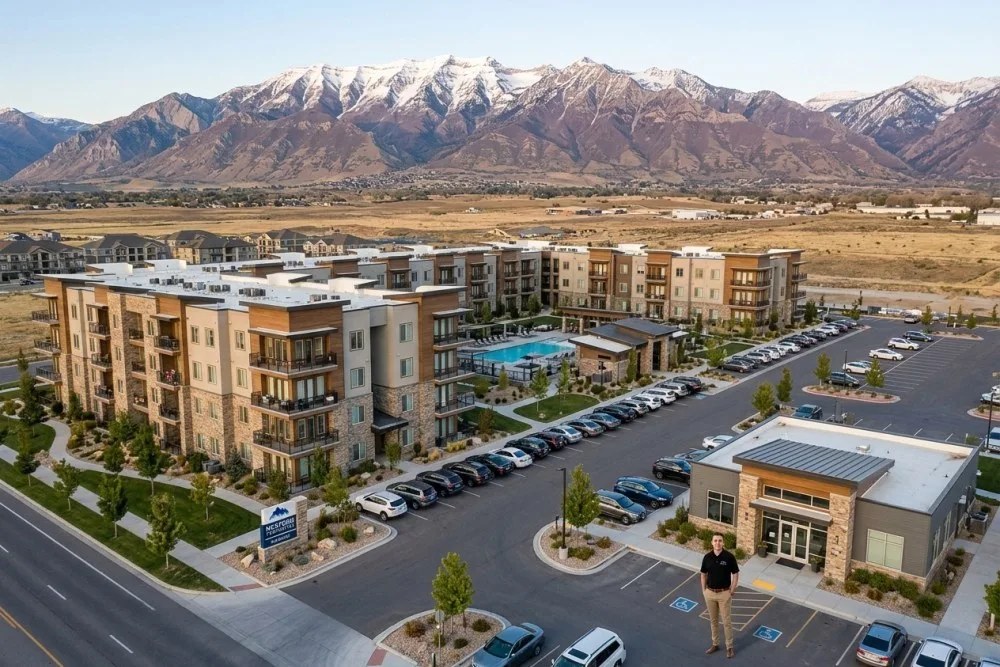
Utah Tax Advantages for Multifamily Investors
Utah's 0.47% effective property tax rate provides substantial ongoing savings for 1031 exchange investors relocating from higher-tax California markets
Utah's tax structure creates compelling advantages for 1031 exchange investors, particularly those relocating capital from high-tax states like California. The combination of low property taxes and favorable income tax rates enhances after-tax returns significantly.
Property Tax Benefits
Utah has an effective property tax rate of 0.47%, ranking it #42 among all 50 states, with the median homeowner paying $2,525 per year in property taxes on a home valued at $489,400. For commercial multifamily properties, this translates to substantial ongoing savings compared to California markets.
Residential properties that are the primary residence of the homeowner in Utah receive a property tax exemption of 45%, meaning only 55% of a home's value is subject to taxation, keeping property taxes for most homeowners quite low. While this exemption applies primarily to owner-occupied housing, the overall low property tax environment benefits all real estate investors.
Income Tax Structure
Utah has a 4.55 percent flat tax on income with no estate or inheritance tax. In Utah, investment income and capital gains are taxed if they are included in the federal adjusted gross income, taxed at 4.55 percent. This creates predictable tax planning for rental income and eventual disposition strategies.
Economic Development Incentives
Utah's targeted incentive programs administered by the Utah Governor's Office of Economic Opportunity include Economic Development Tax Increment Financing (EDTIF). In FY 2025, 18 board-approved projects are projected to create nearly 3,850 new jobs and nearly $6.7 billion in capital investment. These job creation initiatives support multifamily demand fundamentals.
1031 Exchange Execution Strategy
Successfully executing a 1031 exchange into Utah multifamily requires careful planning, proper intermediary selection, and understanding of identification rules. The process demands precision, as it lets you upgrade properties, diversify into different markets, or consolidate holdings without losing 15-23.8% of your equity to taxes each time.
Identification Rules and Strategies
The identification must be specific: street address or legal description. You can identify replacement properties using the Three-Property Rule (up to three properties regardless of value), the 200% Rule (any number of properties as long as their combined fair market value does not exceed 200% of the relinquished property's value), or the 95% Rule (any number of properties of any value, but you must acquire at least 95% of the total value identified).
Avoiding Boot and Tax Consequences
Example: You sell a rental property for $500,000 with a $200,000 mortgage. Net equity is $300,000. You buy a replacement for $450,000 with a $200,000 mortgage, using $250,000 from the exchange. The remaining $50,000 is boot and is taxable. To avoid boot entirely, the replacement property must be equal or greater in value and equal or greater in debt (or equity) compared to the relinquished property.
Qualified Intermediary Requirements
It's important to remember that you don't directly handle the money from your sale. A qualified intermediary must keep the proceeds. The IRS thinks that any money you touch, even for a second, is taxable income, and you can't exchange it anymore. Selecting an experienced QI familiar with Utah markets enhances transaction success.

Utah Economic Fundamentals Supporting Multifamily
Utah's economic strength provides the foundation for sustainable multifamily investment performance. Understanding these drivers helps 1031 exchange investors evaluate long-term appreciation potential beyond immediate tax benefits.
Employment and Population Growth
Salt Lake City employment growth stood at 1.8% year-over-year as of June, among the top performers nationally and well above the 0.8% U.S. rate. Unemployment was 3.6% in July, with education and health services accounting for nearly half of the 29,200 net jobs gained over the 12 months ending in June.
The local economy, valued at $112.9 billion in 2024, continues to thrive with projections to reach $118.9 billion by 2026. A low unemployment rate of 3.6% (compared to 4.6% nationally) reflects the city's strong job market, with sectors such as technology, healthcare, and logistics driving growth.
Business Climate Rankings
The state has been ranked No. 1 in the nation for economic outlook for 18 consecutive years, according to the Rich States, Poor States: ALEC-Laffer State Economic Competitiveness Index. This sustained top positioning reflects Utah's low tax burden, pro-growth regulatory framework, and emphasis on fostering entrepreneurship and innovation.
A recent study ranked Utah as the fifth-best state in the nation for business ventures in terms of economic, workforce, infrastructure, costs and tax factors. This consistent recognition attracts businesses and workers, supporting multifamily rental demand.
Infrastructure and Development
Utah's government and private sector have invested heavily in new infrastructure. The Utah Department of Transportation had over 200 road construction projects statewide in 2023–2024 totaling nearly $3 billion, including new highway corridors and freeway interchange upgrades that improve connectivity in rapidly growing suburbs.
Major development projects enhance long-term multifamily prospects: The Point is the state-led transformation of the former Utah State Prison site into a mixed-use district with ~600 acres; Phase 1 covers ~100 acres with infrastructure work underway and first vertical development expected mid-to-late 2026, featuring a planned 3,000-seat entertainment venue and early multifamily residential.
Market Timing Considerations for 2026
Current market conditions present both opportunities and challenges for 1031 exchange investors targeting Utah multifamily assets. Understanding cyclical dynamics helps optimize entry timing and property selection strategies.
Supply and Demand Dynamics
Elevated construction activity is creating near-term supply pressure, with 2025 deliveries expected to remain high before declining sharply in 2026. Vacancy and rent trends are mixed, with overall occupancy improving despite rent softness driven by concessions and Class A deliveries.
The consensus: late 2027 is when excess supply may mostly burn off, concessions fade, and new fundamentals surface. But 2026 is a transition year—still soft in some corners, but with early signs of stabilization in others. This creates potential entry opportunities for patient capital.
Interest Rate Environment
Analysts expect the Federal Reserve to trim short-term rates by roughly two percentage points between late 2025 and the end of 2026, easing borrowing costs statewide. That one-two punch of strong demand and cheaper capital opens a rare window for expansion.
Most projections anticipate 30-year mortgage rates averaging around 6.2–6.3% throughout 2026, with statewide projections suggesting roughly 3–4% median price appreciation in Utah during 2026, though major metro areas may see stronger performance with some forecasts calling for 4–6% growth.
Rental Market Projections
Rental rates in many Utah metros are projected to grow 4–6% annually through 2026, potentially outpacing home price appreciation in some markets. For real estate investors, Utah's rental market fundamentals appear relatively attractive, with solid projected rent growth and moderate price appreciation.
ADU Development Opportunities
Utah's progressive ADU regulations create unique value-add opportunities for 1031 exchange investors seeking to maximize rental income potential through property enhancement strategies.
Regulatory Environment
In 2026, the "Beehive State" has some of the most homeowner-friendly ADU laws in the country, making it easier than ever to build on your own land. These regulations enable creative approaches to increasing rental yield on exchange properties.
Salt Lake County adopted an ordinance on June 4, 2024, to reduce restrictions to facilitate greater ADU adoption by residents. This webpage is a general guide to help you determine eligibility, understand requirements, and navigate the permitting process.
Development Economics
ADU construction costs vary significantly by configuration: Because so many Utah homes already have large basements, converting this space is often the cheapest route. You already have the "shell" and the roof; you just need to add a kitchen, separate entrance, and fire-rated ceilings.
An ADU isn't just an expense; it's an asset. Adding an ADU will increase your property value, which means your property taxes will likely rise. However, in Utah, your primary residence still qualifies for the 45% residential exemption, so the tax hike is usually much smaller than the rental income the unit generates.

Risk Management and Due Diligence
Successful 1031 exchanges require comprehensive risk assessment and mitigation strategies. Understanding Utah-specific considerations helps protect exchange proceeds while maximizing investment returns.
Market Risk Assessment
Current market conditions demand careful evaluation of entry timing and asset selection. Investing with a long-term hold strategy seems prudent today. With an abundance of new units entering the market, rental increases being on the flat side, and vacancy, concessions and expenses on the rise, it is not likely that net operating incomes will improve much through 2026.
This environment favors experienced operators with strong underwriting discipline: Expect inflation to continue to increase on property expenses. This all adds up to considering a 6-year hold where a higher ROI can be realized in the future.
Financing Considerations
Utah banks cap most investor deals around 75–80 percent LTV with a 1.25 debt-service ratio. Understanding these parameters helps structure exchanges that maintain adequate leverage while meeting lender requirements.
Apartment and multifamily loan rates from 5.64% for a HUD loan, 5.94 for FHA. HUD Loans are one of the best options with the current level of interest rates. Agency financing can provide attractive long-term fixed rates for stabilized properties.
Property Management and Operations
Utah's regulatory environment requires attention to local compliance requirements. Properties must meet state and local codes while optimizing operational efficiency. Costa Mesa property management expertise can translate well to Utah markets, though local partnerships may prove valuable for regulatory compliance and tenant relations.
Tax Compliance and Reporting Requirements
Proper documentation and reporting ensure 1031 exchange benefits are preserved while avoiding IRS scrutiny. Understanding filing requirements and record-keeping obligations protects the tax-deferred status of exchange transactions.
Form 8824 Requirements
The form documents how the exchange was structured and how gain was deferred. The IRS uses it to confirm that the transaction followed Section 1031 requirements. Even if the exchange produced no taxable income, the form is still required. Form 8824 requires specific transaction details, including description of the relinquished and replacement properties.
The reporting year is based on when the relinquished property was sold, not when the replacement property was acquired. Form 8824 is filed with the 2026 tax return because that is the year the exchange began. If the exchange spans two calendar years, the form still belongs with the return for the year of the sale.
Record Retention
Maintaining comprehensive documentation supports the exchange's validity and facilitates future transactions. Records should include purchase agreements, closing statements, QI documentation, identification notices, and all correspondence related to the exchange process.
The exchange documentation becomes part of the replacement property's tax basis calculation, affecting future depreciation schedules and disposition calculations. Proper record-keeping ensures accurate basis tracking throughout the investment holding period.
Implementation and Next Steps
Executing a successful 1031 exchange into Utah multifamily requires coordinated planning, professional guidance, and precise timing. The opportunity window may be particularly attractive in 2026 as market corrections create entry points.
Professional Team Assembly
Success requires assembling experienced professionals familiar with both 1031 exchanges and Utah markets. Key team members include a qualified intermediary, tax advisor experienced with exchanges, Utah-focused commercial broker, and local property management company familiar with state regulations.
Each professional should have demonstrated experience with multifamily transactions and understanding of Utah's specific regulatory environment. The qualified intermediary selection is particularly critical, as the strategy comes with strict rules, including 45-day and 180-day deadlines, use of a qualified intermediary, and reinvesting into equal or greater value property, where missing any requirement can invalidate the exchange and trigger taxes.
Market Research and Property Selection
Thorough market analysis should evaluate submarket fundamentals, competitive positioning, and growth prospects. Focus areas might include emerging submarkets benefiting from infrastructure improvements or established areas with proven rental demand and moderate cap rates.
Property selection should balance current cash flow with appreciation potential, considering Utah's projected economic growth and demographic trends. The state's business-friendly environment and population growth support long-term multifamily fundamentals despite near-term supply challenges.
Timeline Management
Given the strict 1031 deadlines, advance preparation proves essential. Begin market research and team assembly before listing the relinquished property. Identify potential replacement properties and establish relationships with local brokers to facilitate rapid due diligence within the 45-day identification window.
Many successful investors now use dual tracking, which means they market their old property while also looking for new ones to buy. This parallel approach helps keep control and timing, especially in competitive markets where good properties sell quickly.
Utah's combination of tax advantages, economic growth, and multifamily fundamentals creates compelling opportunities for 1031 exchange investors willing to navigate current market dynamics with patience and professional guidance. The state's long-term growth trajectory, supported by business-friendly policies and infrastructure investment, positions well-selected multifamily assets for sustained performance beyond the immediate tax deferral benefits.
Frequently Asked Questions