The Coachella Valley short-term rental market transforms into one of America's most lucrative investment opportunities during April festival season, with nightly rates spiking to $1,200+ versus $665 baseline ADRs and individual properties generating $10,000-$30,000+ in festival weekend revenue. However, recent regulatory tightening across valley cities creates a complex compliance landscape: Palm Springs now caps annual rental contracts at 26 (effective January 1, 2026), while Cathedral City and Rancho Mirage have stopped issuing new permits entirely. Smart investors focus on proximity to Empire Polo Club grounds in Indio, where high STR regulations require licensing but 89% of listings maintain compliance, and festival demand concentration delivers 70% of monthly revenue across just three weekends. With Coachella 2026 projected to generate over $20 million in direct tourism spending and accommodation rates rising 61.6%, this analysis examines acquisition costs, operating expenses, regulatory compliance, and ROI projections for positioning in this high-reward desert market.
Festival Economics Drive Unprecedented Demand
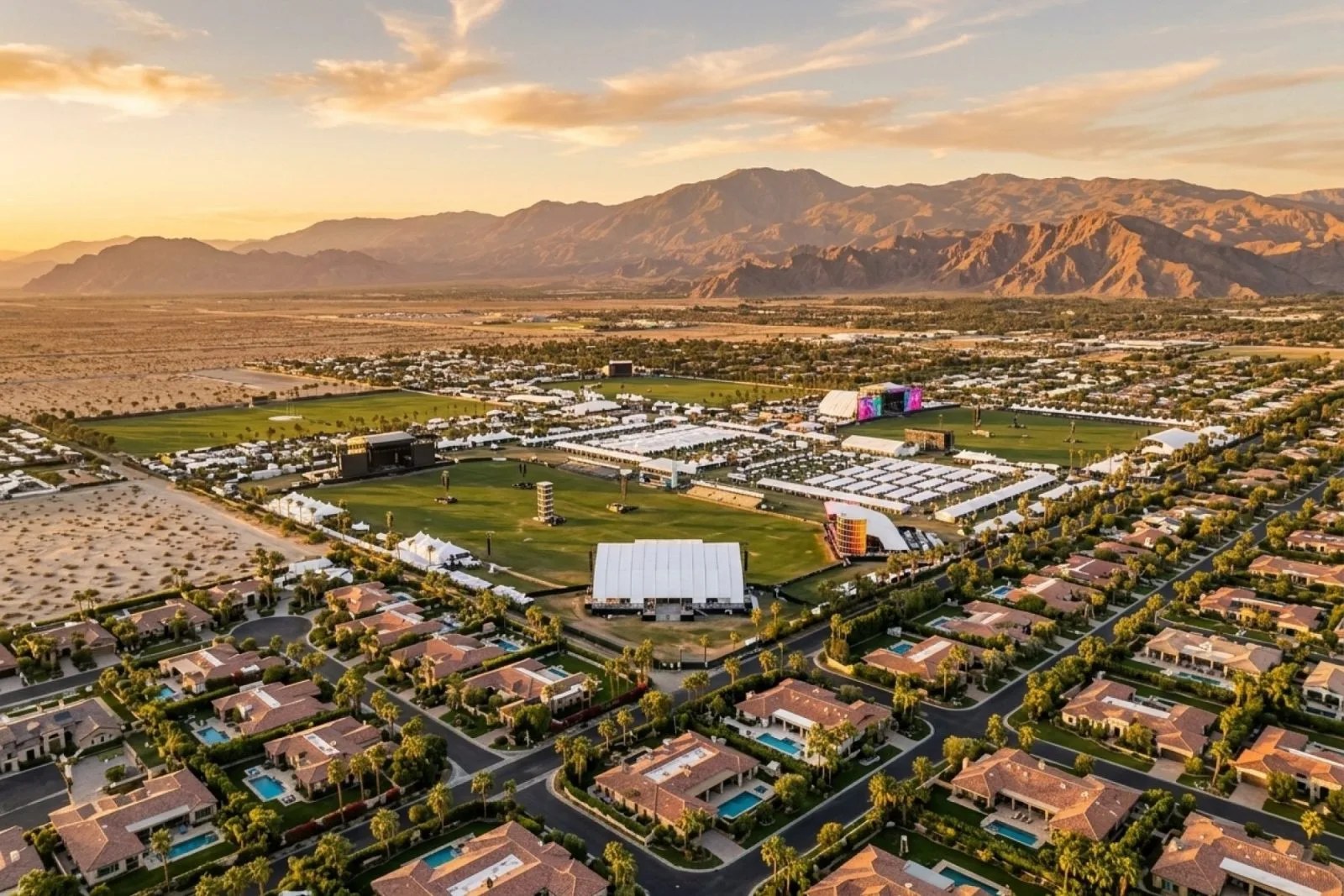
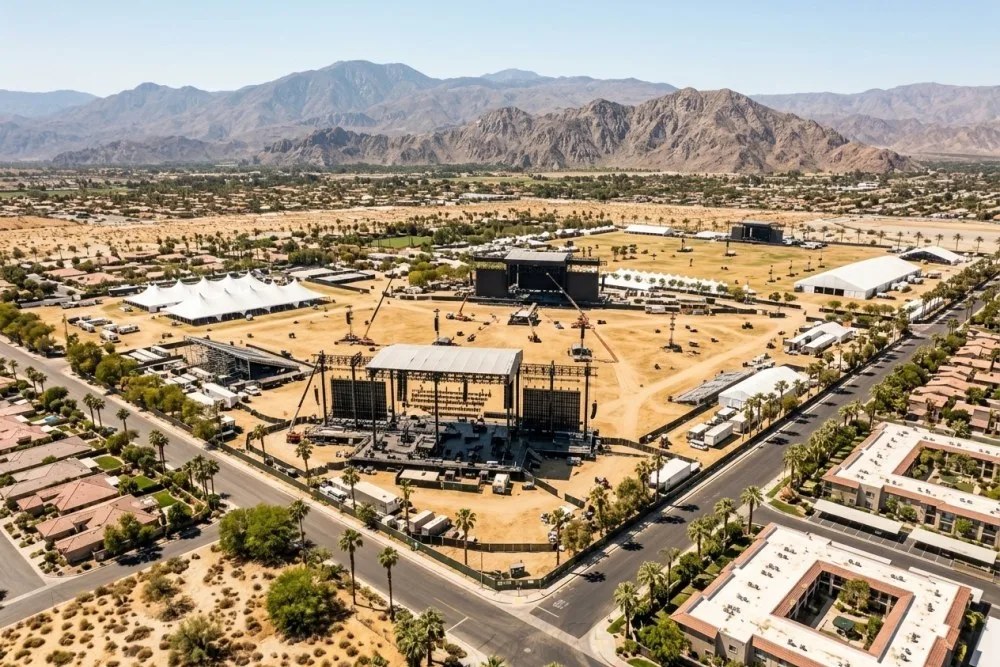
The Coachella Valley transforms into America's music capital every April, generating extraordinary rental demand that dwarfs traditional seasonal patterns. Festival attendance of 125,000 visitors per weekend (250,000 total across both weekends) creates a supply-demand imbalance that fundamentally reshapes the economics of short-term rental investment.
Up to 30% of travelers arrive three days before the festival and stay for up to two days afterward, extending the high-demand window well beyond the actual event dates. This creates multiple revenue opportunities: pre-festival arrivals seeking to avoid crowds, peak weekend bookings at premium rates, and post-festival recovery stays.
The revenue concentration is remarkable. Three festival weekends capture roughly 70% of April's total revenue, making those weekends "the year" for Indio hosts. A single 3-night Coachella stay can generate more revenue than an entire month of traditional bookings in most markets.
Festival Rental Rate Premiums
Festival rates deliver 80%+ premiums across all property types - even budget hotels command $600+ while luxury STRs approach $2,500 per night
The rental rate spikes during festival season represent some of the highest premiums in American short-term rental markets. AirROI data shows Indio listings asking $1,200 per night during Coachella Weekend 2, versus a trailing-twelve-month ADR of $665 — an 80% premium that reflects the concentrated demand.
Market positioning determines premium capture. Properties closest to Empire Polo Club festival grounds produce the largest ADR spikes, with Indio and La Quinta markets more than doubling their normal April baseline rates. Distance matters: each mile from the festival grounds typically corresponds to measurably lower peak pricing power.
High-profile cases like Sophie Rain's booking — originally $29,000, re-booked for $83,375 after cancellation — illustrate both the extreme premiums possible and the cancellation risks that complicate the market. While these represent outlier luxury properties, they demonstrate the revenue potential for properly positioned assets.
Even traditional hotels command extraordinary rates. Motel 6 and Best Western properties charge $600-$700 per night, while JW Marriott Desert Springs commands $2,487 per night during festival weekends, providing competitive context for STR pricing strategies.
Navigate the Complex Regulatory Environment
The regulatory landscape across Coachella Valley cities has tightened significantly, creating both barriers and opportunities for strategic investors. Understanding jurisdiction-specific rules is critical for compliant operations and long-term profitability.
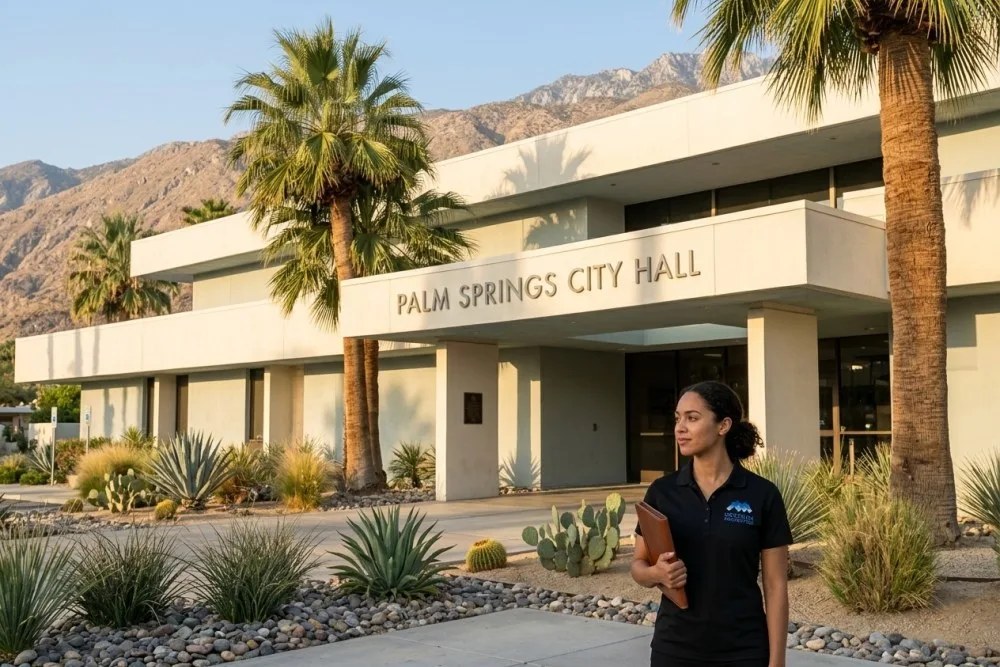
Palm Springs remains STR-friendly but with new restrictions. The city reduced annual rental contracts from 36 to 26, effective January 1, 2026 for existing permits. Properties must operate under neighborhood density caps (20% maximum), comply with booking limits, and meet Good Neighbor noise standards.
Indio offers the most festival-proximity opportunity but requires careful compliance. The city enforces high STR regulations with licensing requirements, though 90% of active listings maintain compliance. Annual permit and business license costs are $1,633, plus 13% Transient Occupancy Tax and 1% Tourism Business Improvement District assessment.
Limited Permit Cities create scarcity value but restrict new entry. Cathedral City phases out most STRs by 2023, while Rancho Mirage only allows permits in HOAs that explicitly permit short-term rentals. Palm Desert's interim ordinance puts a moratorium on new STR permits in Planned Residential zones, with exceptions only for HOA-approved properties.
Jurisdiction verification is essential. Palm Springs city rules don't apply in unincorporated Riverside County, and vice versa, even within the Coachella Valley. Many properties marketed as "Palm Springs" actually fall under different regulatory frameworks, affecting compliance requirements and operating costs.
Property Acquisition and Market Positioning
Indio attached homes at $251K offer festival-proximity access at 22% of Palm Springs detached pricing - the entry point advantage is dramatic
Successful Coachella Valley STR investment begins with strategic property selection that balances acquisition costs, festival proximity, and regulatory compliance. The market rewards precision over speculation.
Median detached home prices across the Coachella Valley reached $699,000 in February 2026, while attached homes averaged $500,000. However, festival-optimized properties typically require higher investment. One investor reported $425,000 out-of-pocket costs for a 6-bedroom Indio property (including 25% down, pool construction, and furnishings) targeting $250,000-$275,000 annual gross revenue.
Location premiums vary significantly by city. Palm Springs detached homes average $1,127,144 (down 8.4% year-over-year), while Indio attached homes average $251,253 (down 10.5% from peak). For investors prioritizing festival proximity over luxury positioning, Indio offers more accessible entry points with stronger event-driven demand.
Proximity to Empire Polo Club drives premium capture, with properties within 10-15 minutes offering optimal positioning for festival groups seeking to avoid rideshare delays and traffic. Investors should prioritize neighborhoods like Terra Lago in Indio, which combines festival proximity with STR-friendly HOA policies.
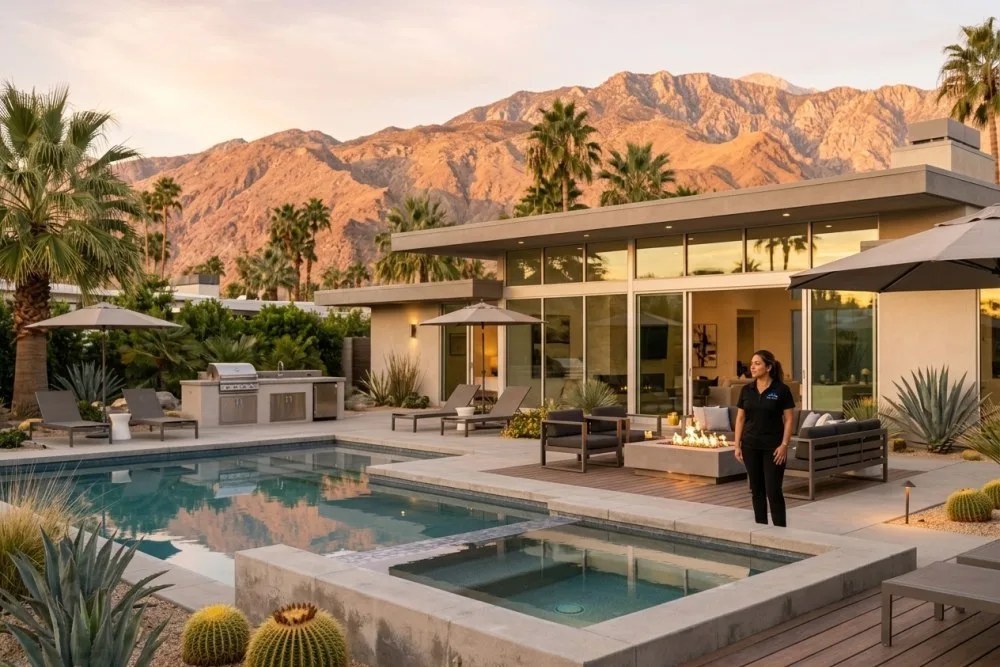
Property features matter for festival bookings. Smart investors focus on homes appealing to large groups, particularly properties with pools (essential in desert markets), multiple bedrooms accommodating 8-12 guests, and outdoor entertainment spaces suitable for pre-festival gatherings.
Operating Expenses and Cost Management
Successful Coachella Valley STR operations require careful attention to both seasonal cost spikes and year-round baseline expenses. The desert climate and festival demand create unique operational considerations that affect profitability.
Utilities represent the largest variable cost. SoCal Edison rates in Palm Springs and Cathedral City range from 20-25 cents per kilowatt-hour with complex tier pricing, while IID rates in Indio and Palm Desert average 11-12 cents per kilowatt-hour with simpler structures. Summer electricity bills can reach $470 in August for typical 1,800 square foot homes, making energy efficiency and solar installation strategic considerations.
Property management fees significantly impact net returns. Professional management ranges from 20-30%, which can eliminate cash flow for highly leveraged properties. However, self-management of successful STRs with 60-70% occupancy requires substantial expertise and time commitment, particularly during peak festival seasons when guest volume peaks.
Maintenance and turnover costs spike during festival periods. High-occupancy weekends generate more wear on properties, higher cleaning requirements, and potential damage from large groups. Smart operators budget 15-20% of gross revenue for maintenance, cleaning, and supplies, with higher reserves during April.
Insurance and liability considerations intensify with festival bookings. Standard homeowner's policies typically exclude commercial STR activity, requiring specialized coverage that accounts for higher occupancy, pool liability, and potential noise/damage claims. Annual premiums typically range from $2,000-$5,000 for comprehensive STR coverage.
Tax compliance adds administrative complexity. Both TOT and TBID must be reported monthly regardless of booking activity, with reports due by the last day of the following month. Late filing penalties and audit risks make professional tax management advisable for serious operators.
Festival Season Revenue Analysis
The revenue potential for well-positioned Coachella Valley STR properties during festival season can justify entire annual investment strategies, but requires understanding both peak performance and realistic baseline expectations.
An average Indio listing charging $1,200 per night during Coachella Weekend 2 can generate $3,600 for a single 3-night stay — roughly 5% of annual revenue earned in 0.8% of the year. This revenue concentration creates both opportunity and risk: missing festival bookings significantly impacts annual performance.
Properties near Empire Polo Club can generate $10,000-$15,000 per festival weekend depending on size and amenities, while top-performing properties capture $10,000-$30,000+ in April revenue alone. However, these figures represent gross revenue before substantial operating expenses and vacancy periods.
Performance varies dramatically by tier: top 10% of Indio properties achieve $15,501+ monthly, while median properties generate around $5,423 per month. The difference between top-performing and average properties often correlates directly with festival season execution and positioning.
Market averages show Coachella hosts earning $59,877 per year with $664 average nightly rates and 37.2% occupancy. However, these figures include many properties not optimized for festival capture, suggesting upside potential for strategically positioned investments.
The booking window provides strategic advantages. Average booking lead time is 63 days, but April stays book 104 days in advance, allowing informed operators to capture festival demand early and implement premium pricing strategies.
Investment Risks and Mitigation
Coachella Valley STR investments face unique risks that require proactive management strategies. The market's dependence on festival economics creates both concentrated opportunity and concentrated vulnerability.
Regulatory risk tops the list. Palm Springs constantly reviews STR regulations, with neighborhood percentage caps subject to future City Council changes. Riverside County imposed a 45-day moratorium on new STR certificates in Thousand Palms, demonstrating regulatory volatility. Investors must monitor municipal meetings and maintain compliance flexibility.
Festival cancellation risk became clear during COVID-19. Coachella was canceled in 2020 and 2021, translating into lost visitor spending for hotels, restaurants, and STR operators who relied on annual festival revenue. Properties dependent on April revenue concentration face significant downside if major events are disrupted.
Market saturation concerns grow as supply increases. Supply grew 64.9% over the past year in Coachella city, though revenue and rates both trended upward. However, experienced operators note market saturation requires properties to "really stand out" with higher upfront investment costs.
Cancellation arbitrage poses operational challenges. Dynamic cancellation penalties tied to current market ADR could close gaps, but cross-platform leakage allows hosts to cancel on Airbnb and relist on VRBO with minimal consequences. Recent reports of $2,000 bookings canceled and relisted at $5,000 highlight guest experience risks.
Competition from hotels intensifies as traditional hospitality recognizes festival economics. Hotel prices rose 61.6% relative to preceding weekends and 26% compared to 2025 festival periods, indicating hotels are capturing more festival premium that previously flowed to STRs.
Mitigation strategies include: diversifying revenue beyond festivals, maintaining compliance reserves, investing in distinctive amenities, and building repeat guest relationships that reduce platform dependence.
Strategic Investment Framework
Successful Coachella Valley STR investment requires a systematic approach that balances festival opportunity with year-round profitability. The market rewards preparation over speculation.
Market Selection Hierarchy: Prioritize Indio for festival proximity and permit availability, consider Palm Springs for luxury positioning despite tighter regulations, and evaluate Desert Hot Springs for lower acquisition costs. Indio offers festival demand, STR-friendly areas, and relatively affordable home prices compared to other desert cities.
Property Specifications: Target 4+ bedrooms accommodating 8-12 guests, prioritize pool inclusion (essential in desert markets), ensure parking for multiple vehicles, and select properties within 15 minutes of Empire Polo Club. You're competing with hotels offering pools and activities, making amenities critical for booking success.
Financial Modeling: Budget $425,000 total investment (including down payment, renovations, pool construction, and furnishings) for properties targeting $250,000-$275,000 gross revenue. Plan for 30-40% total expense ratios including management, utilities, maintenance, and compliance costs.
Operational Excellence: Book April 2027 festival dates by December 2026, implement dynamic pricing that captures shoulder demand, maintain pristine property conditions year-round, and develop repeat guest relationships that reduce platform dependency.
Risk Management: Diversify across multiple booking platforms, maintain 6-month expense reserves, monitor regulatory changes monthly, and develop backup revenue strategies (long-term rentals, corporate housing) for disruption scenarios.
Exit Strategy Planning: Properties maintain value potential even if STR regulations tighten, with decent demand for 30+ day rentals and long-term appreciation prospects. The worst-case scenario still involves owning real estate in a desirable resort market.
The Coachella Valley STR market offers exceptional returns for sophisticated investors who understand festival economics, regulatory compliance, and operational excellence. Success requires treating this as a business investment, not a passive income stream, with the potential for outsized returns justifying the complexity and commitment required.
Frequently Asked Questions