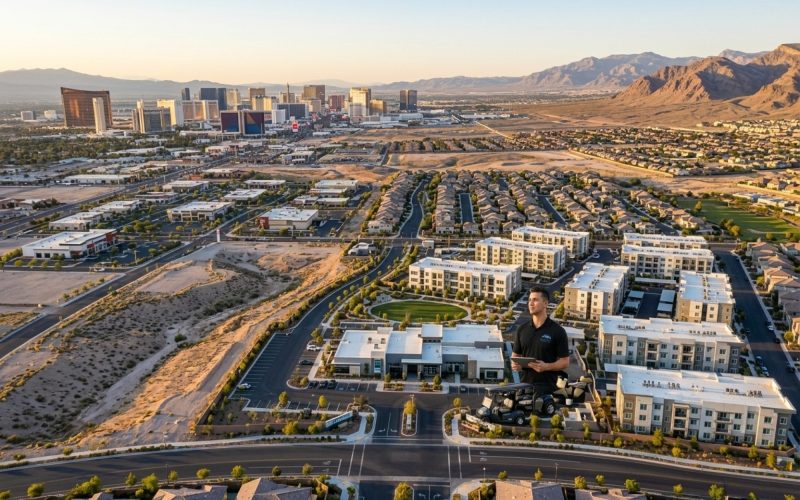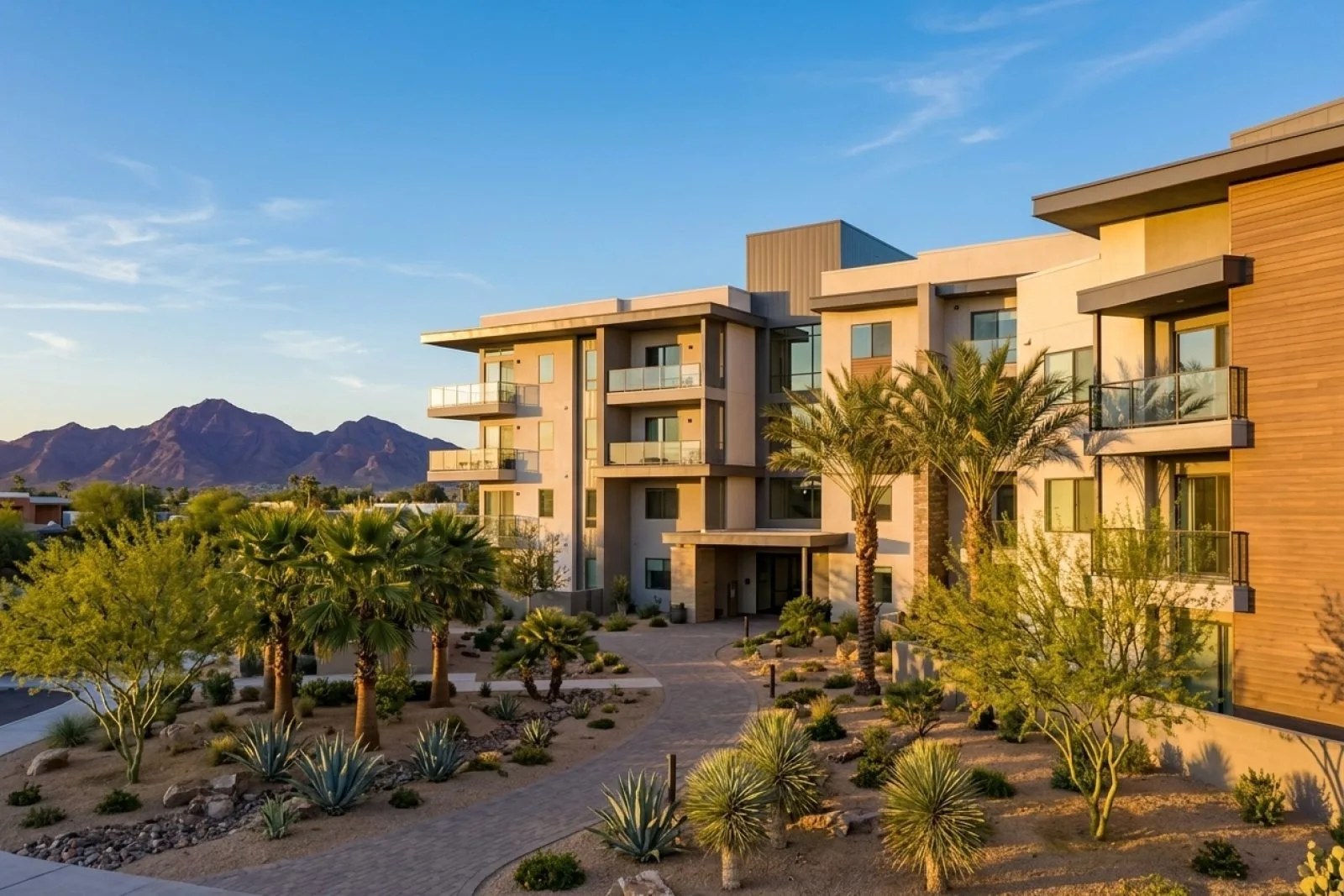
Phoenix's multifamily market faces unprecedented challenges in 2026, with rent declines averaging 8-12% and vacancy rates climbing to 15-18% due to massive oversupply. This dramatic shift fundamentally changes the risk-return equation between long-term rental strategies and Airbnb investments. While short-term rentals offered higher returns during Phoenix's boom years, the current market favors stable, predictable cash flow from traditional leases. Oversupply has created a tenant's market where consistent occupancy matters more than peak nightly rates. For multifamily investors, understanding these dynamics is crucial for protecting returns in Arizona's cooling market while California investors consider Phoenix expansion.
Phoenix Rental Market Reality: The Oversupply Crisis
Phoenix's multifamily landscape has fundamentally shifted in 2026. The metro area added over 45,000 new rental units in the past 18 months, while population growth slowed to just 1.2% annually—down from 3.4% in 2021-2022. This supply-demand imbalance created a renter's market that hasn't been seen since the Great Recession.
Higher-end properties carry significantly higher operating expense ratios due to premium amenities and service expectations.
Vacancy rates across Phoenix submarkets now range from 12% in premium Scottsdale properties to 22% in outlying areas like Goodyear and Surprise. Effective rents have declined 8-15% from 2023 peaks, with Class A properties experiencing the steepest drops. The oversupply particularly impacts newer construction competing directly with short-term rental inventory.
This market correction mirrors what we've observed in other high-growth Sun Belt markets. Development pipelines that seemed justified during 2021-2023's explosive growth now flood the market with competing inventory. The challenge for investors is adapting strategies to this new reality while positioning for eventual recovery.
Long-Term Rental ROI: Stability in Uncertain Times
Traditional long-term rental strategies have become increasingly attractive in Phoenix's oversupplied market. While gross rents have declined, the predictability of 12-month leases provides crucial cash flow stability that short-term rentals cannot match. Properties with strong tenant retention are significantly outperforming those with high turnover.

Current market rents for quality multifamily properties range from $1,400-$1,800 for two-bedroom units in secondary submarkets to $2,200-$2,800 in prime Scottsdale locations. While these represent 10-15% declines from peaks, they've stabilized over the past six months. Properties offering competitive amenities and responsive management are achieving 90-95% occupancy even in challenging submarkets.
Operating Expense Considerations
Long-term rentals benefit from predictable operating expenses that remain relatively constant regardless of occupancy fluctuations. Property taxes, insurance, and maintenance costs are spread across stable tenant bases. Utility expenses for common areas and vacant units represent the primary variable costs, making vacancy management critical for NOI optimization.
We've observed that well-managed Phoenix multifamily properties maintain operating expense ratios between 35-42% of gross rental income. Class A properties tend toward the higher end due to premium amenity costs, while Class B workforce housing operates more efficiently at 32-38% expense ratios.
Airbnb Performance: Volatility in Oversupply
Phoenix's short-term rental market faces dual pressures from multifamily oversupply and increased STR inventory. AirDNA reports over 18,000 active Airbnb listings in metro Phoenix—up 40% from 2023—while demand growth has flattened. This supply surge has compressed both occupancy rates and average daily rates across most property types.
Current ADR performance varies dramatically by location and property type. Premium Scottsdale properties near golf resorts maintain $180-$220 nightly rates but struggle with 45-55% occupancy. Secondary market properties in Tempe and Mesa average $90-$130 nightly but achieve higher 60-70% occupancy due to lower price points and proximity to Arizona State University.
The seasonality factor that traditionally favored Phoenix STRs has diminished significantly. Winter 2025-2026 peak season revenues increased only 15-20% over summer lows, compared to historical premiums of 40-60%. This compression reflects both increased competition and changing travel patterns as remote work reduces seasonal migration.
Regulatory and Compliance Challenges
Phoenix's evolving STR regulations add complexity and costs that impact net returns. The city requires annual licensing, neighborhood compatibility reviews, and 24/7 local contact requirements. Scottsdale has implemented even stricter controls, including occupancy limits and noise monitoring systems that can cost $200-400 monthly per property.
Head-to-Head Financial Analysis: ROI Comparison
Comparing actual investment returns requires analyzing both gross revenue potential and operating expense realities. Our analysis uses a representative 4-unit Phoenix multifamily property purchased at $1.2 million with 25% down financing to demonstrate the stark differences between strategies in today's market environment.

Long-Term Rental Scenario
A traditional rental approach generates $6,400 monthly gross income ($1,600 per unit average) with 92% average occupancy factored for market conditions. Annual gross rental income totals $70,656 before expenses. Operating expenses including property management, maintenance, insurance, and taxes consume approximately $25,730 annually (36.4% expense ratio).
After debt service of $32,400 annually on the $900,000 loan, the property generates $12,526 annual cash flow or $1,044 monthly. This represents a 4.17% cash-on-cash return on the $300,000 down payment—modest but predictable returns with minimal time investment required.
Airbnb Conversion Analysis
Converting the same property to short-term rentals dramatically changes both revenue potential and expense structure. Based on current Phoenix STR performance data, four units could generate $8,800-$12,200 monthly gross revenue during peak occupancy periods, but annual averages drop to $7,200-$8,400 due to seasonality and vacancy.
However, operating expenses increase substantially. STR properties require professional cleaning ($150-200 per turnover), higher insurance ($3,000-5,000 additional annually), furnishing replacement reserves ($200-300 monthly per unit), and active management time or professional STR management fees of 15-25% of gross revenue.
Risk Assessment: Stability vs Upside Potential
Market volatility represents the fundamental difference between these strategies. Long-term rentals provide predictable cash flow with limited downside risk beyond normal vacancy and maintenance issues. Airbnb investments face multiple volatility sources: seasonal demand swings, regulatory changes, increased competition, and economic sensitivity that affects discretionary travel spending.
Phoenix's current market demonstrates these risks clearly. Many STR investors who achieved 8-12% cash-on-cash returns in 2022-2023 now struggle to break even as oversupply and competition compress both rates and occupancy. Long-term rental investors experienced revenue declines but maintained positive cash flow through the transition.
Liquidity and Exit Strategy Implications
Property exit strategies differ significantly between rental approaches. Traditional rental properties appeal to broader investor pools, including institutional buyers seeking stable cash flow. Furnished STR properties have more limited buyer appeal and may require conversion back to traditional rentals for optimal sale prices.
Current Phoenix multifamily sales data shows traditional rental properties selling at 6.2-7.8% cap rates, while STR properties face buyer skepticism and often sell at discounts to comparable traditional rental comps. This liquidity premium for traditional rentals adds another advantage in uncertain market conditions.
Market Timing and Cycle Considerations
Phoenix's rental market operates in predictable cycles tied to population growth, employment expansion, and construction activity. The current oversupply phase typically lasts 18-36 months before supply-demand balance normalizes. Historical patterns suggest rental growth resumes once absorption catches up with new deliveries.
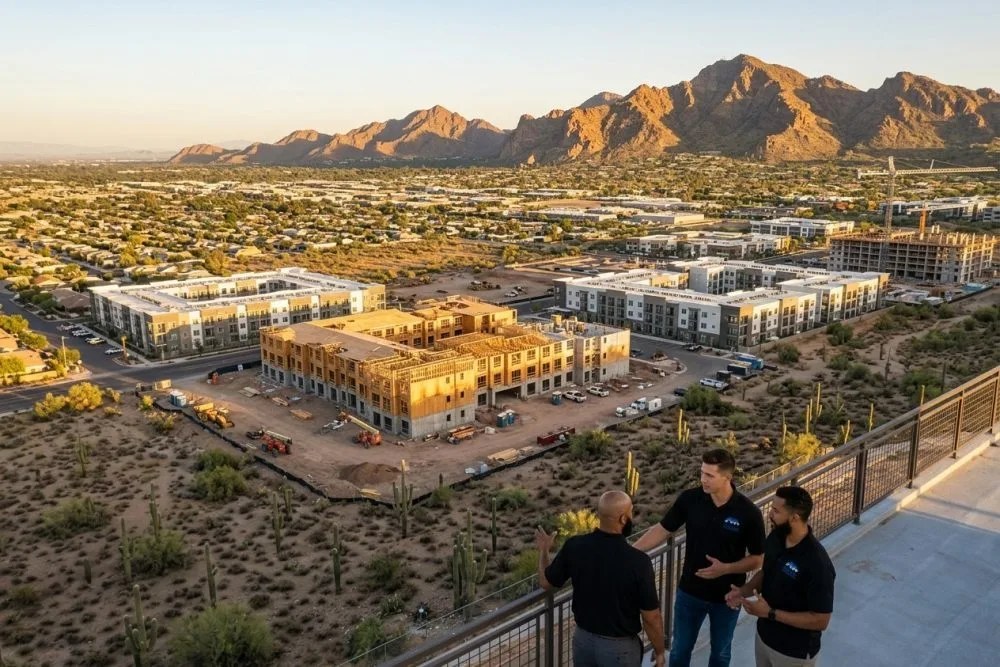
For long-term investors, current market conditions present acquisition opportunities at below-replacement-cost pricing. Properties purchased during oversupply phases historically generate superior returns once markets normalize. The key is maintaining cash flow through the correction period while positioning for eventual rent growth recovery.
STR markets recovery typically lags traditional rental recovery by 12-18 months, as leisure travel and discretionary spending recover more slowly than housing demand. This suggests that even when Phoenix rental markets improve, Airbnb performance may continue facing headwinds through 2027.
California Investor Perspective
For orange county multifamily investment managers, Phoenix offers comparative value despite current market challenges. California's regulatory environment, higher property taxes, and limited development opportunities make Phoenix's temporary oversupply an attractive entry point for long-term portfolio diversification.
The arizona vs california real estate taxes advantage remains compelling even with reduced rental income. Arizona's effective property tax rates of 0.6-0.8% are comparable to California's ~0.75% rate, but the larger tax advantage lies in Arizona's lack of state income tax on rental income, which compounds over time as properties appreciate and rents eventually recover.
Management Intensity and Scalability
Operational demands between rental strategies differ dramatically, affecting both profitability and investor lifestyle considerations. Traditional rentals require periodic tenant screening, lease renewals, and maintenance coordination—manageable tasks for investors with multiple properties or professional property management relationships.
Airbnb operations demand continuous attention: guest communication, cleaning coordination, pricing optimization, review management, and regulatory compliance monitoring. These tasks don't scale efficiently, making professional STR management essential for investors with multiple properties, but management fees of 18-25% significantly impact net returns.
Technology and Automation Impact
Modern property management technology has streamlined traditional rental operations significantly. Automated rent collection, maintenance request systems, and tenant screening platforms reduce management time while improving tenant satisfaction. These efficiency gains help maintain margins even during rent compression periods.
STR technology solutions provide pricing optimization and booking management but cannot eliminate the fundamental labor intensity of guest services and property turnover. Automation benefits traditional rentals more than short-term rentals, creating another advantage for long-term strategies in competitive markets.
Financing Considerations and Leverage Impact
Financing availability and terms heavily favor traditional rental properties. Conventional mortgages for investor properties offer 75-80% loan-to-value ratios at competitive rates, assuming standard rental income for qualification purposes. This leverage amplifies returns when properties perform as underwritten.
STR properties face more restrictive financing options. Many lenders classify short-term rentals as commercial properties requiring 70-75% LTV maximums and higher rates. Some lenders prohibit STR use entirely on residential investment loans. This financing disadvantage reduces leverage benefits and increases required down payments.
Current interest rate environment makes leverage costs a critical consideration. Traditional rental cash flow can typically service debt at 6.5-7.5% rates while maintaining positive cash flow. STR properties need higher average returns to cover increased borrowing costs, making financing disadvantages even more impactful in compressed revenue environments.
Strategic Recommendations for 2026-2027
Given current Phoenix market conditions, long-term rental strategies offer superior risk-adjusted returns for most multifamily investors. The stability of traditional leases provides crucial cash flow predictability while markets work through oversupply conditions. Properties with strong fundamentals—good locations, quality construction, appropriate pricing—will outperform regardless of strategy.
For investors considering STR conversions, focus on truly differentiated properties in premium locations with sustained demand drivers. Generic properties in secondary locations face increasingly challenging competition from both traditional rentals and other STR inventory. The middle market—average properties in average locations—strongly favors traditional rental approaches.
California investors exploring Phoenix expansion should prioritize cash flow stability over growth speculation. Current pricing provides attractive entry points for long-term holds, but near-term appreciation is unlikely given oversupply conditions. Properties that generate positive cash flow today will be positioned for superior returns when market conditions normalize.
Portfolio Diversification Strategy
For larger investors, a hybrid approach may optimize returns while managing risk. Maintain 80-90% of units in traditional rental configuration for stable cash flow, while testing STR strategies on 1-2 premium units to capture upside potential. This approach provides market exposure while limiting downside risk from STR volatility.
The current market environment favors conservative positioning with emphasis on cash flow preservation over growth maximization. As Phoenix works through its supply correction, investors who maintain positive cash flow and strong tenant relationships will be best positioned for the eventual market recovery.
Frequently Asked Questions