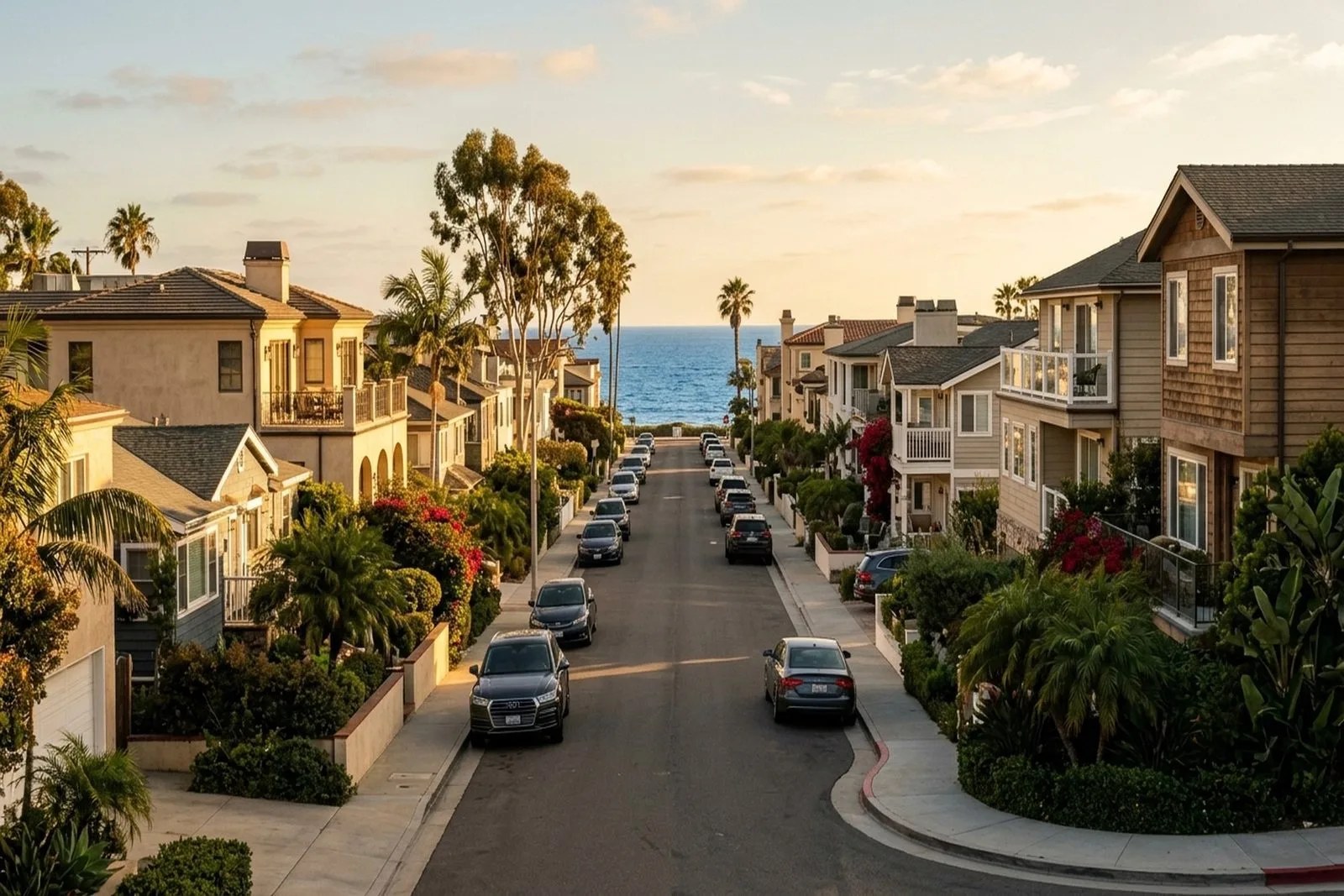
Orange County’s rental market vacancy has hovered near 3.8% for years. That figure doesn’t move much because it can’t — not with the structural supply constraints baked into OC’s geography, zoning, entitlement process, and political environment. Understanding why supply stays constrained is essential for forecasting rent growth and for understanding why long-term OC multifamily ownership has historically been such a strong bet.
When investors ask why Orange County rents keep growing, the easy answer is demand — strong employment, high incomes, desirable weather, limited homeownership affordability. All true. But it’s only half the story. What makes OC exceptional is that the supply side is structurally constrained in ways that are genuinely difficult to fix. That structural constraint is why OC vacancy sits at 3.8% countywide, why coastal submarkets run even tighter at 2.5–3.5%, and why that picture isn’t likely to change materially over the next 3–5 years regardless of what happens to interest rates.
Why Demand Isn’t the Interesting Story
OC’s demand drivers are well-documented: 3.2 million people, one of the country’s highest median household incomes ($100,000+), a diverse economy anchored by healthcare (Hoag, UCI Health, CHOC), technology, finance, and tourism. Homeownership is financially out of reach for the majority of OC households — with median home prices near $1.2 million and a 30-year mortgage payment on a median home exceeding $7,000/month with 20% down, the gap between owning and renting in OC is among the widest in the country. This creates a floor under demand that is structural rather than cyclical.
Geography: Physical Limits on Development Land
Orange County is geographically constrained in ways most inland markets aren’t. To the west: the Pacific Ocean. To the south and east: the Santa Ana Mountains and Cleveland National Forest. To the north: full urbanization against Los Angeles County. There is no agricultural land on the periphery to convert to housing. Every new multifamily unit in OC is an infill project — replacing or adding density to land that’s already developed. Infill is inherently more expensive, more complicated to permit, and more politically contentious than greenfield development.
The California Coastal Commission
For any development within the Coastal Zone — which includes virtually all coastal cities from Seal Beach to San Clemente — the California Coastal Commission has review authority above and beyond local city approvals. Coastal Commission review adds 6–18 months to the development timeline, significant consultant costs (biological assessments, view corridor studies, public access plans), and the risk of denial or modification that can fundamentally change project economics.
This is the primary reason Newport Beach, Laguna Beach, and Dana Point see almost no new multifamily development despite having some of the highest rental demand in the county. The entitlement cost and timeline for coastal sites makes most projects economically unviable at today’s cap rates and construction costs.
Entitlement: The 2–5 Year Barrier to New Supply
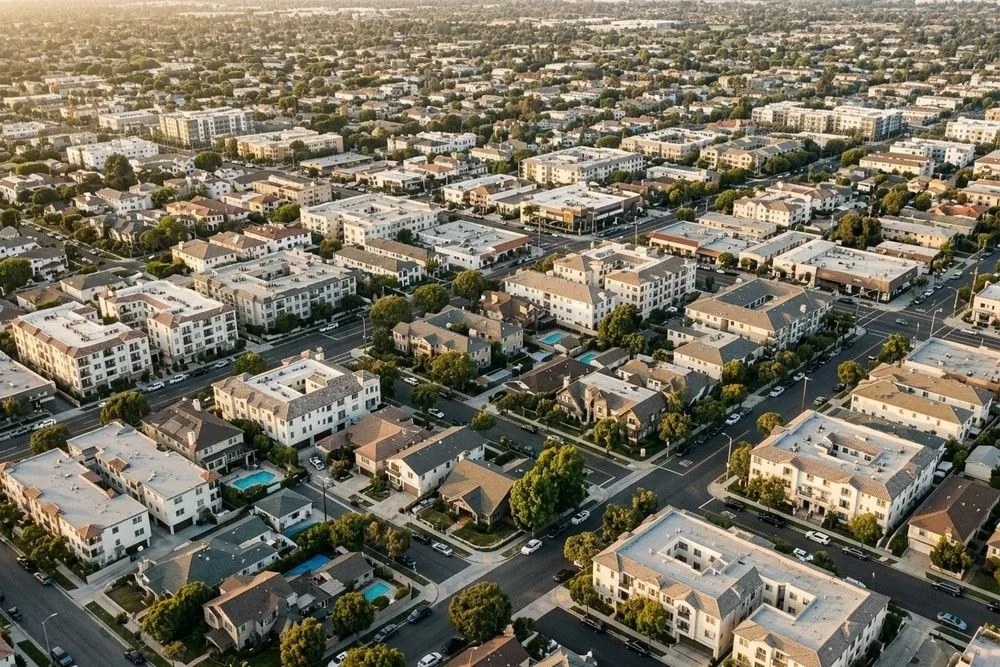
As covered in our guide to California land entitlement, getting a multifamily project approved in OC typically takes 2–5 years from land acquisition to building permit. The practical implication: if a developer decides today to build apartments in Anaheim, the earliest those units can be delivering is 2029–2030. The supply pipeline for 2026–2027 is already mostly fixed by decisions made 2–3 years ago.

NIMBY Politics in OC Cities
Orange County has historically had strong NIMBY political dynamics around new multifamily development. Established homeowners in cities like Laguna Beach, Laguna Niguel, Yorba Linda, and Mission Viejo have politically opposed apartment development for decades — through zoning restrictions, minimum parking requirements that make projects financially unviable, and active opposition campaigns at planning commission hearings. State law has increasingly constrained cities’ ability to block housing, but the political environment still shapes which projects get through efficiently.
OC delivers ~1,979 units in 2025. Phoenix delivers 25,000+. OC's supply ceiling — driven by geography and regulation — is the structural foundation of its rental market durability.
What the 2026–2027 Pipeline Looks Like
The data tells a clear story: deliveries in 2025 were down 43% from 2024 as developers pulled back in response to elevated construction costs, financing challenges, and entitlement delays. As of early 2026, only about 4,775 units remain under construction countywide — a 14% annual decline signaling sharply reduced supply in the next 24 months.
This supply cliff means that if demand holds even at current levels, the supply-demand balance in 2027–2028 will be tighter than today. When vacancy falls below 3.5% market-wide, operators have real pricing power — and the annual cap of 5% + CPI under AB 1482 may become the binding constraint rather than market demand.
What This Means for Investors
Rent growth has durability. Unlike markets where a surge of new supply can quickly tip vacancy from 4% to 8% (as happened in Phoenix and Austin in 2023–2024), OC’s supply pipeline simply can’t respond quickly enough to sustained demand growth. Rent growth in OC is slower than in high-supply Sun Belt markets during a boom — but far more durable during a correction.
Cap rates remain compressed for structural reasons. Sophisticated institutional investors — REITs, pension funds, family offices — accept 3.8–4.5% cap rates in a 6.5% rate environment because they believe in the long-term supply-constraint story. That story is credible precisely because the constraints are structural, not cyclical.
Operators who manage the turnover process professionally extract significantly more value than those who let units sit. In OC’s tight market, a vacant unit that’s well-presented and priced correctly leases in days. The difference between a 10-day turn and a 45-day turn on a 12-unit building is $11,200 at $2,800/month. See our guide to OC submarket dynamics for how this plays out differently across the county.
Frequently Asked Questions