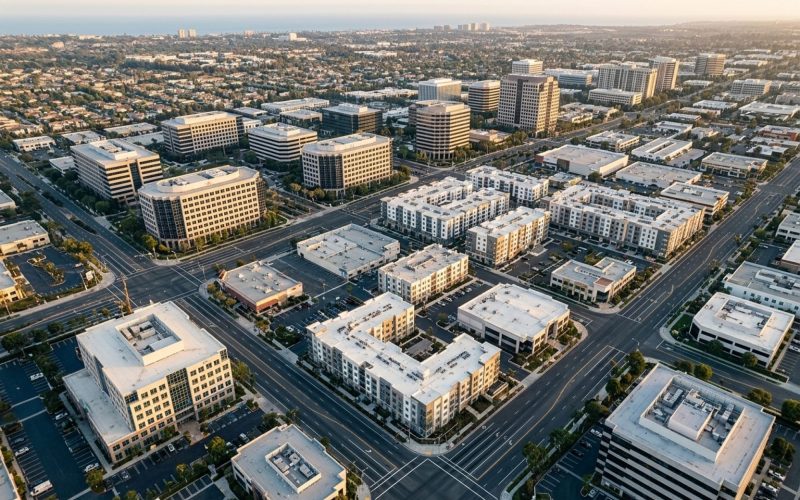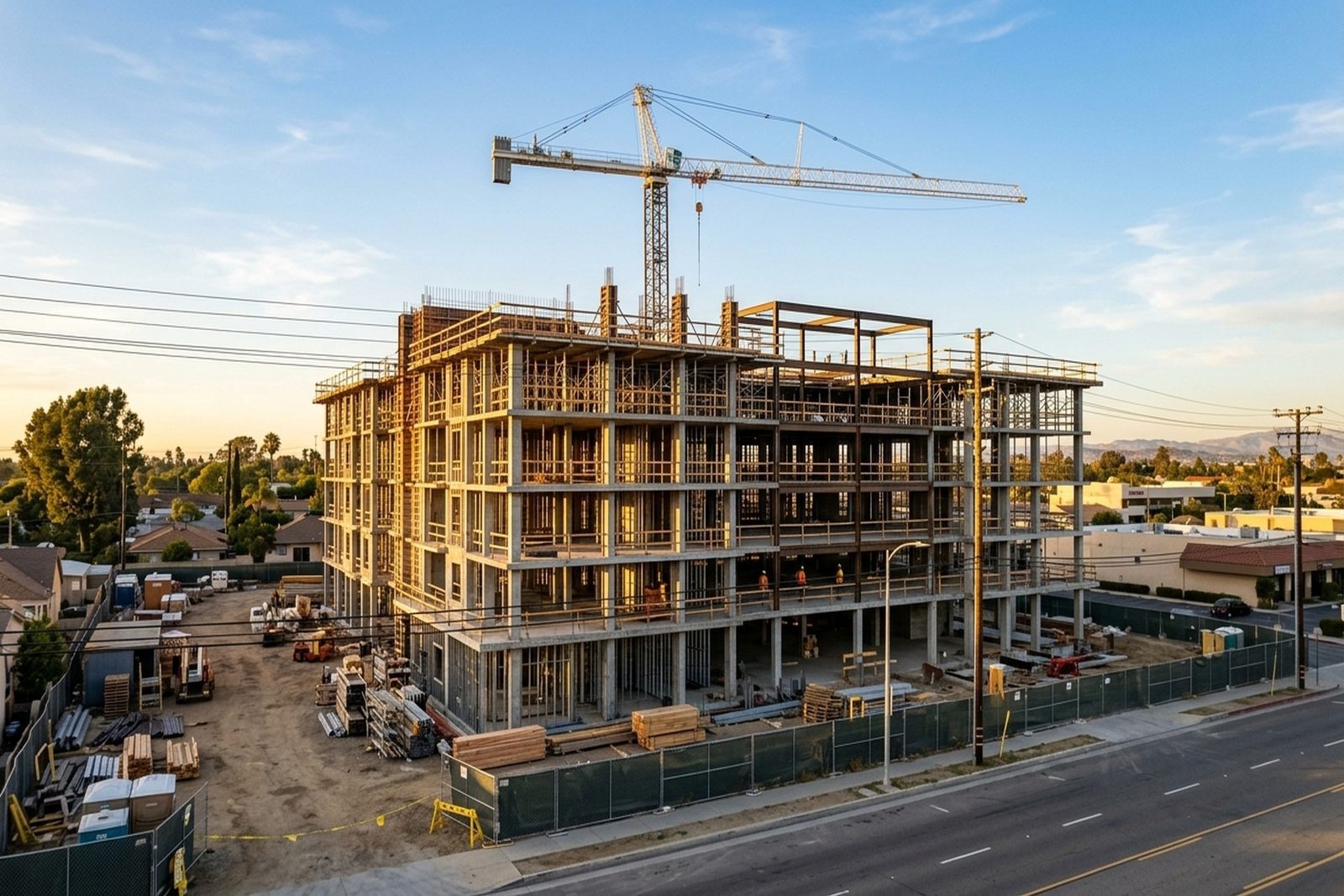
Orange County is in the middle of its most significant multifamily development cycle in over a decade. Six projects — spanning Irvine, Anaheim, Costa Mesa, and the coastal corridor — are adding thousands of units and shifting submarket dynamics. For investors and property managers, understanding where supply is landing matters as much as tracking vacancy rates.
Supply is the variable most OC investors prefer not to think about. For most of the last decade, new multifamily construction in Orange County was constrained enough that you could largely ignore the pipeline. That's changing.
2025 deliveries of ~1,979 units are 43% below the 10-year average. The pipeline contraction is expected to keep supply-side pressure muted through 2027, supporting continued rent growth.
1. Irvine Spectrum Edge — Irvine
The largest single addition to the Irvine multifamily stock in years, Spectrum Edge adds approximately 850 units of mixed-income housing adjacent to the Irvine Spectrum retail corridor.
The Irvine submarket has historically absorbed new supply quickly due to strong employer demand and limited land. But 850 units delivered in a 12–18 month window is notable. We're watching time-to-lease metrics carefully — if it takes longer than 90 days to stabilize, that's a signal for the broader submarket.
2. ARTIC District — Anaheim
Anaheim's transit hub at the Anaheim Regional Transportation Intermodal Center is anchoring a broader mixed-use development that includes 600+ apartments above retail and office space. Transit-oriented development at this scale can shift the submarket profile meaningfully. Cap rate compression in this submarket is a real possibility over the next 5–7 years.

3. 18th Street Corridor — Costa Mesa
Multiple infill projects totaling approximately 320 units are in various stages of construction between Harbor Boulevard and Newport Boulevard. The 18th Street supply will be absorbed, but it will likely put modest pressure on rents in the immediate corridor for 12–18 months post-delivery.
4. Banning Ranch — Newport Beach (Update)
One of the longest-contested development sites in Orange County history, Banning Ranch was permanently preserved as open space in December 2022 after the Trust for Public Land acquired the property with state funding. The 401-acre site, once proposed for up to 1,375 residential units, is now deed-restricted against housing development in perpetuity. Its removal from the pipeline underscores how limited Newport Beach’s future multifamily supply truly is.
5. Downtown Fullerton TOD — Fullerton
A 400-unit transit-oriented development targeting the commuter-to-LA renter profile. With Metrolink connecting Fullerton to Union Station in under an hour, this project is positioned for renters who work in Los Angeles but want Orange County cost and lifestyle.
6. Crossroads at Lake Forest — Lake Forest
A 275-unit suburban garden-style project targeting the family renter who wants top-rated schools and a price point below Irvine. Lake Forest has historically delivered strong tenant stability — lower turnover than coastal markets, longer average tenancies.
“New supply doesn't kill an OC submarket — misread supply does. The question isn't whether units are being built. It's whether the units being built match the renter profile that actually exists in that zip code.”
— Chris Kerstner, CEO, NextGen Properties
What It Means for Investors
Approximately 3,340 units across these six projects, with deliveries spread across 2025–2027. For a county with 3.4% vacancy and strong demand fundamentals, that pipeline is manageable. Supply analysis is where most individual landlords underperform institutional operators. If you want a read on how the pipeline affects your specific asset, talk to our team.
Permit Activity in Context
OC permitted roughly 8,200 multifamily units in 2024 — well below the estimated 14,000-unit annual need to keep pace with household formation and job growth. The gap between permitted supply and actual demand is the structural tailwind behind OC rent growth. Even in peak delivery years, OC has never permitted enough multifamily housing to meaningfully soften the market county-wide.
Key constraints that limit OC supply:
- Land scarcity: OC is 95%+ built out. Virtually all new development is infill, redevelopment, or entitlement of previously restricted parcels — all of which carry higher per-unit costs and longer timelines than greenfield development.
- Entitlement timelines: 18–36 months from application to permits in most OC cities. Cities with active NIMBYism (Newport Beach, Laguna Beach, Dana Point) can take longer.
- Construction costs: $350–$600/SF for wood-frame multifamily in OC. At $500/SF, a 200-unit project costs $100M+ before land — limiting the developer pool to well-capitalized operators.
- Interest rates: Construction loan rates at 7–9% in 2025–2026 have pushed marginal projects out of feasibility, further constraining the pipeline.
Absorption and Rent Impact by Submarket
New supply does not affect OC uniformly. Submarkets with strong employment anchors and limited existing vacancy absorb new units faster:
- Irvine: Historically absorbs new supply within 6–9 months. Strong employer demand (tech, biotech, UCI) provides consistent renter inflow.
- Anaheim/ARTIC corridor: Slower absorption — 9–15 months for large projects. More price-sensitive tenant base means lease-up concessions are common.
- Coastal (Costa Mesa, Newport, HB): Extremely limited new supply means any delivery is absorbed quickly. Rents rarely soften even during delivery periods.
- South County (Lake Forest, Mission Viejo): Moderate absorption. Family-oriented renters are less transient, supporting stable occupancy once leased.
How to Track the Pipeline
Investors should monitor supply at the submarket level, not county-wide. Useful sources:
- CoStar/REIS: Most comprehensive pipeline data. Available via subscription or through your commercial broker.
- City planning department websites: Most OC cities publish approved and pending entitlements. Check quarterly.
- SCAG (Southern California Association of Governments): Publishes regional housing needs assessments and permit data.
- Local brokerage reports: CBRE, Marcus & Millichap, and Kidder Mathews publish free quarterly OC multifamily reports with pipeline data.
If you are evaluating an acquisition, request a 1-mile and 3-mile radius supply analysis from your broker. Submarket-level data matters more than county-level averages.
Frequently Asked Questions